
Daily Deep Dive · 12 Mar 2026 · Decorative Arts
Lot Spotlight: Mdina Earth pattern bottle vases (Lot 1159) and the photo checks that matter before bidding on 20th-century art glass
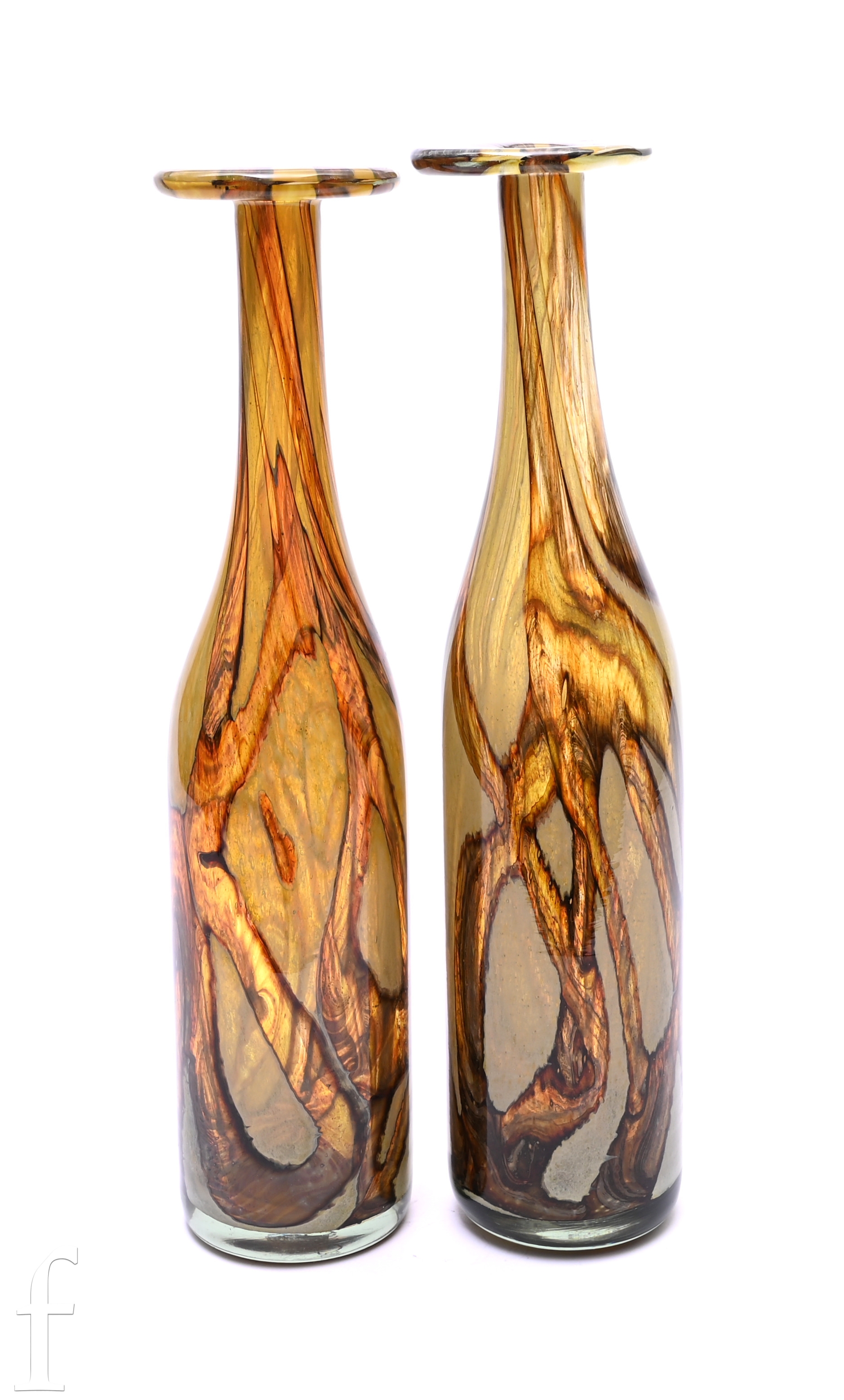
Today’s Fieldings Auctioneers lot is worth attention because the listing shows enough angles to judge the pair’s proportions, rim finish, base signatures, and how evenly the sandy brown decoration runs through each body before bidding. That matters with Mdina glass: the appeal sits in the sculptural silhouette and the depth of colour, but collectors still need to look hard for bruised rims, polished-out damage, and pairs that are more similar than truly matched.
Primary live lot today
Mdina — two 20th-century brown and sandy Earth pattern attenuated bottle vases with engraved signatures, Lot 1159
Auction house: Fieldings Auctioneers Ltd
View live lot listing
Estimate: £120–£150
Why this lot is interesting
Mdina’s appeal is tactile before it is academic. Buyers respond to the bottle form, the warm desert-like palette, and the way the glass shifts from brown to sandy gold as light moves across it. That makes a well-photographed pair especially useful: you can evaluate not just whether the vases are handsome, but whether they read as a convincing pair rather than two related pieces trying to pass as twins.
This Fieldings Auctioneers listing earns attention because the photographs appear to cover front, profile, and additional gallery views, giving bidders a reasonable chance to inspect neck length, rim finish, body taper, and signature placement. On art-glass pairs, small differences in height, colour density, or polish matter. A pair can still be desirable without being identical, but the bid level should reflect how disciplined that matching really is.
Who buys this and why
- Mid-century interior buyers: drawn to tall bottle vases because they read cleanly on shelves, consoles, and sideboards, adding colour and shape without needing floral use.
- Studio glass collectors: interested in Mdina signatures, period surface quality, and whether the pair shows the workshop’s sandy Earth palette with enough consistency to justify a grouped buy.
- Dealers and design traders: buying for resale to clients who want sculptural 20th-century glass, but only if rims, bases, and polish survive close inspection and the pair hangs together visually.
Photo checklist: what to inspect
- Rim honesty: zoom in on both flat rims for tiny nibbles, bruises, or later grinding that can dull the profile.
- Pairing discipline: compare heights, neck width, shoulder line, and colour concentration. Similar is not the same as matched.
- Base signatures: confirm the engraved Mdina marks look consistent and not suspiciously fresh against wear to the base.
- Surface polish: look for hazing, scratches, or over-cleaning that can flatten the depth of the glass.
- Body clarity: check whether internal bubbles, colour transitions, and the sandy decoration feel integral rather than muddy or clouded.
Comparator lots (same category)
- Mdina mid-century Maltese glass vase with ruby abstract design, Lot 1153 — Auction house: Fieldings Auctioneers Ltd. Estimate: £50–£80. view lot
- Mdina Tiger design lollipop vase group, Lot 1156 — Auction house: Fieldings Auctioneers Ltd. Estimate: £60–£80. view lot
- Mdina contemporary lollipop glass vase in Earth tones, Lot 1420 — Auction house: Fieldings Auctioneers Ltd. Estimate: £80–£120. view lot
UK media & culture context
Mdina sits neatly in a British collecting habit that still prizes studio glass as both decoration and design history. These are not just vessels; they are shelf architecture. In UK interiors coverage and dealer stock, tall art-glass bottles keep returning because they bridge the gap between decorative object and restrained modernist sculpture.
- V&A glass collection overview — useful institutional context for how museums frame vessel glass by material, colour, and design history rather than by room styling alone.
- V&A: An A–Z of glass — a practical refresher on blown-glass language that helps when judging finish, body shape, and surface treatment from photographs.
- The Guardian on The Glass Menagerie in London — not an auction source, but a timely reminder that glass still lands culturally in Britain as something both fragile and theatrically expressive, which is exactly why strong silhouette and surface matter so much in decorative buying.
UK social / market pulse
No credible UK-only same-day social or pricing pulse for comparable Mdina bottle-vase pairs was available this morning, so there is no reliable short-term trading signal to cite today. For this category, collector confidence is better built from signatures, rim condition, and how convincingly the pair works together than from thin social chatter.
Bottom line
This is a persuasive decorative-art lot because the pair has height, recognisable Mdina character, and enough photography to assess whether the two vases genuinely belong together. If the rims stay clean, the engraved signatures look right, and the colour balance holds across both bodies, it is an intelligent buy for a collector or interior-led bidder; if one vase proves noticeably weaker in finish or proportion, bid for the stronger single-object appeal rather than paying a full matched-pair premium.
Editorial analysis for educational purposes only. Final bidding decisions, fees, tax, shipping, and contract terms are handled by the auction house.