
Daily Deep Dive · 13 Mar 2026 · Scientific Instruments
Lot Spotlight: Armand compass dial with ballooning scene (Lot 903) and the photo checks that matter before bidding on small-format scientific instruments
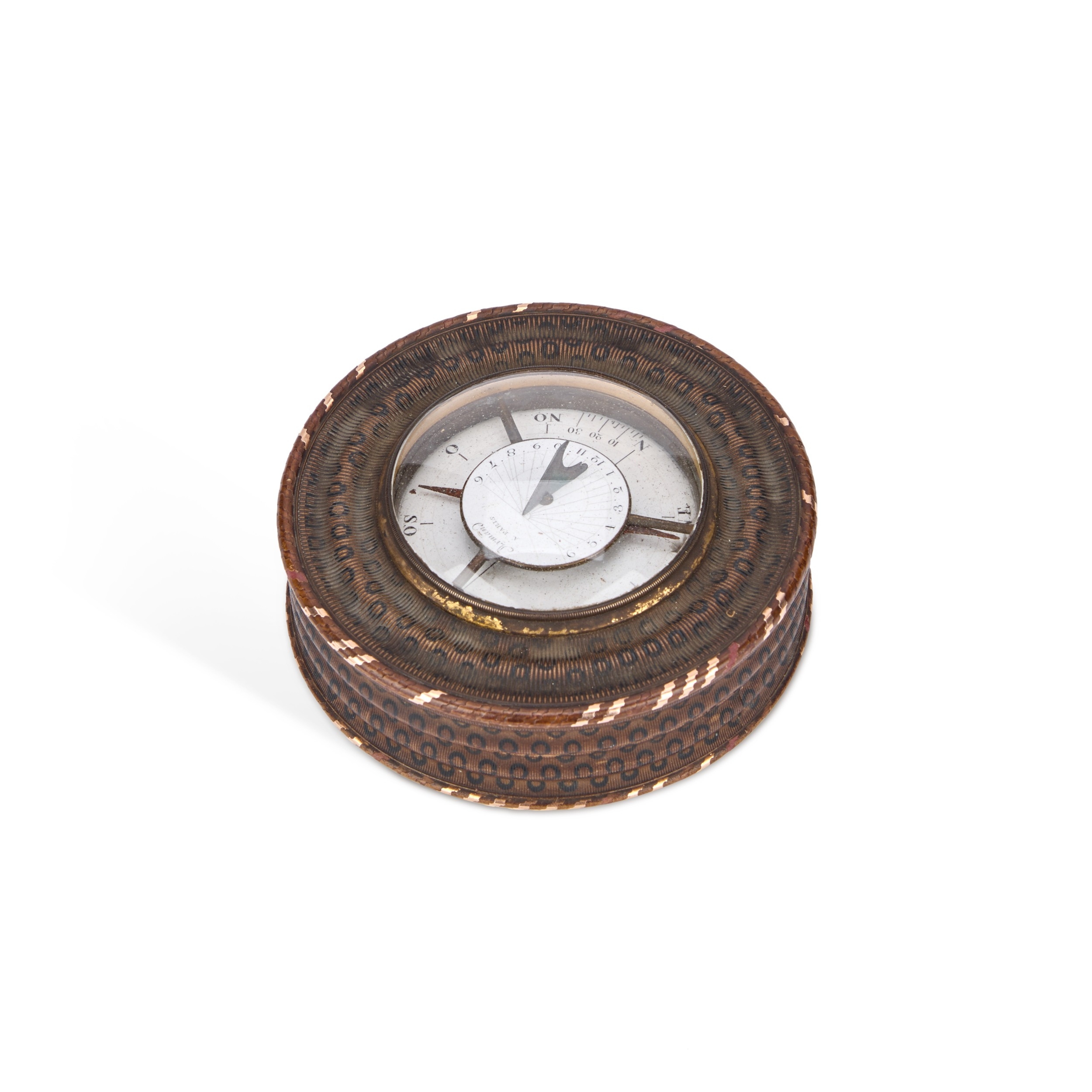
Today’s Elstob Auctioneers lot is worth attention because the live listing gives six images across the dial, mount, glazed cover, fitted box, and engraved ballooning medallion. That is enough to judge whether the romance of the object is supported by the harder things buyers actually need: enamel condition, metal integrity, hinge honesty, and whether the instrument and case feel like they have lived together for a long time rather than met shortly before cataloguing.
Primary live lot today
A rare Armand compass dial with a ballooning scene, French, second half 18th century, Lot 903
Auction house: Elstob Auctioneers
View live lot listing
Estimate: £600–£800
Why this lot is interesting
This is the sort of object that can flip from curiosity to serious collecting material depending on how complete and unmolested it appears in the photographs. The signature to the dial, the eight-point enamel compass, the supporting struts, the glazed dome, and the decorative case all need to work together. If they do, the lot has more than decorative charm: it has narrative force, a compact cabinet scale, and the kind of crossover appeal that brings in scientific-instrument buyers, Grand Tour-minded decorative buyers, and collectors who simply want an object with a better story than yet another mahogany box.
The ballooning medallion is where the lot becomes culturally sticky. In Britain, ballooning imagery still lands somewhere between Enlightenment spectacle and Boys’ Own annual fantasy. It is half instrument, half little theatre prop. That is good for attention, but it also means buyers must resist bidding on the scene alone. Rare-looking is not the same as right.
Who buys this and why
- Scientific instrument collectors: interested in originality, dial quality, the signed element, and whether the box and instrument remain convincingly associated.
- Cabinet-object buyers: drawn to scale, conversation value, and the way a small instrument can read beautifully in a study or library without demanding a huge footprint.
- Dealers and decorators: attracted by the ballooning scene and the fitted case, but only if the object still presents as period rather than pieced together.
Photo checklist: what to inspect
- Enamel compass plate: zoom in for hairlines, chips, re-touching, or losses around the points and lettering.
- Glazed dome and struts: check whether the glazing looks old and comfortably seated, and whether the supports appear straight rather than later adjusted.
- Dial signature and divisions: confirm the Armand signature and numeric divisions remain legible and consistent with the surrounding wear.
- Case relationship: inspect hinges, fit, interior wear, and the tortoiseshell inlay area to judge whether the instrument and box are a long-term pair.
- Ballooning medallion: look closely for rubbing, re-gilding, or later brightening that could make the scene seem sharper than the rest of the object’s age would suggest.
- Scale honesty: remember the dial is catalogued at 8cm diameter. Tiny instruments reward detail but punish damage.
Comparator lots (same collecting lane)
- BAUSCH & LOMB, Criterion 4000 late-20th-century telescope system, Lot 172 — Auction house: Swan Fine Art. view lot
- Vintage bubble sextant, Mark IX, serial no. 3973/42, with fitted case — Auction house: Wessex Auction Rooms. view lot
- Pair of Opticron Explorer wide-angle 8x42 field binoculars, Lot 222 — Auction house: Elstob Auctioneers. view lot
UK media & culture context
This lot lands in a very British sweet spot: the instrument as story object. We still like our science with a dash of theatre, preferably involving brass, a fitted box, and the vague sense that someone once carried it into weather they should probably have avoided. The ballooning scene adds a whiff of Georgian wonder that feels closer to The Aeronauts than to a dry museum label.
- Royal Museums Greenwich: navigation instruments — strong background for how collectors and curators read purpose-built instruments rather than treating them as generic decor.
- Science Museum: ballooning — useful context for why balloon imagery still carries cultural charge well beyond specialist instrument collecting.
- The Guardian on The Aeronauts — not a collecting source, but a clean illustration of how ballooning still reads in British culture as spectacle, peril, and period romance.
Bottom line
This is exactly the sort of lot that rewards cool-headed scrutiny. The six listing images make it possible to inspect more than mood: you can evaluate the enamel, the fit of the glazing, the relationship between the dial and its case, and whether the ballooning medallion feels genuinely of a piece with everything else. If those elements hold together, the estimate looks understandable for an object with rarity, cabinet presence, and crossover appeal. If any one of them looks over-cleaned, later-married, or simply too good for the surrounding wear, the right move is not to stretch for the story.
Editorial analysis for educational purposes only. Final bidding decisions, fees, tax, shipping, and contract terms are handled by the auction house.