
Daily Deep Dive · 18 Mar 2026 · Ceramics
Lot Spotlight: Andrew Crouch’s celadon studio pottery vase (Lot 364) and the glaze, rim, and mark checks that matter before bidding on quiet British studio ceramics
Today’s Burstow & Hewett lot is worth attention because the listing gives several clean views across the fluted body, celadon surface, profile, and base. That is exactly what you want with studio pottery: enough photography to judge whether the calm silhouette is backed up by healthy glaze, honest firing, and convincing maker attribution rather than just a fashionable green pot and a plausible story.
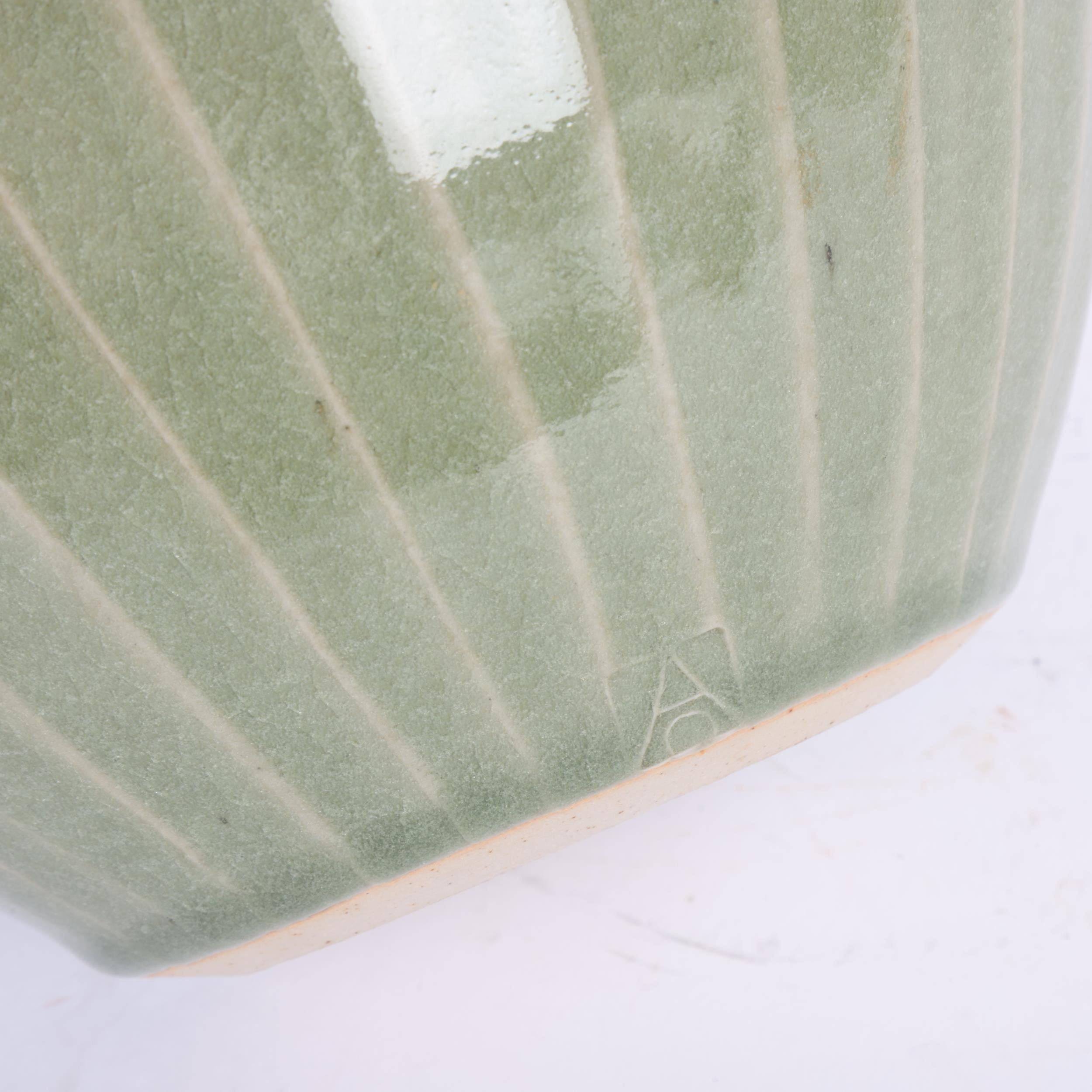
Primary live lot today
ANDREW CROUCH (b.1955), a studio pottery stoneware vase with fluted sides and celadon glaze, makers marks to side, height 23cm, Lot 364
Auction house: Burstow & Hewett
View live lot listing
Estimate shown: £100
Why this lot is interesting
Good studio pottery often looks simpler than it is. A celadon vase can appear almost self-explanatory in a catalogue shot, but the buying case usually turns on subtler things: how the glaze breaks over the ribs, whether the shoulder has enough tension, whether the foot is cleanly finished, and whether the maker’s marks feel integral rather than convenient. When those details line up, a restrained pot can outperform noisier decorative work because experienced buyers trust the object, not just the style.
This Andrew Crouch example earns a proper look because Burstow & Hewett’s images give enough coverage to assess exactly those points. You can read the vase as a finished piece rather than a silhouette alone. The fluting matters because it shows how evenly the pot has been thrown and finished; the celadon matters because any crawl, impact mark, or later damage would read quickly on a quiet pale glaze. In other words, the photography lets a bidder do some actual homework instead of buying a mood board.
Who buys this and why
- Studio pottery collectors: drawn to a named British maker, clear marks, and a disciplined form that sits comfortably alongside St Ives and later craft-influenced collections.
- Interior-led buyers: attracted by celadon’s easy domestic appeal and the fact that one well-made vase can hold a shelf or console without shouting.
- Dealers and resale-minded buyers: interested if the rim, glaze, and foot stay clean enough to keep post-sale intervention close to zero.
Photo checklist: what to inspect
- Rim line: check for nibbles, tiny flakes, or polished-over chips. Celadon can make small losses look softer than they are.
- Glaze pooling: look at how the celadon gathers in the fluting. Uneven pooling can be charming; sharp dead patches can point to wear or impact.
- Foot and base: inspect the underside for grinding, later label residue, and whether the foot ring looks cleanly finished rather than clumsy.
- Maker’s marks: make sure the marks sit naturally within the clay body and firing, not as something suspiciously fresh or awkwardly placed.
- Vertical profile: use the side views to judge whether the neck and shoulders remain true. A slight lean may be part of hand-made character; a stressed wobble is something else.
- Scale honesty: remember the catalogue height is 23cm. Quiet pots can read larger in isolated photographs than they do in a room.
Comparator lots (same collecting lane)
- Dorothy Kemp (1905-2001), St Ives Pottery, a stoneware bottle vase with lobbed body, makers mark to base, height 19.5cm, Lot 40 — Auction house: Burstow & Hewett. view lot
- THOMAS PLOWMAN (b.1934-), a tall Stalham Pottery stoneware sectional vase, makers mark and pottery mark to base, height 57cm — Auction house: Burstow & Hewett. view lot
- Dan Asram for 1882 Ltd, a Positive cylinder vase, makers marks to base, height 30.5cm, Lot 481 — Auction house: Burstow & Hewett. view lot
UK media & culture context
British buyers do not approach studio pottery as a niche footnote anymore. It now sits in a broad collecting lane that runs from Bernard Leach and St Ives through to interior-led contemporary craft buying. That matters here because Crouch’s vase trades on exactly the qualities British collectors have learned to value: restraint, surface intelligence, and marks that reward a closer look rather than a louder first impression.
- V&A: Studio Pottery, an introduction — useful background on how East Asian influences, Leach, Hamada, and British studio practice shaped the visual language that still frames celadon-led pottery buying.
- Pallant House Gallery: British Studio Ceramics from Bernard Leach to Magdalene Odundo — a reminder that museum and gallery framing continues to place studio ceramics firmly inside serious British collecting culture.
- The Guardian on Stoke-on-Trent’s museums and ceramics studios — a practical pulse check that British pottery remains active cultural territory rather than a dormant heritage story.
- Crafts Council / Collect 2026 press material — evidence that high-end contemporary craft, including ceramics, still commands institutional and commercial attention in the UK. No credible same-day social market pulse source was found today that added more than noise, so I would not over-read social chatter on this lot.
Bottom line
This is the sort of lot that rewards calm buying. The photographs are good enough to judge the rim, glaze behaviour, profile, and marks, which is exactly what matters with restrained studio pottery. If those details still read clean under close inspection, the estimate looks sensible for a named maker with a form that should stay easy to place in both collecting and interior contexts. If the rim starts showing small losses or the marks feel less convincing in hand than they do on screen, the vase quickly moves from thoughtful buy to decorative maybe.
Editorial analysis for educational purposes only. Final bidding decisions, fees, tax, shipping, and contract terms are handled by the auction house.