
Daily Deep Dive · 25 Mar 2026 · Lighting
Lot Spotlight: chrome ball table lamp with acrylic diffuser (Lot 362) and the scratch, diffuser, and rewiring checks that matter before bidding on compact Space Age-style lighting
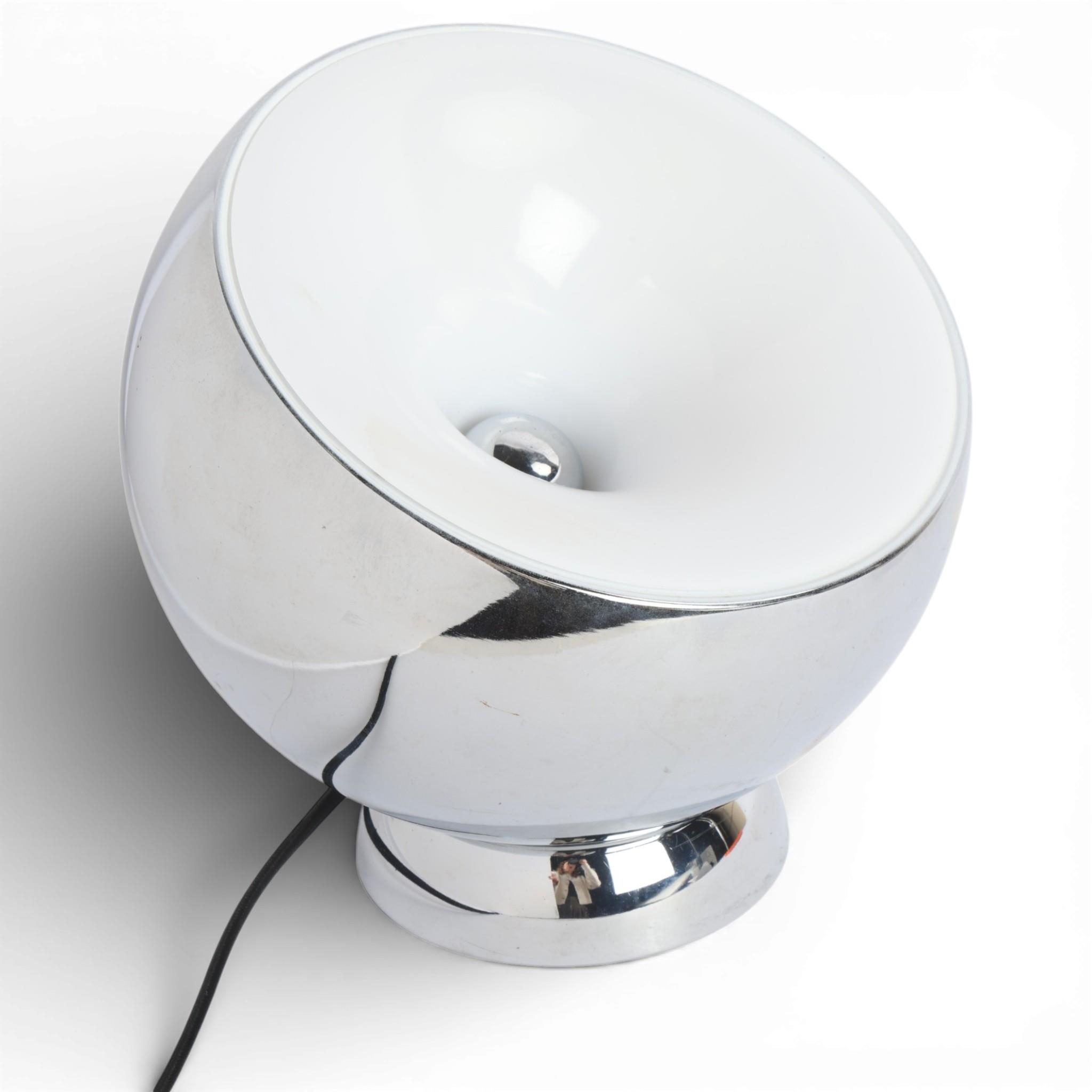
Burstow & Hewett gives this little lamp exactly the sort of coverage it needs. The mirrored chrome sphere, white acrylic diffuser, and ordinary day-to-day wear are all visible enough to decide whether you are buying a crisp bit of Space Age-style lighting or just a good silhouette with tired surfaces and optimistic electrics.
Primary live lot today
A chromed ball table lamp with white acrylic diffuser, diameter 23cm, shade height 16cm, Lot 362
Auction house: Burstow & Hewett
View live lot listing
Estimate: £80–£120
Condition note in listing: Good condition, light surface scratching, working order
Why this lot is interesting
This is a very compact lesson in why late-20th-century lighting still sells so well. A chrome sphere and white diffuser can read as Space Age cool, boutique-hotel styling, or simply a useful little mood lamp, depending on who is looking. That breadth matters. It means the buyer pool is wider than the estimate suggests, but it also means people can overpay for silhouette alone if they stop inspecting after the first shiny photo.
This particular listing is better than average because Burstow & Hewett show the lamp clearly enough to let you judge the surface rather than merely admire the form. The estimate is not pretending this is a blue-chip design-object masterpiece. It is a modest decorative lot, and that is exactly why clear photography matters: if the chrome has gone soft, the acrylic has yellowed, or the fitting has been bodged, there is not much price room to forgive those faults.
Who buys this and why
- Interior-led buyers: looking for a compact lamp that gives an instant 1960s or 1970s note without needing a whole room of matching modernist furniture.
- Dealers and decorative traders: attracted by the low estimate and the fact that clean chrome-and-acrylic lighting photographs well for resale if the condition holds up in hand.
- Set dressers and hospitality buyers: interested in small lamps that can give bars, bedrooms, and reception spaces a quick retro signal, but only if the electrics and diffuser are practical rather than theatrical liabilities.
What to inspect in the photos
- Chrome sharpness: look for pitting, dull patches, or aggressive polish marks that flatten the whole point of a mirrored spherical body.
- Acrylic diffuser colour: make sure the white dome reads evenly rather than cream, nicotine-toned, or patchily sun-aged.
- Join between body and shade: inspect how neatly the diffuser sits against the metal so you can spot warping, cracks, or replacement parts.
- Surface scratching: the condition note already admits light scratching, so the question is not whether scratches exist but whether they stay acceptable at normal viewing distance.
- Base stability and cable exit: small lamps often survive cosmetically while the practical bits suffer. Check whether the base sits true and whether the cable routing looks orderly.
- Working order language: treat it as a useful guide, not a safety certificate. Budget for testing and possible rewiring after collection.
Comparator lots
- Vintage five-sconce tulip shade chandelier, Lot 940 — Auction house: Matthews Auctioneers. view lot
- A 20th century Invicta Interiors arc floor lamp with white acrylic dome shade, Lot 2105 — Auction house: The Great Western Auctions Ltd. view lot
- Catherine Purves brass star-shaped wall light, Lot 91 — Auction house: Burstow & Hewett. view lot
UK media & culture context
Chrome-and-acrylic lighting sits in a very British zone where post-war optimism, pop interiors, and nostalgia keep bumping into each other. Objects like this still work because they look familiar even when the designer is unnamed. They recall the same broad visual world as Habitat-era interiors, sci-fi television sets, cocktail-bar glamour, and the long afterlife of the lava lamp on British screens and shop shelves.
- V&A blog: Champagne standard lamps — a useful museum reminder that twentieth-century lighting is judged on finish, material behaviour, and restoration choices, not just on sculptural presence.
- BBC News: Lava lamp creators mark 50 years of 1960s icon — handy context for how futuristic domestic lighting remains lodged in British popular memory well beyond specialist design circles.
Market pulse
No credible same-day UK market pulse for directly comparable chrome-ball table lamps turned up in a form worth citing this morning. That leaves the old-fashioned checks doing most of the work: surface quality, diffuser ageing, and the cost of making a decorative electrical object safely usable again.
Bottom line
This is a sensible small lot rather than a mythic design trophy, and that is why it works. If the chrome still reads crisp, the diffuser stays properly white, and the admitted scratches do not jump out under normal room light, the estimate looks fair for a decorative lamp with strong retro appeal. If the sphere is more scuffed than glossy or the acrylic has gone tired, buy it only at a level that leaves room for cleaning, electrical attention, and the possibility that the silhouette is better than the object itself.
Editorial analysis for educational purposes only. Final bidding decisions, fees, tax, shipping, installation, electrical testing, rewiring, and contract terms are handled by the auction house.