
Daily Deep Dive · 30 Mar 2026 · Ceramics
Lot Spotlight: William Moorcroft’s ‘Red Tulip’ vase by Sally Tuffin (Lot 1) and the tube-lining, colour, and surface checks that matter before bidding
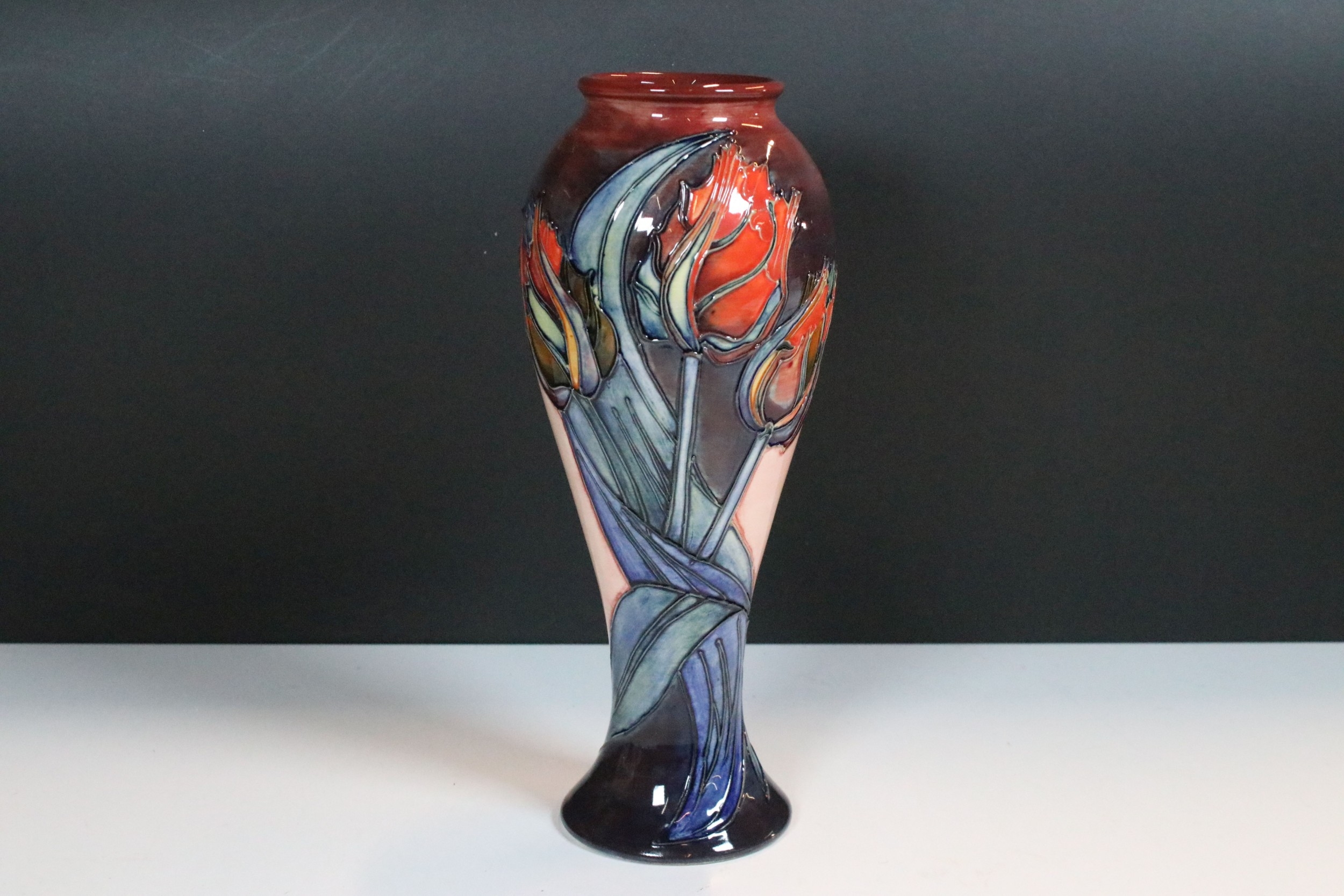
This is the sort of later Moorcroft piece that lives or dies on freshness. Wessex Auction Rooms gives enough photography to judge the inverted-bell shape, the tube-lined tulips, and whether the glaze still carries the depth that makes Sally Tuffin-era wares feel decorative rather than merely recognisable.
Primary live lot today
William Moorcroft pottery vase in the ‘Red Tulip’ pattern, designed by Sally Tuffin, Lot 1
Auction house: Wessex Auction Rooms
View live lot listing
Estimate: See listing
Auction date in listing: 28 Mar 2026
Why this lot is interesting
Tuffin-designed Moorcroft sits in an awkward but useful middle ground for buyers. It is recognisably Moorcroft, so the maker carries instant decorative appeal, but it does not rely on the deep pre-war mystique that often pushes earlier wares into a different budget bracket. That makes pieces like this good teaching lots. You can focus on pattern quality, colour handling, and surface condition without the whole thing being swallowed by pure brand reverence.
The ‘Red Tulip’ design is exactly the sort of pattern that either sings or dies depending on execution. Tulip heads need enough definition to feel crisp but not stiff, and the surrounding ground has to support them rather than flatten them. When the photos are decent, as they are here, buyers can do more than admire a floral silhouette. They can ask the harder questions about tube-lining sharpness, glaze vitality, and whether the vase still looks convincing from more than one angle.
Who buys this and why
- Moorcroft collectors: drawn to a named Sally Tuffin pattern that offers decorative clarity without requiring pre-war money.
- Interior-led ceramics buyers: interested in a piece that can read as rich and traditional without becoming heavy or overly fussy.
- Dealers in 20th-century British design: attracted by the easy explainability of a recognisable factory, readable pattern, and manageable display scale.
What to inspect in the photos
- Tube-lining: check whether the raised outlines still look crisp and even rather than rubbed, softened, or clumsily restored.
- Red and green colour balance: strong Moorcroft depends on colour depth, not just pattern recognition. Look for richness rather than chalkiness.
- Rim and foot: these areas often tell the truth quickly. Watch for chips, nibbles, grinding, or signs of old knocks.
- Glaze surface: make sure the shine still feels healthy and that there are no obvious scratches or cloudy patches killing the finish.
- Shape confidence: the inverted form should read cleanly in profile. If the body feels awkward or visually dead, the decoration cannot rescue it on its own.
Comparator lots
- Mike Dodd waisted studio pottery vase, Lot 110 — Auction house: Duke’s. view lot
- Andrew Crouch stoneware celadon vase, Lot 364 — Auction house: Burstow & Hewett. view lot
- Clarice Cliff ‘Persian Inspiration’ twin-handled lotus jug, Lot 258 — Auction house: Gorringe’s. view lot
UK media & culture context
Moorcroft still occupies a very British corner of the decorative imagination: somewhere between country-house taste, department-store aspiration, and the sort of heirloom object that used to sit behind glass in a front room nobody was meant to disturb. Sally Tuffin’s designs matter because they kept that identity legible for later buyers, giving the factory a second-life vocabulary that feels warmer and more accessible than pure museum reverence.
- Moorcroft official site — useful grounding in the factory history and the longer decorative tradition behind the name.
- V&A on Arts and Crafts — good background for the handmade, pattern-led British decorative culture that still shapes how buyers read pottery like this.
Market pulse
Later Moorcroft does not trade on rarity alone. Buyers still want clean pattern, honest condition, and enough visual punch to justify shelf space. That keeps the market practical. If the photos suggest sound glaze, sharp outlines, and no obvious rim drama, this sort of vase can still make sense as a decorative buy first and a maker-led buy second.
Bottom line
A good later Moorcroft vase should still feel awake in photographs. If the tulips keep their edge, the glaze has proper depth, and the rim and foot stay clean, this is a sensible decorative buy with a legible factory story behind it. If the surface looks sleepy or the condition starts to undercut the pattern, the name alone is not enough to carry the bid.
Editorial analysis for educational purposes only. Final bidding decisions, fees, tax, shipping, collection, condition verification, and contract terms are handled by the auction house.