
Daily Deep Dive · 31 Mar 2026 · Lighting
Lot Spotlight: Herbert Terry’s pre-war Model 1227 Anglepoise lamp (Lot 42) and the spring, joint, and finish checks that decide whether the icon still works as a buy
This is the sort of lamp that should feel balanced before it feels beautiful. Auctioneum’s pre-war Model 1227 is worth watching because the catalogue gives bidders enough honest photography to judge the stepped arms, spring hardware, base stance, and painted surface before nostalgia starts flattering the object.
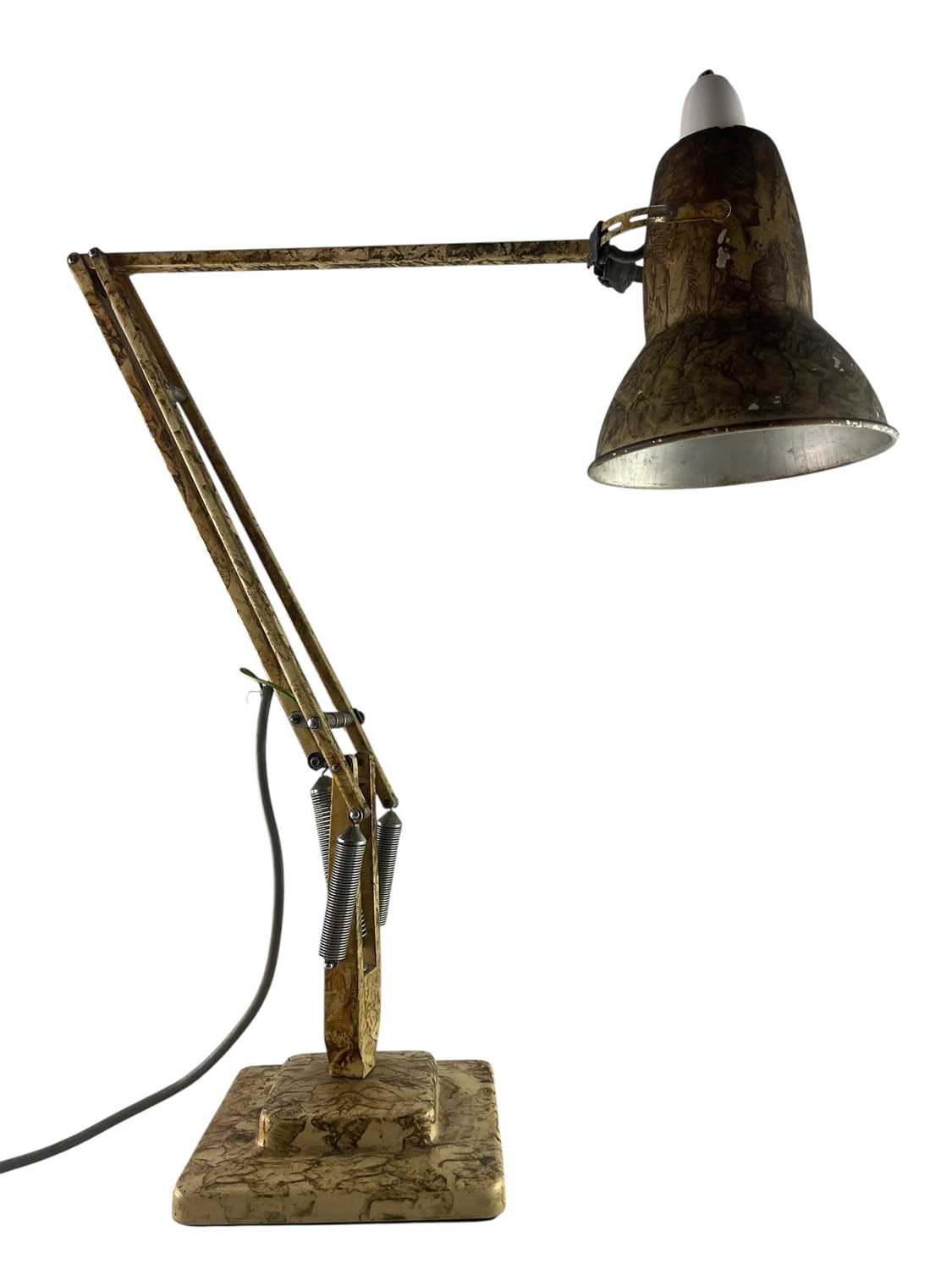
Primary live lot today
Herbert Terry Model 1227 pre-war two-step Anglepoise table or desk lamp, Lot 42
Auction house: Auctioneum Ltd
View live lot listing
Estimate: £50–£80
Auction date in listing: 1 Apr 2026
Why this lot is interesting
Anglepoise lamps are common enough in the imagination that buyers sometimes stop looking closely at the actual engineering. That is a mistake with a pre-war Herbert Terry example. The value here sits in whether the mechanism still reads as disciplined: even springs, arms that do not look forced, a shade and base that belong together, and a finish with age rather than cosmetic panic baked into it.
The estimate is where this gets live. At £50–£80, you are not being asked to pay for a museum label; you are being asked to make a judgement call on structure, originality, and restoration drag. If the lamp is fundamentally straight and complete, there is room for rewiring and light fettling. If the joints are tired or the paint has been clumsily redone, the cheap entry point disappears fast.
Who buys this and why
- Design-led collectors: drawn to the Model 1227 as one of the great British task-lamp forms and willing to live with finish wear if the lamp still looks mechanically coherent.
- Home-office or studio buyers: interested in using an early Anglepoise properly, so they care less about pristine paint than about balance, adjustability, and whether rewiring will be straightforward.
- Trade buyers and stylists: attracted by the recognisable silhouette, but only if the restoration burden stays comfortably below what the finished piece might justify in a shop or scheme.
Condition pressure points
- Spring match and tension: the paired springs should look even rather than improvised, and the arm set should sit with confidence instead of drooping or straining.
- Elbows, pivots, and fixings: watch for distortion, over-tightened replacements, or joints that suggest the lamp has been forced beyond its intended range.
- Shade edge and socket area: dents, scorching, later fittings, and rough repainting often show here first.
- Paint honesty: age and wear are acceptable; thick modern spray work, clogged screws, and inconsistent colour are much less charming.
- Base stability: the footprint should look level and complete, without obvious cracks, bent metal, or missing feet that turn use into irritation.
- Cable reality: unless the wiring is clearly recent and competent, budget for a rewire and treat any assumption of safe use as provisional.
Comparator lots
These comparators stay in the same British task-lighting lane, which is the useful way to triangulate value here: not every buyer needs the exact same model, but they do need to compare restoration burden against recognisability.
- Herbert Terry & Sons Model 90 industrial Anglepoise desk lamp, Lot 23 — Auction house: Auctioneum Ltd. Estimate: £50–£80. view lot
- Retro mid-20th-century industrial workman’s Anglepoise desk lamp, Lot 456 — Auction house: Auctioneum Ltd. Estimate: £40–£60. view lot
- Vintage Herbert Terry Model 90 Anglepoise lamp, Lot 411 — Auction house: Burstow & Hewett. Estimate: £40–£60. view lot
UK media & culture context
The Model 1227 is one of those British designs that escaped its original job description. It began as a proper task lamp and ended up as shorthand for practical modernism: the look of studios, architects’ desks, editing rooms, and the sort of working interior Britain still romanticises when it wants utility with brains. That crossover is why early Herbert Terry examples keep a market even when they need work.
- Design Museum: Anglepoise — concise context on George Carwardine’s spring-and-lever breakthrough and why the form became a design landmark rather than just a workshop lamp.
- V&A collections: Anglepoise Lamp 1227 — useful museum-level grounding for the model and its place in British industrial design history.
- V&A on modernism — broader context for why utilitarian objects with strong form and engineering logic moved into the collector conversation.
Bottom line
The charm here is not decorative romance; it is whether the mechanism still looks like it means business. For modest money, this could be a very sensible buy for someone happy to rewire and clean while leaving honest age alone. If the joints look sloppy, the springs suspect, or the finish too freshly “improved,” the famous silhouette will not save it from becoming a nuisance.
Editorial analysis for educational purposes only. Final bidding decisions, fees, tax, shipping, collection, condition verification, and contract terms are handled by the auction house.