
Daily Deep Dive · 03 Apr 2026 · Wine & Spirits
Lot Spotlight: Hine ‘Rare — The Original’ Cognac Fine Champagne (Lot 856) and why the best bid is the one attached to the cleanest bottle
Drake’s Auctions has done something useful for buyers: it has listed three near-identical Hine ‘Rare — The Original’ bottles in the same timed sale. That turns today’s decision into a practical collector’s exercise. If the fill, branded stopper, and presentation box all look sharper on one bottle than the others, that is the one worth stretching for. If they all look equally honest, discipline matters more than brand name theatre.
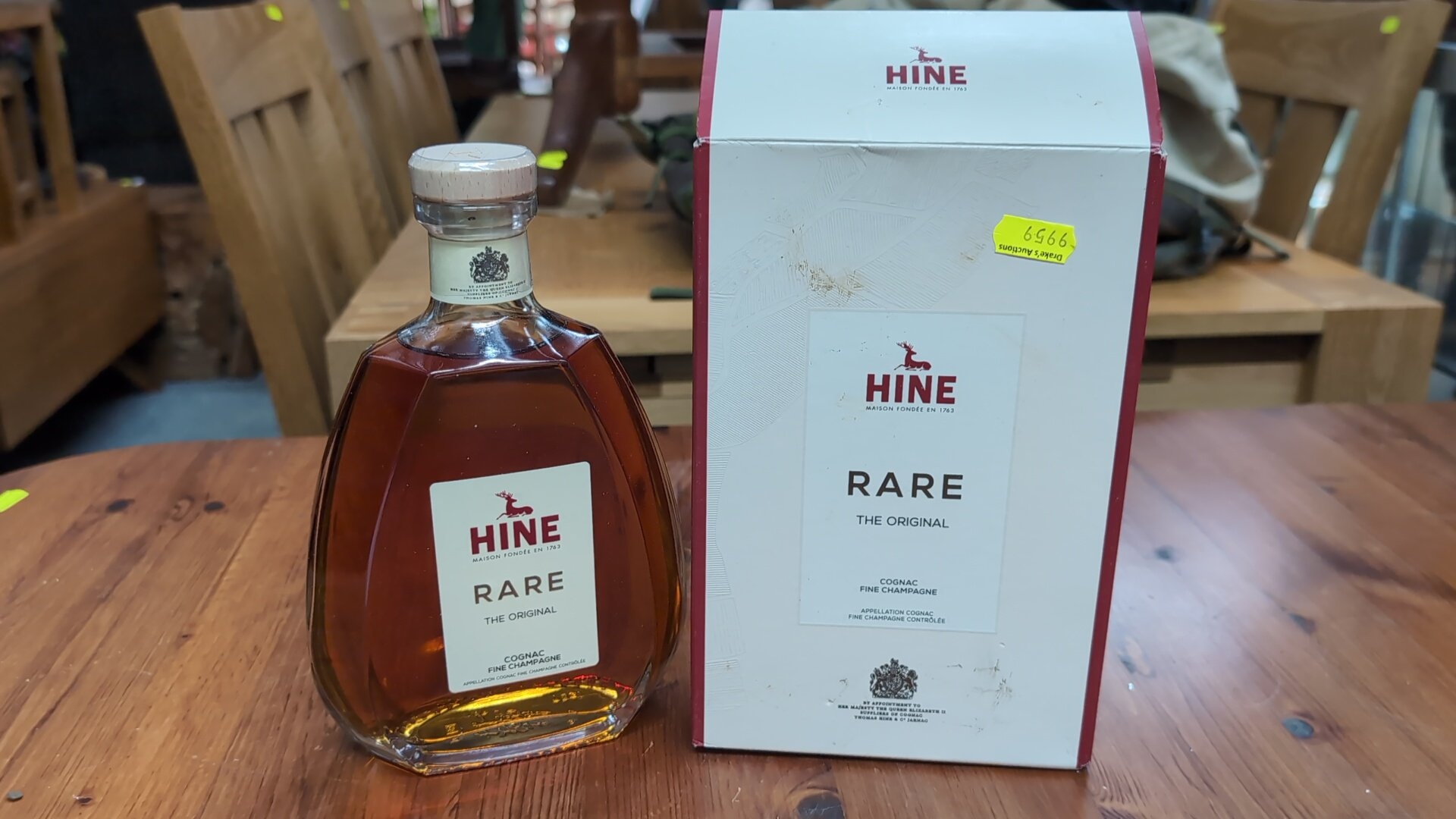
Primary live lot today
Hine ‘Rare — The Original’ Cognac Fine Champagne, 70cl, 40% vol, Lot 856
Auction house: Drake’s Auctions
Estimate shown: No estimate published
More information on the listing: 1 bottle, includes box
View live lot listing
Why this lot is interesting
Hine sits in the pleasant overlap between drinkable bottle and collectable object. The house has real British resonance — Thomas Hine was from Dorset, and the company still trades on that Anglo-French identity — but this particular lot is interesting for a more grounded reason: the bottle comes in a moulded decanter format with a branded stopper and original presentation box, so the buying decision is partly about liquid and partly about completeness.
The sale gets more interesting because Drake’s has listed three examples together: Lots 856, 857, and 858. When a catalogue gives you a small internal comparison set, you do not need to romanticise scarcity. You can compare fill level, clarity, stopper fit, label sharpness, and box wear across near-like-for-like bottles and decide which one actually deserves the stronger bid.
What to inspect in the photos
- Fill level: make sure the shoulder and neck look consistent with an older but sound bottle; obvious short fill is where romance starts getting expensive.
- Stopper and collar: this style relies on presentation, so check that the branded stopper looks original, clean, and free of chips or cloudy damage.
- Decanter body: inspect the moulded glass for scratches, clouding, label abrasion, and any sign of seepage around the closure.
- Presentation box: corners, hinge points, and printed surfaces matter more than people admit. A tired box can drag a giftable bottle back into “drink it, don’t display it” territory.
- Consistency across the three Hine lots: when several copies are live at once, the best bottle is not the one with the nicest story. It is the one that survives side-by-side visual comparison.
Comparator lots (same category)
- Hine ‘Rare — The Original’ Cognac Fine Champagne, Lot 857 — Auction house: Drake’s Auctions (no estimate published). view lot
- Hine ‘Rare — The Original’ Cognac Fine Champagne, Lot 858 — Auction house: Drake’s Auctions (no estimate published). view lot
- A sealed 1 litre bottle of vintage Martell Medallion Cognac, Lot 950 — Auction house: South Dublin Auction (estimate shown €80 - €160). view lot
UK media & culture context
Hine has an unusually British collector story for a Cognac house. That matters because UK buyers often respond to bottles that feel equally at home in a drinks cabinet, a club-room interior, or an old-school gifting circuit. This is not a nightclub-status bottle; it is closer to the sort of thing that still looks right beside a cut-crystal decanter and a decent tray — more Sunday-paper elegance than loud luxury.
- Royal Warrant Holders Association: Thomas Hine & Co
- BBC Good Food: Hine Rare VSOP review
- Decanter: complete guide to Cognac
UK social / market pulse
No reliable open UK-only daily social dataset was available this morning that would let me quote a defensible short-term trend for Hine specifically. The safer read is the structural one: gift-boxed Cognac remains liquid enough for mixed audiences of drinkers, decorators, and occasion buyers, but bidding discipline improves sharply when more than one near-identical bottle is available in the same sale.
Bottom line
This is a buyable lot if you treat it as a choice between three bottles, not as a one-off trophy. Bid hardest on the example with the cleanest fill, the freshest box, and the crispest stopper; if there is no meaningful visual difference, let the cheapest honest bottle win. Add premium, shipping, and breakage risk before you persuade yourself that a pretty decanter is automatically a bargain.
Editorial analysis for educational purposes only. Final bidding decisions, fees, tax, shipping, and contract terms are handled by the auction house.