
Daily Deep Dive · 06 Apr 2026 · Decorative Arts
Lot Spotlight: Ezan France opalescent bird bowl (Lot 6) and the difference between dreamy glow and tired glass
A French opalescent bowl only earns its keep when the moulding still reads clearly after the first hit of atmosphere wears off. Eastbourne Auctions has given this Ezan bowl five useful photographs, which means today’s decision is not about whether it looks pretty in a catalogue. It is about whether the birds, rim, and satin glow still feel crisp enough to justify bidding once wear, cleaning scars, and premium are added back into the story.
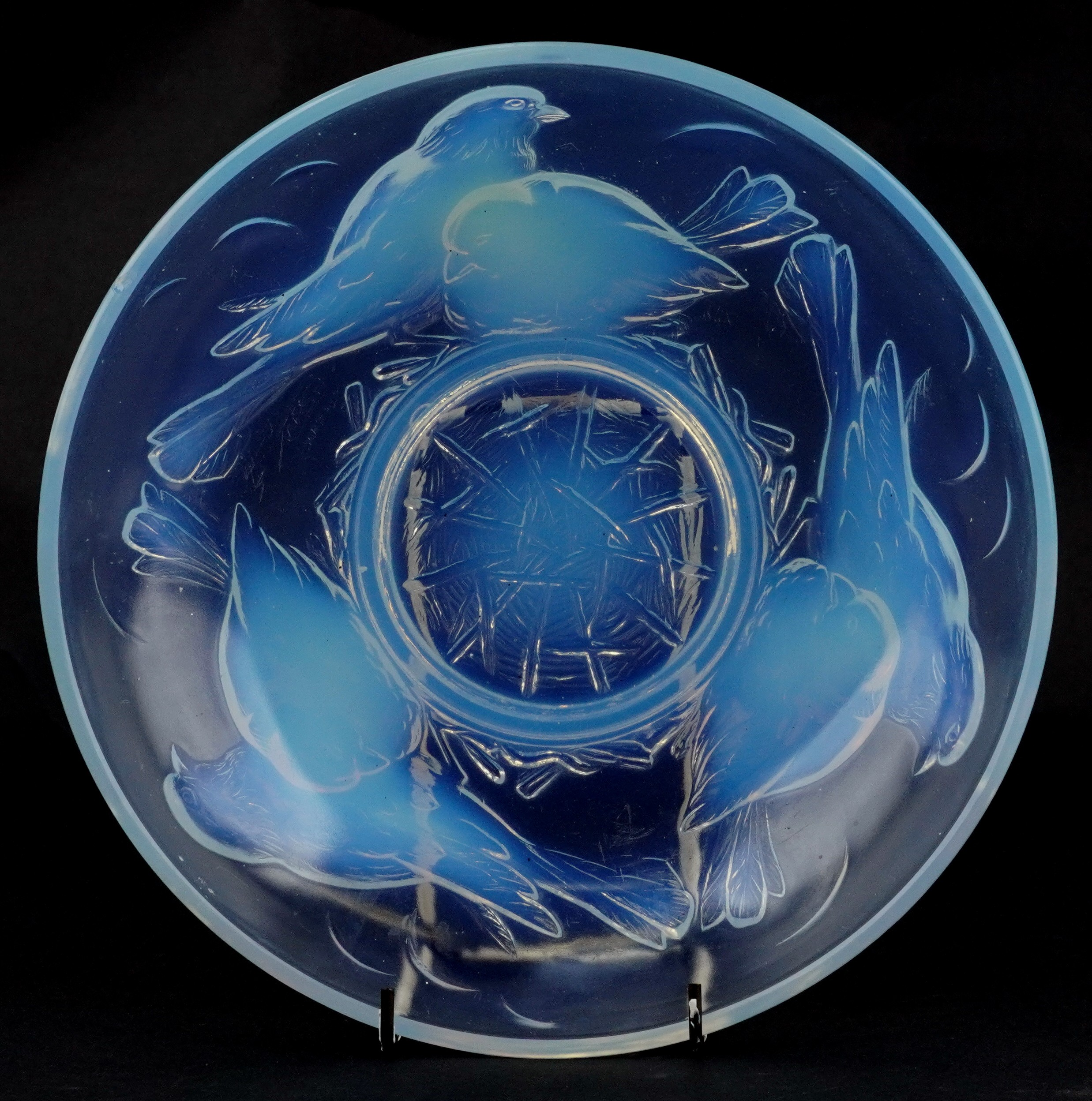
Primary live lot today
An Ezan France opalescent pressed glass bowl decorated with birds, 25cm diameter, Lot 6
Auction house: Eastbourne Auctions
Estimate shown: £80 - £120
More information on the listing: five listing photographs, French opalescent pressed glass, bird relief decoration
View live lot listing
Why this lot is interesting
Ezan sits in a useful buying lane: French decorative glass with proper Art Deco atmosphere, but usually without the price gravity of a top Lalique name. That makes this bowl appealing to buyers who want sculptural relief, period mood, and a recognisable interwar look without paying purely for signature prestige.
The estimate is where it becomes genuinely attractive. At £80 to £120, Eastbourne’s lot is priced in the zone where a strong-looking bowl can still function as a decorator’s object first and a collector’s experiment second. The catch is that opalescent pressed glass can go flat surprisingly fast if the rim is bruised, the relief has been over-cleaned, or the soft glowing finish is doing all the work for a design that is only average up close.
Who buys this and why
- Art Deco glass buyers: they are looking for French interwar design language, decent mould definition, and a bowl that still feels intentional rather than merely old. They will care most about rim condition, signature area, and whether the bird decoration still has punch.
- Interior buyers: they want a centrepiece with soft, atmospheric light response and enough scale to hold a table on its own. They can live with minor age wear more easily, but only if the silhouette and glow still read cleanly in a room.
- Dealers and trade pickers: they will view it as a margin-sensitive object. For them, the lot only works if the photographs suggest honest glass and the hammer stays disciplined once fees and shipping are included.
Condition pressure points
- Rim and upper edge: opalescent bowls pick up tiny nicks that are easy to miss in flattering light. Zoom hard on the lip before assuming the softness is just finish.
- Bird relief crispness: the moulded birds should still look lively and legible. If the decoration feels blurred, the bowl can slide from collectible glass into generic decorative stock very quickly.
- Base wear: look for an honest ring of age rather than fresh-looking scratches or grinding that suggests later intervention.
- Surface clouding: soft opalescence is desirable; greasy haze, bloom, or washing damage is not. Photographs should separate glow from neglect.
- Signature or factory attribution area: if the mark is shown, read it closely; if it is not, price in the attribution gap rather than pretending it does not matter.
Comparator lots (same category)
- R. Lalique France opalescent glass bowl, “Oursins” pattern, Lot 152 — Auction house: Murray's. Useful as the premium end of the same French opalescent bowl lane, where signature, pattern recognition, and relief quality push value higher. view lot
- René Lalique “Lys” opalescent glass bowl on four feet, Lot 331 — Auction house: Burstow & Hewett. A sharper benchmark for how much buyers will pay when the design is unmistakable and the moulded form is more ambitious. view lot
UK media & culture context
This sort of bowl lands neatly in the British taste for French decorative glass that feels glamorous without becoming grand. It is closer to cocktail-cabinet, Mayfair-flat, old-magazine glamour than museum solemnity — the kind of object that still reads well in a room because it catches light, not because it demands a lecture first.
- V&A: Objects of beauty — Art Nouveau glass and jewellery
- Selling Antiques: UK dealer market for antique Lalique glass
- Hickmet Fine Arts: René Lalique glass overview
Market note: no credible open UK short-term social pulse source turned up this morning that was specific enough to French opalescent glass to be worth quoting. The steadier read is the useful one: recognisable Art Deco glass continues to attract both decorative buyers and specialist collectors, but only when condition is clean enough that the glow is not masking fatigue.
Bottom line
This is a sensible decorative-arts buy if the rim is clean, the birds stay crisp under zoom, and the glass reads as opalescent rather than tired. If the photographs hide edge damage or washed-out relief, the charm drops faster than the estimate suggests. A sharp example has room at Eastbourne’s guide; a soft one is just paying for mood.
Editorial analysis for educational purposes only. Final bidding decisions, fees, tax, shipping, and contract terms are handled by the auction house.