
Daily Deep Dive · 07 Apr 2026 · Ceramics
Lot Spotlight: Charles Vyse’s ‘The Daffodil Woman’ and why the best British studio pottery still feels like a scene, not just a figure
Some studio pottery is really about glaze and shape. Charles Vyse is different: the figure has to hold together as theatre, social history, and object. Swan Fine Art’s postponed 8 April sale includes The Daffodil Woman, a vividly painted street-seller model with five useful photographs. That is enough to ask the important question before bidding: are you looking at a lively Chelsea figure with proper presence, or a charming story that starts to wobble once you inspect petals, paint, and plinth arrangement closely?
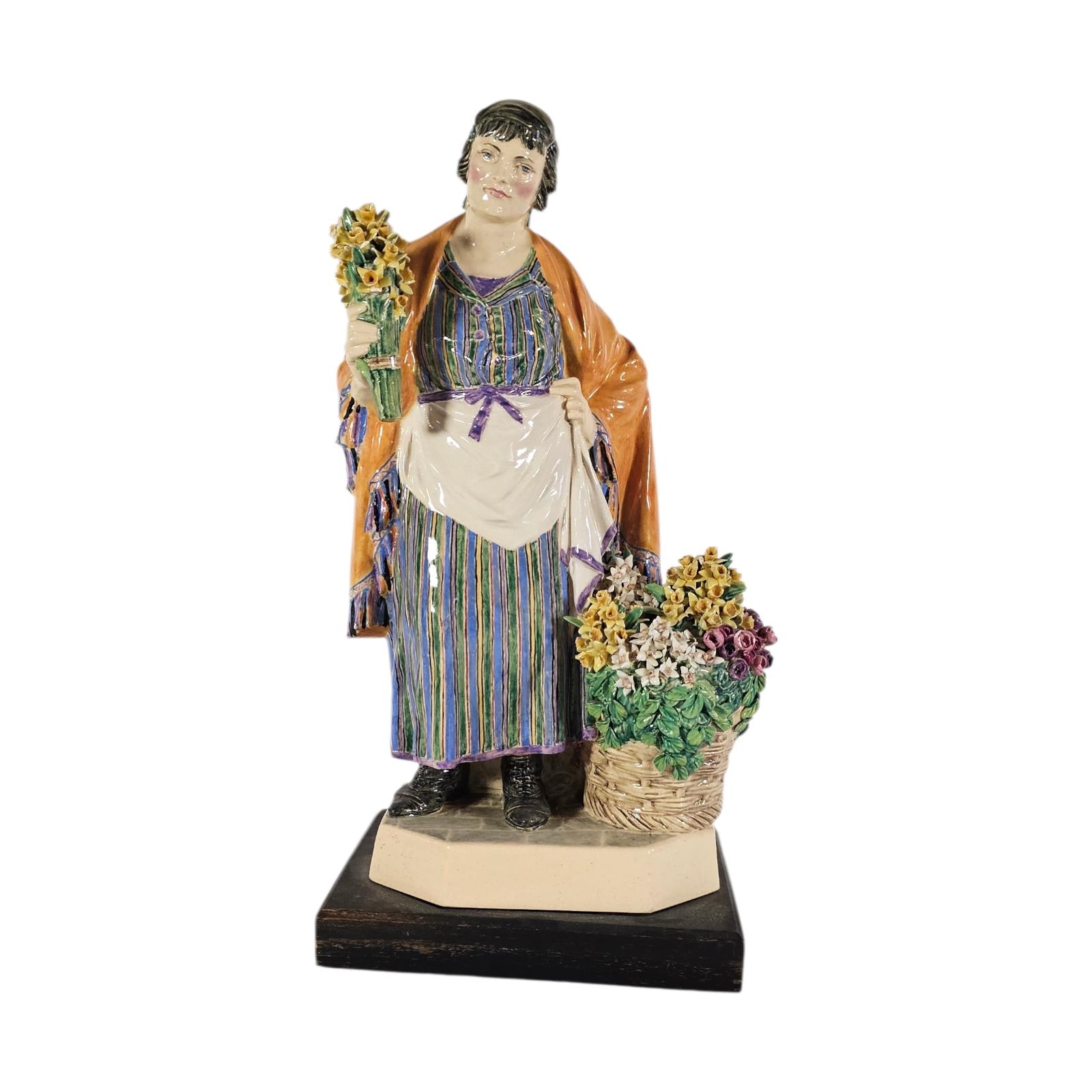
Primary live lot today
Charles Vyse, 1882–1971, ‘The Daffodil Woman’, studio pottery figurine
Auction house: Swan Fine Art
Sale timing shown: Postponed until Wed 8 Apr 2026, 12pm BST
Estimate shown: £200 - £400
Listing detail: five photographs; striped dress and ochre shawl; basket of spring flowers; approx. 28cm including plinth; condition noted as good overall with very slight loss to petals
View live lot listing
Why this lot is interesting
Vyse’s best-known figures land in a lane that is very British and still oddly undervalued when compared with louder names: part London street type, part early-20th-century studio experiment, part domestic sculpture. That mix matters. You are not just buying a decorative pottery woman with flowers. You are buying a figure built around character and observation, which is exactly why weak colour, damaged petals, or a fussy plinth can drain the life out of it so quickly.
This example has enough in its favour to merit attention. The modelling of the shawl and striped dress reads cleanly, the flower basket gives the composition an extra beat rather than clutter, and Swan’s estimate still leaves room for buyers who genuinely want an English studio figure with narrative force rather than a generic mantelpiece ornament. The attraction is strongest if the paint remains fresh and the figure still looks like a street seller caught mid-cry rather than a static ceramic costume study.
What to inspect in the photos
- Petals and flower heads: the listing already notes very slight loss to petals, so zoom every bloom rather than treating that line as routine. Losses are common here, but they still matter to the figure’s energy.
- Hands, basket edge, and projecting details: these are the places most likely to have tiny chips, nicks, or old overpaint on a figural pottery model.
- Face and glaze liveliness: the expression has to survive close inspection. If the face looks dull or over-cleaned, the whole figure becomes more decorative than compelling.
- Base-to-plinth relationship: mounted figures can be fine, but you want the join to feel stable and sympathetic rather than like a later attempt to make a modest figure look grander.
- Colour balance: the striped dress, ochre shawl, and yellow daffodils should feel deliberate together. If one area has faded or dulled badly, the composition can go from witty to weary fast.
Who buys this and why
- British studio pottery collectors: they want named makers, recognisable subject types, and enough image coverage to assess whether the figure keeps its personality under scrutiny.
- Decorative-arts buyers: they are drawn to colour, silhouette, and narrative. For them, the figure works if it still reads from across the room and does not collapse into fussy detail up close.
- Dealers: they will care about how honestly the petal wear is shown, whether the plinth is a help or a hindrance, and whether the estimate still leaves room after premium and shipping.
Comparator lots (adjacent sculptural-pottery lane)
- Two Pottery Sculptures Handmade in Wales by Frederick Pridham — Auction house: Jones & Llewelyn Auctioneers. Not a direct Vyse comparison, but a useful reminder of how the market prices handmade British sculptural pottery when character and modelling do the heavy lifting. view lot
- A studio pottery abstract derrière — Auction house: Arthur Johnson & Sons. A more playful sculptural benchmark showing how much of this market depends on form, finish, and whether the joke or character survives first glance. view lot
- Charles Vyse, ‘The Daffodil Woman’ — Auction house context: Swan Fine Art. The current live lot is itself the cleanest reference point because the five-photo set is strong enough to let buyers judge narrative figure, glaze freshness, and petal survival together. view lot
UK media & culture context
This figure sits somewhere between London street-cries history, old British character acting, and the sort of observant social detail that stops a ceramic figure from becoming merely quaint. It is closer to The Singing Detective-era mood, interwar theatre costume, or a flower seller drifting through a London Museum print than to polished Deco glamour. That is the charm: you are buying a type from British urban memory, not a salon beauty.
- London Museum: the calls of London’s historic street traders
- London Museum: flower sellers in London street life
- V&A: studio pottery — an introduction
- Fellows: Charles and Nell Vyse overview
Market note: open UK social chatter specific to Charles Vyse was too thin to quote responsibly this morning. The steadier read is enough: named British studio pottery with personality still attracts attention, but condition and visual conviction do more work than maker name alone at this estimate level.
Bottom line
This is a persuasive live lot if the petal losses stay truly slight, the painted face remains lively, and the plinth arrangement feels stable rather than compensatory. If the flowers are more fragile than the listing suggests, or the colour has gone flat in person, the figure becomes much less special very quickly. Bid for the character and glaze together, not for the maker name on its own.
Editorial analysis for educational purposes only. Final bidding decisions, fees, tax, shipping, and contract terms are handled by the auction house.