
Daily Deep Dive · 8 Apr 2026 · Furniture
Lot Spotlight: a Victor Wilkins G-Plan Fresco sideboard, and why long mid-century storage only earns a strong bid when the surfaces still look disciplined
A big G-Plan sideboard can still make a room feel instantly more self-assured, but only when the teak has depth, the handles stay sculptural rather than tired, and the long top has not been slowly defeated by plant pots, speakers, and decades of keys. Bourne End Auction Rooms has listed a 213cm Fresco sideboard attributed to Victor Wilkins with six useful photographs and a £300–£400 estimate. That is enough to make this a proper furniture buy rather than a nostalgia buy.
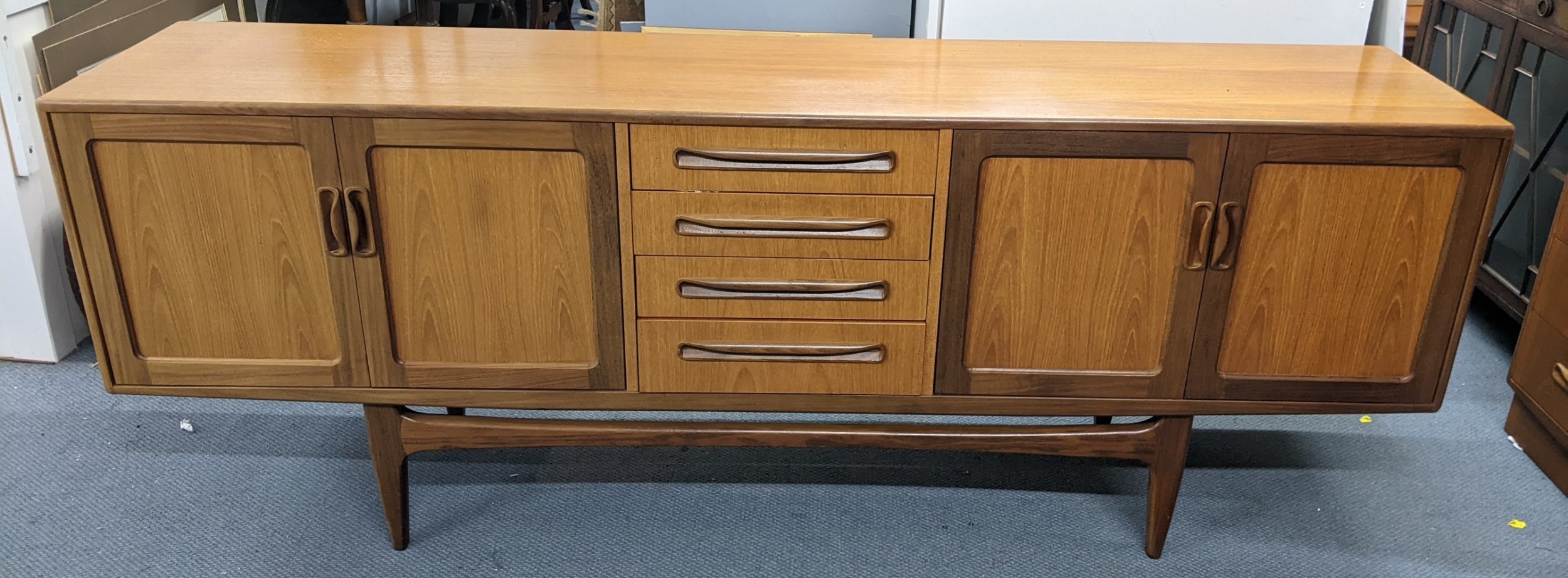
Primary live lot today
G-Plan Fresco mid-20th-century teak sideboard designed by Victor Wilkins
Auction house: Bourne End Auction Rooms Ltd
Sale timing shown: Wed 8 Apr 2026, 10:30am BST
Estimate shown: £300 - £400
Listing detail: approx. 79cm high x 213cm wide; six catalogue photographs; long low sideboard format with central drawer bank and flanking cupboards; location noted as RWB
View live lot listing
Why this lot is interesting
Good Fresco pieces sit in a very specific British lane: modern enough to feel lighter than old sideboards, but warm enough not to look like office furniture wearing a vintage badge. Victor Wilkins understood that balance. The reason buyers still chase these long cabinets is not just the name on the back; it is the mix of architectural length, softened edges, and handles that do just enough design work without turning theatrical.
This particular lot is interesting because the estimate leaves room for a buyer who wants a genuinely usable piece, not a shrine to mid-century branding. At 213cm wide it has the scale collectors and interiors buyers actually want, and the photograph set is good enough to start asking the important questions: is the teak top still even, do the drawer fronts line up cleanly, and do the handles still read sharply enough to justify paying for Fresco rather than any anonymous teak sideboard of the period?
Condition pressure points
- The long top first: on a sideboard this size, ring marks, sun fade, edge nibbles, and old heat damage matter more than buyers admit. One tired top can flatten the whole object.
- Handle crispness: Fresco handles are part of the appeal. If they are chipped, softened by repair, or visibly darker from uneven refinishing, the piece loses some of its point.
- Door alignment and hinge strain: flanking cupboard doors should sit evenly. Droop, twisting, or awkward spacing can signal harder use or later adjustment.
- Drawer action and interiors: central drawers need to open straight and look honest inside. Buyers should want clean runners, no crude replacement knobs, and no unpleasant surprises from liner paper or damp smells.
- Base and lower edges: vacuum knocks, veneer chips, and past moves tend to show low down. That is where smart buyers often find the real wear story.
Who buys this and why
- Mid-century furniture collectors: they want named British design with recognisable proportions and enough photographic evidence to judge whether the piece is still more design object than storage unit.
- Interior buyers furnishing one key wall: they are buying length, calm visual rhythm, and practical storage. For them, the top condition matters almost as much as the maker.
- Dealers and trade buyers: they will be doing fast maths on veneer work, transport, and whether the estimate still leaves enough margin after buyer’s premium and cleanup.
Comparator lots (same buying lane)
- A G Plan Fresco teak highboard sideboard, 188cm wide — Auction house: Bamfords Auctioneers & Valuers. Useful because it shows how the market prices the taller, slightly more upright version of the same family when the estimate is notably lower. view lot
- A G-Plan sideboard raised on tapering supports — Auction house: Minster Auctions. Not as glamorous a catalogue line, but useful because the note about veneer peeling is exactly the sort of honesty that helps buyers triangulate restoration risk against price. view lot
- A G Plan E Gomme cocktail sideboard enclosing five drawers, drop-down section and glass sliding doors — Auction house: Ashley Waller Ltd. A more feature-heavy comparison showing how bar fittings and display elements can change the pricing lane even when the G-Plan badge is familiar. view lot
UK media & culture context
Fresco-era G-Plan sits right in the British domestic shift from post-war utility to aspirational modern living: teak, lower profiles, longer lines, and enough Scandinavian influence to make suburban rooms feel more cosmopolitan without frightening buyers who still wanted practicality. In cultural terms, this is the furniture equivalent of a smarter 1960s living room set on British television: sideboard, drinks space, ceramics on top, records nearby, and the quiet suggestion that the house has moved on from ration-book austerity.
- V&A: post-war design in Britain
- V&A: Britain Can Make It and the move from utility to modern consumer design
- Old Creamery Furniture: the story behind G Plan furniture
- Retro Vintage Online: Victor Wilkins and the Fresco range
Bottom line
This is the sort of sideboard that makes sense if you want real length, real usability, and the calmer end of British mid-century design rather than a loud one-line statement piece. The estimate is not silly, but the margin for error sits in the surfaces: if the top is tired, the veneer chipped, or the doors fighting their openings, the glamour drains fast. If the teak stays rich and the cabinet lines remain disciplined, Bourne End’s lot has the makings of a very sensible bid.
Editorial analysis for educational purposes only. Final bidding decisions, fees, tax, shipping, and contract terms are handled by the auction house.