
Daily Deep Dive · 16 Apr 2026 · Jewellery
Lot Spotlight: a Victorian-style ruby and diamond three-stone ring (Lot 26C), and why the word “style” is doing most of the work here
This ring is attractive because it knows the part it wants to play. London Auctions has a live Victorian-style ruby and diamond three-stone ring with four clear photographs, pierced scrollwork, and enough detail to make this a practical buying exercise in period taste rather than a blind leap into antique romance. The key question is not whether it looks charming for three seconds on screen. It is whether the rubies match well enough, the engraving stays crisp enough, and the mount feels convincingly made enough to justify bidding without an age guarantee doing the heavy lifting.
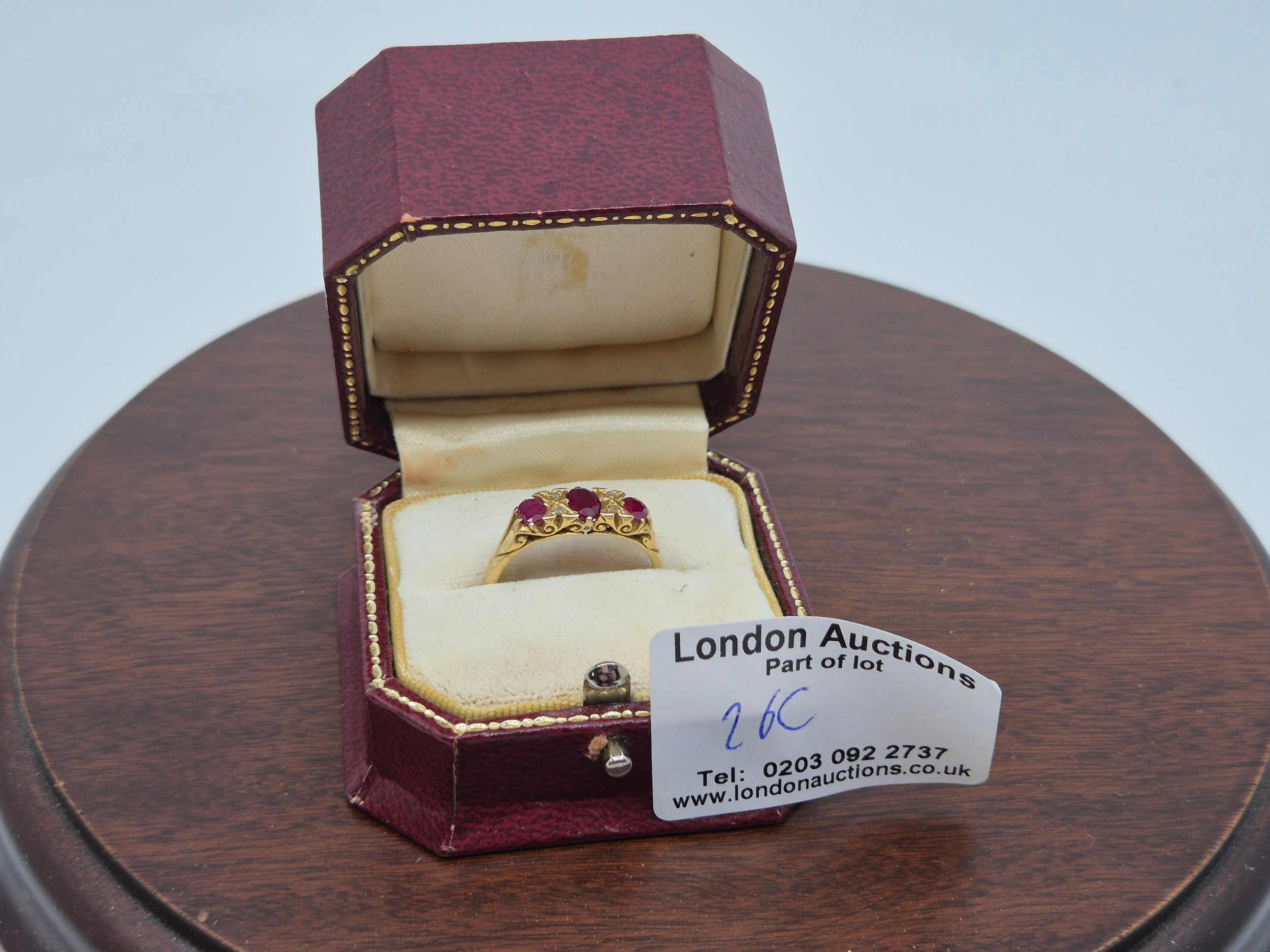
Primary live lot today
Victorian-style 18ct yellow gold three-stone ruby and diamond ring, Lot 26C
Auction house: London Auctions
View live lot listing
Estimate: No estimate published
Auction date in listing: 20 Apr 2026
Why this lot is interesting
The useful thing here is the catalogue’s honesty. It does not call the ring Victorian. It calls it Victorian-style, which puts buyers in a better frame of mind immediately. That wording shifts the decision away from fantasy provenance and back onto the object itself: ruby colour, diamond support, mount quality, and whether the scrollwork gallery has real finesse or just enough decorative noise to impersonate age.
Three-stone rings are an easy shape to like and an easy shape to overpay for. This one works because the design has a recognisable late-19th-century flavour without pretending that flavour alone settles value. It sits in the same emotional lane as the sort of ring British period dramas like to slip onto a hand in a close-up, but buyers should treat it less like costume magic and more like a small engineered object that has to earn confidence from the top, side, and shank views.
Who buys this and why
- Romantic private buyers: they want a coloured-stone ring with antique mood and a more individual look than a plain modern solitaire.
- Secondary-market jewellery buyers: they like auction-room rings that offer precious metal, wearable scale, and decorative detail without Bond Street retail pricing.
- Dealers and resellers: they will see this as a style-led stock piece, but only if the rubies read lively in hand and the mount stays crisp under magnification.
Where the risk sits
- Ruby match: the three stones need to feel like a family. Look for mismatched tone, windowing, dead patches, or one central stone doing all the visual work.
- Diamond accents: the small diamonds between the rubies are there to sharpen the outline. Check that they still look bright and evenly set rather than tired or swallowed by wear.
- Mount crispness: the pierced and engraved scrollwork is part of the appeal. Soft edges, heavy polishing, or messy later repair work will flatten the whole point of the design.
- Shank and sizing: a finger size R is useful, but inspect for thinning, solder lines, or evidence of hard resizing that may have disturbed the shoulders.
- Period honesty: “Victorian-style” is a design cue, not a date. If true age matters to you, ask for hallmarks, close-ups, and any available condition report before bidding.
Comparator lots
These comparators are not identical twins, but they sit in the same live bidding lane: small precious-metal dress rings in the same London Auctions sale, where buyers are deciding between colour, layout, and how much decorative character they want per pound spent.
- Vintage 18ct gold and platinum sapphire and diamond three-stone ring, Lot 26A — Auction house: London Auctions. No estimate published. A cleaner, cooler three-stone alternative if you prefer a more restrained head and less scrollwork theatre. view lot
- 11ct yellow gold emerald and diamond cluster ring, Lot 25 — Auction house: London Auctions. No estimate published. More cluster than line, so the decision shifts toward face-up sparkle and emerald colour rather than the classic three-stone silhouette. view lot
- 18ct yellow and white gold seven-stone diamond half-eternity ring, Lot 26 — Auction house: London Auctions. No estimate published. A plainer diamond-led option for buyers who want wearable value without paying for coloured stones or historical styling cues. view lot
UK media & culture context
Britain still buys rings with story attached. That does not always mean strict antique purity. Quite often it means a ring that borrows the right cues, old-cut atmosphere, scroll engraving, yellow gold warmth, coloured stones, and a shape that feels inherited even when the date is less secure than the mood. That is why catalogue wording matters so much here. A style-led ring can still be a good buy, but only if the object is carrying the romance rather than the buyer doing it for free.
- Country Life, “How to buy an engagement ring at auction” — useful British auction-buying context on why individuality and coloured stones keep attracting ring buyers.
- Country Life, “Jewellery designers are united in their love for colourful gemstones” — a current reminder that colour is still a live part of the buying conversation, not a niche detour.
- Hancocks London ruby and diamond three-stone ring — not a comparator for price, but a sharp London trade reference for how the three-stone ruby format is presented at the top end of the market.
Bottom line
This is a sensible ring for buyers who want period flavour without demanding museum certainty. The layout is attractive, the scrollwork gives it personality, and the listing photography is good enough to make a measured decision. Bid if you like the stones, the mount still looks crisp, and you are happy treating “Victorian-style” as design language rather than a promise. If you need hard period assurance, stronger ruby evidence, or a published estimate to anchor your nerve, let somebody else buy the mood.
Editorial analysis for educational purposes only. Final bidding decisions, fees, tax, shipping, collection, condition verification, gemstone treatment disclosure, sizing, and contract terms are handled by the auction house.