
Daily Deep Dive · 17 Apr 2026 · Ceramics
Lot Spotlight: a Beswick huntsman, four foxhounds, and a fox, and why this sporting shelf piece only works if the group still reads as a whole
Single Beswick horses can be easy buys. This TW Gaze group is trickier, and better for it. Lot 1400 turns one rearing huntsman, four foxhounds, and a fox into a little piece of British sporting theatre, but the appeal only holds if the gloss stays fresh enough, the paint remains consistent enough, and the different models still look like they belong in the same room rather than in a dealer's leftover tray assembled five minutes before cataloguing.
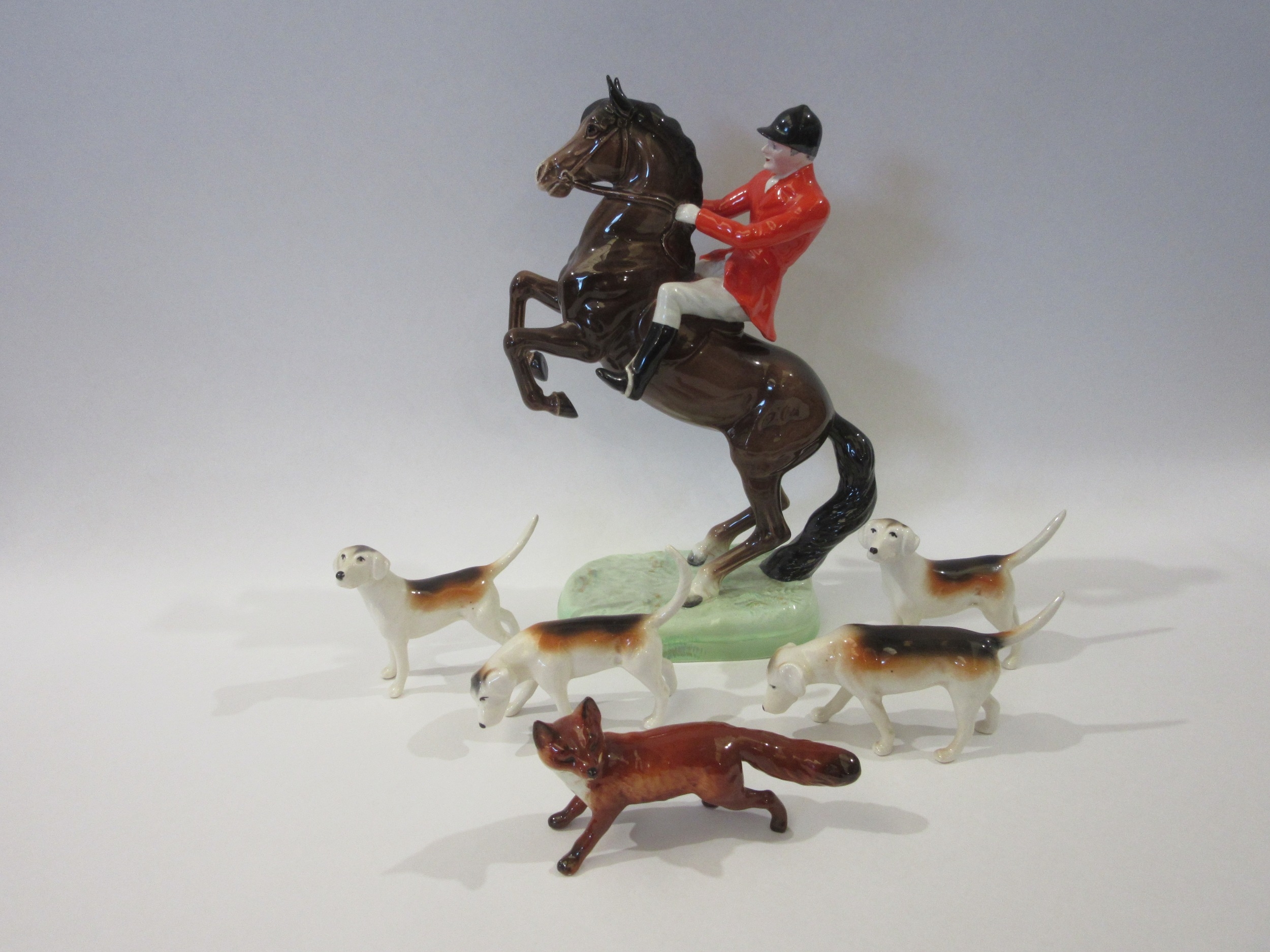
Primary live lot today
Beswick huntsman on rearing horse, model 868, with four Beswick foxhounds and a Beswick fox, model 1440, Lot 1400
Auction house: TW Gaze
View live lot listing
Estimate: £80 - £120
Auction date in listing: 17 Apr 2026
Why this lot is interesting
Beswick made animal figures by the thousand, but not every multi-piece sporting group earns the same kind of attention. This one has a real internal logic. The rearing huntsman supplies height and drama, the hounds give the lot rhythm across the shelf, and the fox stops the whole thing feeling like five unrelated animal models that happen to share a maker. That is why the estimate is live. A buyer is not just paying for six ceramic objects. They are paying for a display idea that either hangs together instantly or falls apart just as fast.
There is also a useful Britishness to the thing. Beswick figures sit somewhere between Staffordshire pottery manufacture and country-house fantasy, which is exactly why they still attract two very different buyers: people who care about model numbers and glaze, and people who simply want the room to feel a bit more hunt-ball, library, or boot-room than it did before. The photographs on this listing are strong enough to make that judgement practical rather than romantic.
Who buys this and why
- Beswick collectors: they will want model clarity, gloss consistency, and enough condition confidence to justify buying a grouped lot instead of cherry-picking single animals elsewhere.
- Sporting and country-house decorators: they are buying the tableau, not just the ceramics, and want a shelf or mantelpiece group that reads quickly and cleanly from across the room.
- Dealers: they may see break-up value in the horse and hounds, but only if the paint is fresh, the figures are free from obvious repairs, and the fox is not merely there to bulk out the count.
Condition pressure points
- Gloss and paint match: the horse, hounds, and fox do not need identical ageing, but they do need to feel visually compatible. If one figure looks over-cleaned, dull, or heavily crazed against the others, the group loses authority.
- Ears, tails, and legs: Beswick animal figures suffer most at the extremities. Look hard at the horse's forelegs, hound tails, ears, and the fox's finer points for chips, clean breaks, or oversprayed repair.
- Model numbers and marks: serious buyers will want underside photographs or confirmation where possible. The catalogue names model 868 and model 1440, which is useful, but marks and impressed numbers still matter if you care about confidence rather than just display.
- Scale and coherence: grouped lots live or die on whether the different figures feel intentionally assembled. Check that the hounds are not wildly mixed in stance, finish, or scale to the point that the huntsman starts looking stranded.
- Base wear: shelf wear is expected. What you do not want is grinding, filler, or fresh felt hiding an old crack or a restored foot rim.
Comparator lots
These comparators stay in the same collecting lane: live Beswick animal models from the same TW Gaze sale, useful for judging whether you want the theatrical grouped lot, a single headline horse, or a simpler buyer entry point.
- Beswick Arab Stallion "Bahram", model 1771, Lot 1401 — Auction house: TW Gaze. Estimate £60 - £90. A cleaner single-model buy if you prefer one strong horse rather than the management problem of a six-piece display. view lot
- Beswick Cantering Shire in grey gloss, model 975, Lot 1403 — Auction house: TW Gaze. Estimate £25 - £35. A lower-risk route into the same maker if you want scale and breed character without paying for sporting narrative. view lot
- Beswick Bois Roussel racehorse with foxhound, model H701 and model 941, Lot 1404 — Auction house: TW Gaze. Estimate £20 - £30. The bargain-end sporting alternative, useful for testing whether you want the hunting mood without stretching to the fuller huntsman group. view lot
UK media & culture context
Beswick sits in a recognisable British decorative tradition: Staffordshire ceramics made for people who wanted animals, horses, dogs, and rural theatre domesticated onto shelves and sideboards. That matters here because this lot is not really about one perfect horse. It is about whether the whole little scene still delivers the sort of sporting-country-house shorthand that British buyers have understood for generations.
- The Potteries, Beswick Pottery history — useful background on the Longton factory and why Beswick remains one of the best-known names in British ceramic animal modelling.
- Beswick Pottery on Wikipedia — a quick reference on the firm's Longton history, its shift into animal modelling, and the collector market that still surrounds the brand.
- V&A collections search: Staffordshire figures — a useful museum-side reminder that ceramic animal and figure display sits inside a longer British Staffordshire tradition, not just a mid-century brand story.
Bottom line
This is a good lot for buyers who want Beswick with a bit of staging and not just a single respectable horse. The estimate is still modest, the image quality is strong, and the group has enough presence to justify proper scrutiny. Bid if the gloss looks even, the extremities look clean, and you genuinely want the whole tableau. If you only really love one figure, buy a single-model lot instead and leave this one for someone who wants the shelf to tell the full story.
Editorial analysis for educational purposes only. Final bidding decisions, fees, tax, shipping, collection, condition verification, authenticity, restoration disclosure, and contract terms are handled by the auction house.