
Daily Deep Dive · 20 Apr 2026 · Furniture
Lot Spotlight: an Omann Danish wall-unit sideboard, and why the drinks cupboard only helps if the whole cabinet still feels taut
This is exactly the sort of furniture lot that looks cooler from ten feet away than it can prove at arm’s length. John Goodwin’s Lot 697 is a compact late-century Omann wall unit with a double-door cupboard, open shelves, and a drinks section, so the buying case is not about generic Danish good taste. It is about whether the long vertical lines still read straight, the doors still sit cleanly, and the cabinet has enough discipline left in it to feel like proper mid-century storage rather than a useful survivor wearing the right accent.
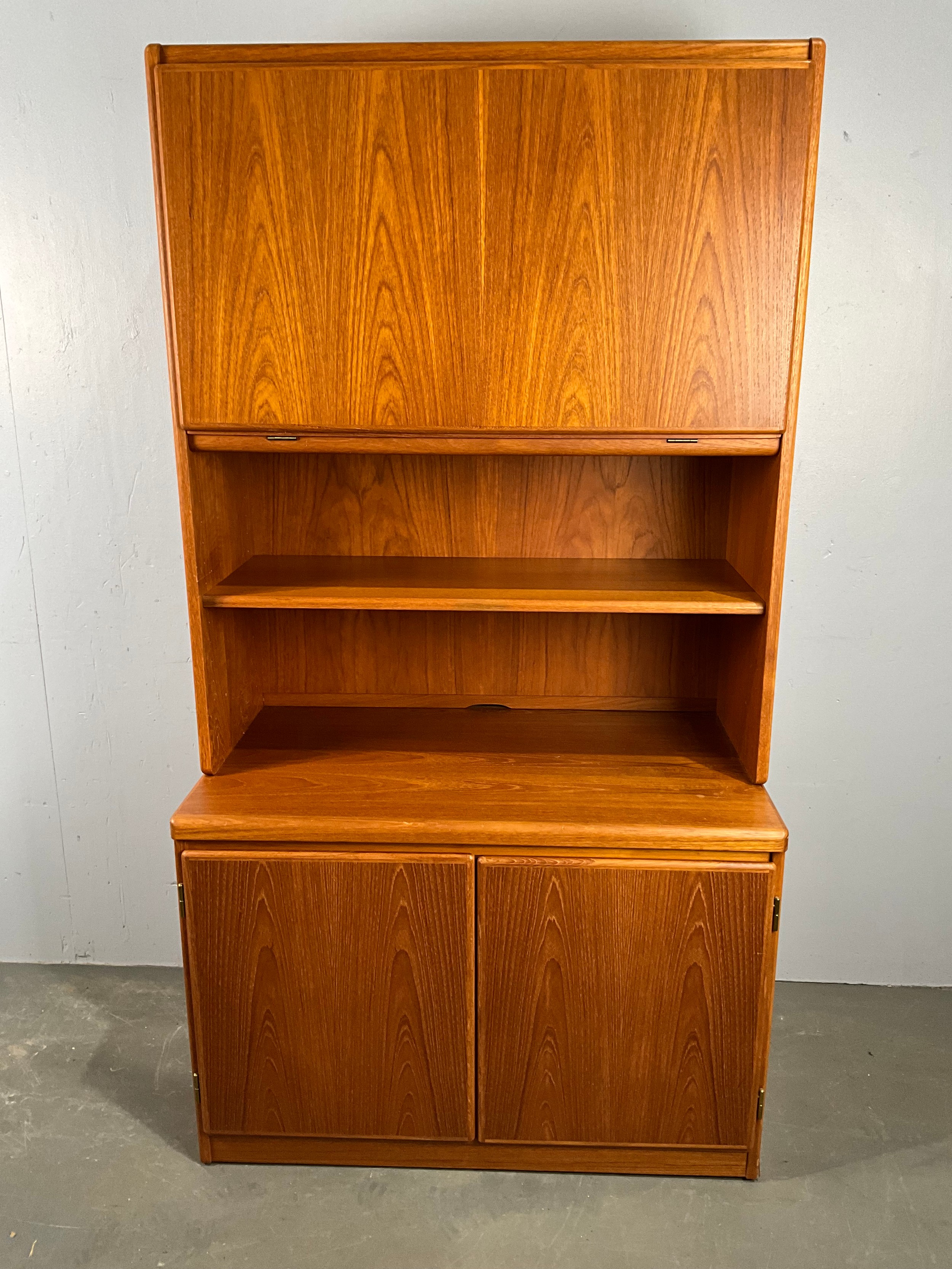
Primary live lot today
Omann Danish Design late-century sideboard wall unit with double-door cupboard, shelves, and drink cabinet, Lot 697
Auction house: John Goodwin
View live lot listing
Estimate: £20 - £100
Auction date in listing: 22 Apr 2026
Catalogue dimensions: 90cm wide, 168cm tall
Why this lot is interesting
There is a real buyer lane for narrow Scandinavian storage because British rooms are rarely as generous as the magazines pretend. At 90cm wide, this Omann piece offers the sort of vertical storage that can slip into a flat, dining corner, or study wall without asking for a full sideboard footprint. That makes the estimate feel live. Buyers are not competing for rarity theatre here. They are competing for proportion, utility, and the quiet status that good Danish cabinetry still carries when the lines remain crisp.
The drinks cupboard matters too, but only as a bonus. Mid-century storage gets over-praised when a bottle compartment appears, as if one charming detail can forgive a tired carcass. It cannot. What you want from the photographs is not just a pleasing teak tone. You want evidence that the cabinet doors close square, the shelves are not sagging, and the whole unit still has the visual tension that makes Danish case furniture feel deliberate rather than merely old.
Who buys this and why
- Mid-century interior buyers: they are buying a room-solving piece with a small footprint, and will care most about whether the unit still looks calm, balanced, and ready to live with.
- Dealers and pickers: they will see value in the Omann name and the useful proportions, but only if the cabinet is structurally straight enough that restoration does not eat the margin.
- Private buyers furnishing flats or studies: they may be less concerned with maker hierarchy and more interested in getting real storage with better lines than most reproduction furniture offers at the same money.
Where the risk sits
- Door alignment and gaps: check whether the double doors sit square and with even margins. Twisted carcasses and tired hinges make narrow cabinets look nervous very quickly.
- Shelf bowing and support holes: open shelving is honest. Look for sag, enlarged support points, or replacement pegs that suggest the weight-bearing bits have had a harder life than the catalogue copy implies.
- Teak surface tone: you want a consistent finish, not one panel sun-faded and another freshly wiped. Uneven colour can mean patchy refinishing or years of lopsided display.
- Base and plinth wear: the lower edges of storage furniture usually tell the truth. Watch for water bloom, scuffing, veneer losses, and dark bruising near the floor.
- Drinks section practicality: make sure the interior layout still works as intended. Missing shelf hardware or loose fitments turn a selling point into clutter.
Comparator lots
These stay in the same storage lane from the same John Goodwin sale. They are useful because all three ask the same question in different accents: do you want disciplined mid-century utility, cheaper lookalike practicality, or a more decorative traditional sideboard that brings bulk and labour with it?
- Omann Danish Design late-century wall unit with four-drawer base and glazed cupboard above, Lot 696 — Auction house: John Goodwin. Estimate £20 - £100. The nearest comparator by maker and footprint, but the glazed upper section asks for cleaner presentation and more tolerance for visual busyness. view lot
- Stag style sideboard / cabinet, Lot 701 — Auction house: John Goodwin. Estimate £10 - £40. The budget route if you want useful storage and the general mid-century mood without paying for Danish attribution or the more elegant proportions. view lot
- Edwardian mirror back sideboard, Lot 691 — Auction house: John Goodwin. Estimate £30 - £50. A reminder that the same money can buy far more timber and ornament, but also far more scale, transport grief, and polishing obligation. view lot
UK media & culture context
Danish storage furniture still lands well in Britain because it solves a very British problem: how to make modest rooms feel ordered without filling them with heavy brown bulk. This lot sits in that lane. It is the kind of compact teak piece that works when the room wants calm rather than statement, and the British design press still treats Scandinavian restraint as shorthand for grown-up taste rather than austere theory.
- House & Garden, “What defines Scandinavian design and why are we so fascinated by it?” — a useful UK interiors reference for why clean-lined timber furniture still reads as warm rather than severe in British rooms.
- V&A collections search: sideboards — a museum reminder that storage furniture is judged as much by silhouette and proportion as by pure usefulness.
- Omann Jun Møbelfabrik on Wikipedia — a quick maker reference for bidders who want to place the Omann name before deciding whether the attribution deserves a premium.
- No credible UK social or market-pulse source added anything sharper today than the design and museum references above, so the better move is to stay with the object and the photographs.
Bottom line
This is a good furniture lot because it is modest, usable, and still visually ambitious enough to separate itself from ordinary second-hand storage. The estimate leaves room for a sensible bid, but only if the cabinet stays square and the surfaces look honest. If the photos still persuade you after you have stared at the door lines, shelf levels, and base wear, this is exactly the sort of mid-century buy that can make a room feel better without turning the room into a museum set.
Editorial analysis for educational purposes only. Final bidding decisions, fees, tax, shipping, collection, condition verification, authenticity, restoration disclosure, and contract terms are handled by the auction house.