
Daily Deep Dive · 21 Apr 2026 · Ceramics
Lot Spotlight: a Royal Doulton Long John Silver charger, and why storyware only lands when the wall piece still feels bold from the doorway
Some ceramic lots are about glaze finesse. This one is about instant theatre. House & Son Auctioneers & Valuers has a 16-inch Royal Doulton Long John Silver charger in today’s live sale, and the appeal is obvious the second you see it: big sailor figure, swaggering pose, and exactly the sort of literary subject that can make a hallway or study feel more entertaining. The harder question is whether the printed scene, rim, and overall punch still look crisp enough to justify hanging a piece of storyware rather than merely owning another bit of pirate memorabilia.
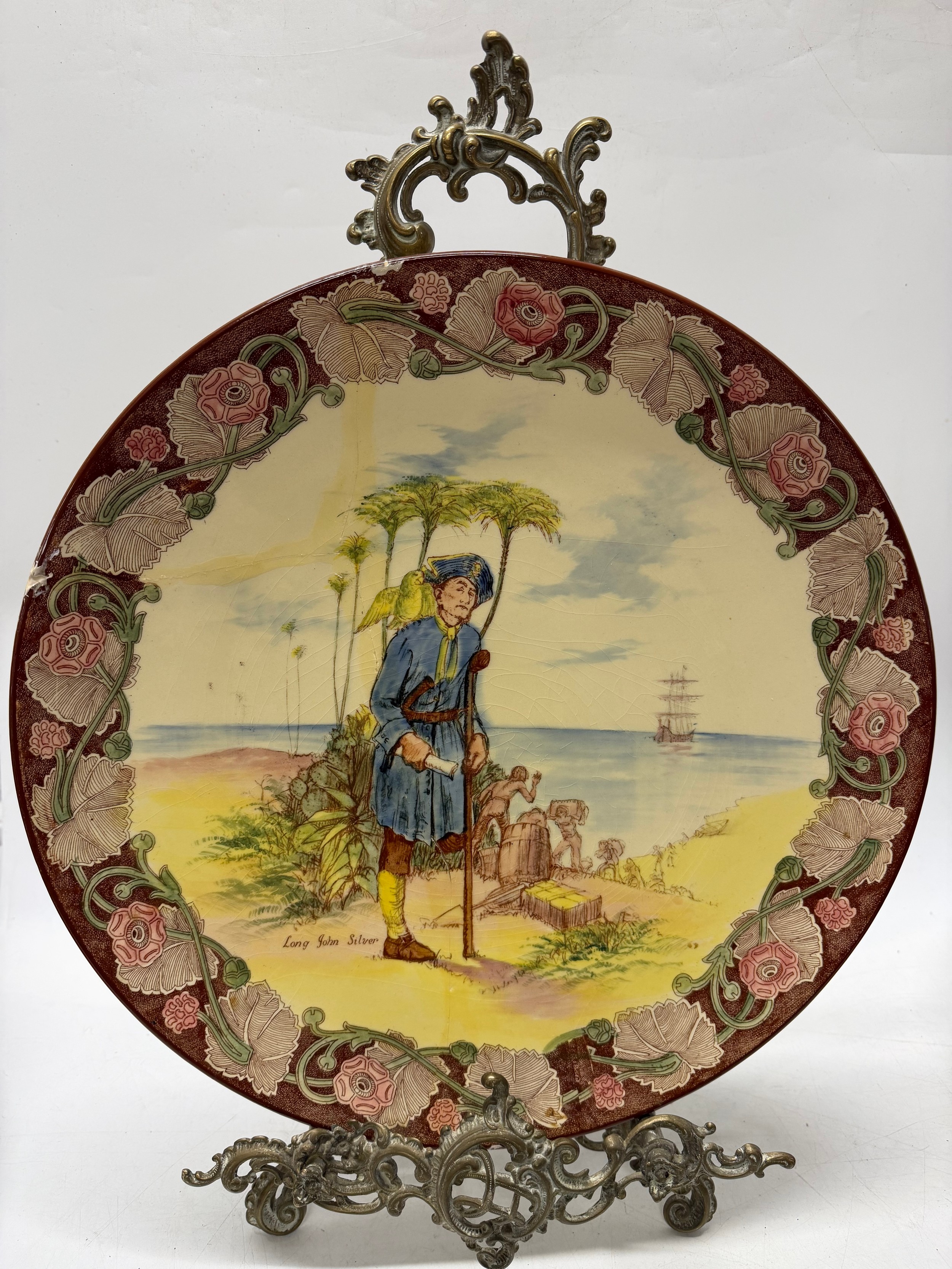
Primary live lot today
A Royal Doulton charger, “Long John Silver”, Lot 178
Auction house: House & Son Auctioneers & Valuers
View live lot listing
Estimate: No estimate published
Auction date in listing: 21 Apr 2026
Catalogue dimensions: 16in diameter
Why this lot is interesting
The collecting lane here is broader than Royal Doulton completists. Chargers with strong narrative subjects are bought by readers, pub-room decorators, and sellers who understand that a wall piece has to perform at a glance. Long John Silver does that job unusually well because the subject is legible even across a room. You do not need specialist knowledge to understand what the plate is trying to sell.
That broad appeal is also the risk. Storyware can become sentimental clutter very quickly when the print goes soft, the rim loses authority, or the hanger logic looks improvised. This charger works best if it still has the graphic confidence of a proper display piece, not just the comfort of a familiar Stevenson character. If the image still reads cleanly from the doorway, the lack of estimate is less worrying than it first appears.
Who buys this and why
- Royal Doulton and seriesware collectors: they are buying subject matter, factory recognition, and the pleasure of a piece that can still hold a wall on its own.
- Interior buyers dressing libraries, studies, and bars: they care less about catalogue taxonomy and more about whether the plate has enough visual force to justify its diameter.
- Dealers in decorative ceramics: they will like the literary subject and easy read-across to Stevenson, but only if condition is strong enough that the eventual buyer does not feel they paid for narrative alone.
Condition pressure points
- Rim edge: with a plate this size, nibbles and glaze flakes usually sit at the perimeter. Look hard for tiny losses that disappear in a catalogue shot but matter when hung at eye level.
- Surface clarity: Long John Silver has to read sharply. If the transfer or painted detail looks rubbed, the whole premise weakens because the lot stops being theatrical and starts being merely old.
- Hanging practicality: the front can be excellent and the back disappointing. Ask whether there is a stable hanging point, old staple marks, or later adhesive hardware that changes how safely it can be displayed.
- Crazing and tone: a little age can be fine, but heavy crackle or discolouration across the pale ground will make the scene look tired rather than atmospheric.
- Backstamp and honesty: if additional back images are available, check whether the reverse confirms the expected Royal Doulton story cleanly instead of leaving the object to trade only on its front-facing charm.
Comparator lots
These comparators stay in the same wall-ceramics lane from the same House & Son sale. They help because the buying question is not simply “which plate is nicest?” It is whether you want strong named storyware, another Royal Doulton subject at the same scale, or a more painterly floral charger that trades literary character for decorative breadth.
- A Royal Doulton charger, “The Gleaners”, Lot 177 — Auction house: House & Son Auctioneers & Valuers. Estimate No estimate published. The closest comparator by maker and form, useful for judging whether you want a social-scene subject or the bolder single-figure drama of Long John Silver. view lot
- A Victorian pottery charger painted poppies, marked Kings Lynn, Lot 179 — Auction house: House & Son Auctioneers & Valuers. Estimate No estimate published. This is the decorative route if you want colour and wall impact without paying for a named literary subject. view lot
UK media & culture context
Long John Silver is not just a character name doing cataloguing work. In Britain he belongs to one of the best-known adventure stories in the language, which is why a charger like this can cross from pottery collecting into literary decorating so easily. The best British wall ceramics often succeed for exactly that reason: they are half object, half cultural shorthand.
- British Library, “Treasure Island” — a straightforward reminder of how fully Stevenson’s pirate world, and Long John Silver in particular, entered British visual culture.
- British Library Shop, “Map of Treasure Island, 1899” — useful context for how the novel’s imagery still circulates as a display language in its own right, not just as text.
- V&A, “Highlights from the Ceramics collection” — a good UK museum reference for why bold ceramics remain decorative statements as much as collectible objects.
- V&A, “Popular pottery” — especially relevant here because it frames British pottery as social history as well as design, which is exactly the lane this literary charger occupies.
Bottom line
This is a cheerful, saleable wall ceramic with a subject that still does real work in Britain. I would not chase it purely because Long John Silver is familiar, but I would take it seriously if the rim is clean, the front remains crisp, and the display logic is sound. In other words, bid for the plate as a room-making object, not as a pirate-themed impulse buy.
Editorial analysis for educational purposes only. Final bidding decisions, fees, tax, shipping, collection, condition verification, authenticity, restoration disclosure, and contract terms are handled by the auction house.