
Daily Deep Dive · 22 Apr 2026 · Lighting
Lot Spotlight: a Widdop Bingham & Co Tiffany-style figurine lamp, and why decorative bravado only pays if the shade and base survive close inspection
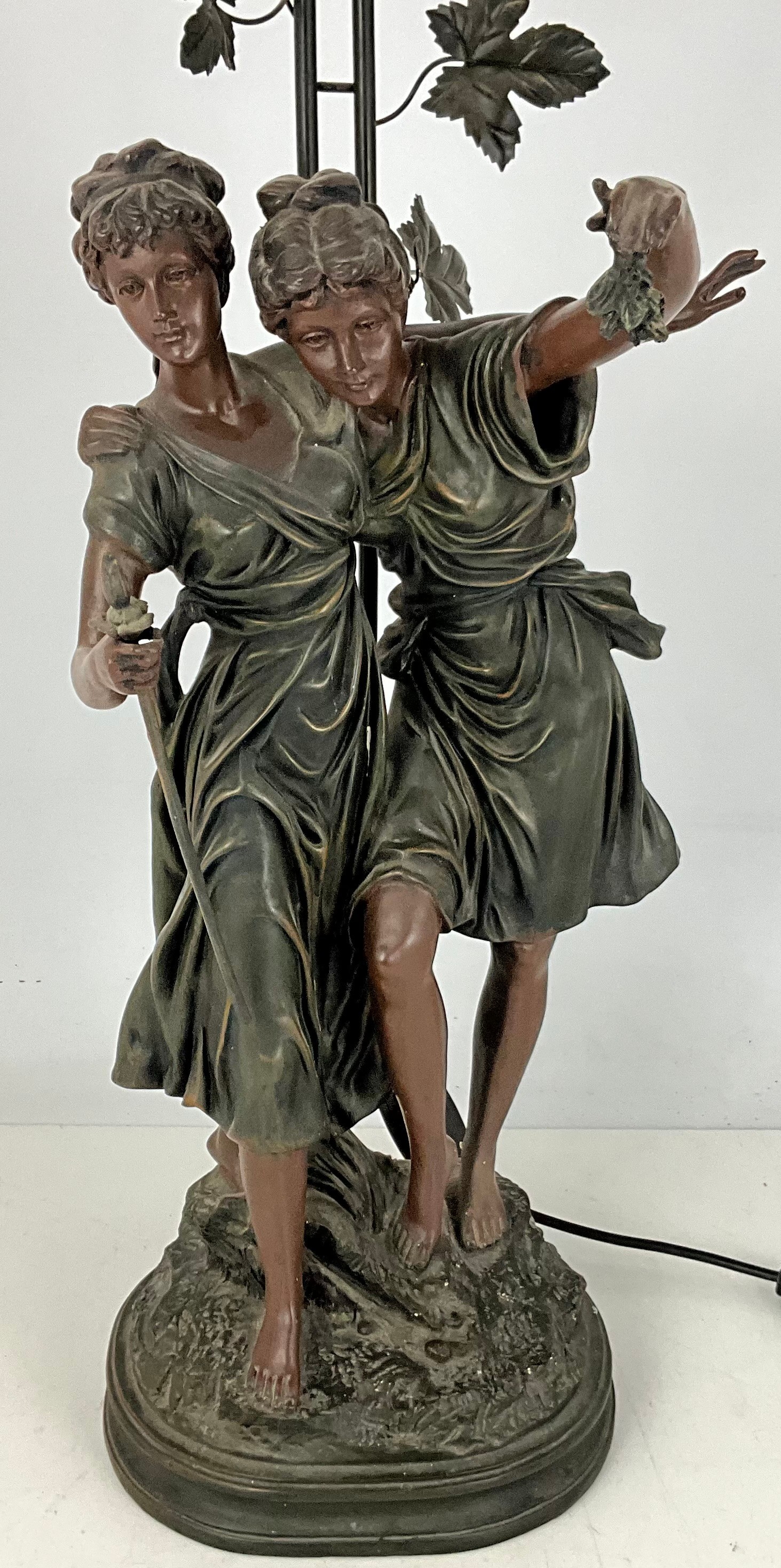
This is the sort of lamp dealers clock in a second and private buyers can easily over-romance. John Goodwin has a large Widdop Bingham & Co Tiffany-style figurine lamp, Lot 457, with two female figures supporting a stained-glass-effect shade and a stated height of about 101cm. The immediate appeal is obvious: it is theatrical, big enough to alter a corner of a room, and pitched squarely at buyers who want atmosphere rather than restraint. The harder question is whether the glass, the bronze-coloured resin compound figures, and the wiring story are convincing enough to justify bidding on an object that is selling decorative impact first and authorship a distant second.
Primary live lot today
Large Widdop Bingham & Co Tiffany-style figurine lamp featuring two female figures in a bronze-coloured resin compound, Lot 457
Auction house: John Goodwin
View live lot listing
Estimate: £50–£100
Auction date in listing: 22 Apr 2026
Catalogue note: Approx. height 101cm
Why this lot is interesting
The collecting tension here is not subtle. The phrase “Tiffany-style” pulls one way, toward stained-glass romance and Edwardian mood, while the named maker and resin-compound base pull another way, toward a later decorative object whose value sits in silhouette, size, and room effect rather than blue-chip glass history. That does not make it a bad buy. It just means the bidder needs to value it like a statement lamp with theatrical taste, not like an early-20th-century prize.
That is exactly why this lot is more interesting than a plainer reproduction. The two-figure base gives it enough swagger to work in a hallway, bar corner, or maximalist sitting room, and the 101cm height makes it substantial enough that the lamp has to earn its floor space. At £50–£100 it lives in the useful zone where a decorative buyer, prop stylist, or interiors-minded dealer can make a sensible case for it, provided the photos still support the drama when you stop admiring the idea and start checking the details.
Who buys this and why
- Interior buyers building a warmer, more layered room: they are buying coloured light, sculptural presence, and a lamp that can break up a run of safe neutral furniture.
- Dealers in decorative interiors stock: they will see resale potential if the glass reads richly, the figures feel intact, and the lamp is large enough to photograph well in a room set.
- Hospitality and set-dressing buyers: pubs, boutique lets, and stylists often want exactly this level of instant atmosphere, but only when the electrics and condition do not create a headache straight after purchase.
Where the risk sits
- Shade honesty: the shade is the whole pitch. Look for cracked panels, replaced pieces, uneven lead lines, or dead patches where the colour no longer glows but just sits there.
- Base material: the catalogue says bronze-coloured resin compound, not bronze. Check for rubbed high points, casting seams, chips to fingers or drapery, and any colour variation that makes the base feel lighter-grade in person than in the photograph.
- Join between shade and figures: flamboyant lamps often suffer exactly where the visual weight changes. Ask whether the fit at the top is firm, whether fixings are original, and whether the whole thing stands square.
- Electrics: with decorative lighting, safe wiring is worth more than seller optimism. Ask whether it has been tested, rewired, or sold strictly as a decorative item requiring inspection before use.
- Scale versus practicality: 101cm is useful, but only if the lamp still reads elegant. A big lamp that feels top-heavy or clumsy becomes a transport problem, not a room-maker.
Comparator lots
These comparators stay in the same John Goodwin lighting lane and help frame the choice properly: figurative theatre, improvised decorative conversion, or simpler period-style room lighting.
- Large spelter jug converted to a lamp, Lot 458 — Auction house: John Goodwin. Estimate £20–£40. This is the cheaper converted-object route if you like patinated drama but do not need the stained-glass shade or the overt figurative base. view lot
- Vintage French 3 branch porcelain chandelier, Lot 468 — Auction house: John Goodwin. Estimate £20–£40. Useful if your taste leans toward lighter, more obviously decorative lighting without the same material risk around a resin figure base. view lot
- Good quality mahogany standard lamp with carved base and shelf, Lot 470 — Auction house: John Goodwin. Estimate £20–£40. The traditionalist’s option: less showy, more adaptable, and a good reminder that part of Lot 457’s premium is really payment for character. view lot
UK media & culture context
British buyers do not need a museum-grade Tiffany lamp to understand the appeal here. Stained glass, coloured light, and sinuous Art Nouveau lines still land strongly in UK interiors because they soften rooms and signal craft, even when the object is a later decorative echo rather than a period masterpiece. That is why the distinction matters: you are buying the British afterlife of that taste, not pretending you have found an overlooked New York studio treasure in Worcestershire.
- V&A, “Art Nouveau” — useful for the organic line and glass-led decorative language that still makes this kind of lamp feel legible in British interiors.
- V&A, “Objects of beauty: Art Nouveau glass and jewellery” — good context for how Tiffany’s glass vocabulary became a reference point far beyond original Tiffany Studios pieces.
- The Stained Glass Museum, Ely — a practical reminder that stained glass remains a living collecting and display tradition in Britain, not just an antique-shop cliché.
- House & Garden, “Tiffany lamps are in, again” — a useful UK interiors reference for the renewed appetite for coloured-glass lighting as rooms move away from austere minimalism.
Bottom line
I would treat this as a decorative lighting buy with resale potential, not as a connoisseur glass buy. If the shade is clean, the figures are not rubbed to death, and the wiring story is sensible, the estimate leaves room for a practical interiors purchase. If the glass is tired or the base feels flimsy up close, the phrase “Tiffany-style” will not save it. The right bid here is for room effect backed by solid condition, not for borrowed glamour.
Editorial analysis for educational purposes only. Final bidding decisions, fees, tax, shipping, collection, condition verification, authenticity, restoration disclosure, and contract terms are handled by the auction house.