
Daily Deep Dive · 24 Apr 2026 · Ceramics
Lot Spotlight: a Moorcroft Mackintosh tribute vase that works only if the design still has enough nerve in the clay
Moorcroft can tempt buyers into paying for the name twice: once for the pottery, then again for the designer being quoted. Deal Auction House’s Lot 161 is a Moorcroft Pottery vase in the ‘Tribute to Charles Rennie Mackintosh’ pattern, designed by Rachel Bishop, and the listing gives eight photographs plus a crisp 4000px image family to judge whether the dark ground, stylised floral geometry, and tube-lined surface are still doing real decorative work. That makes this a better ceramic lot than a quick headline suggests. The buying question is not whether Mackintosh remains a strong British design reference. He does. The question is whether this vase still has enough sharpness in the line, colour separation, and foot condition to justify bidding on the object rather than on borrowed Arts and Crafts aura.
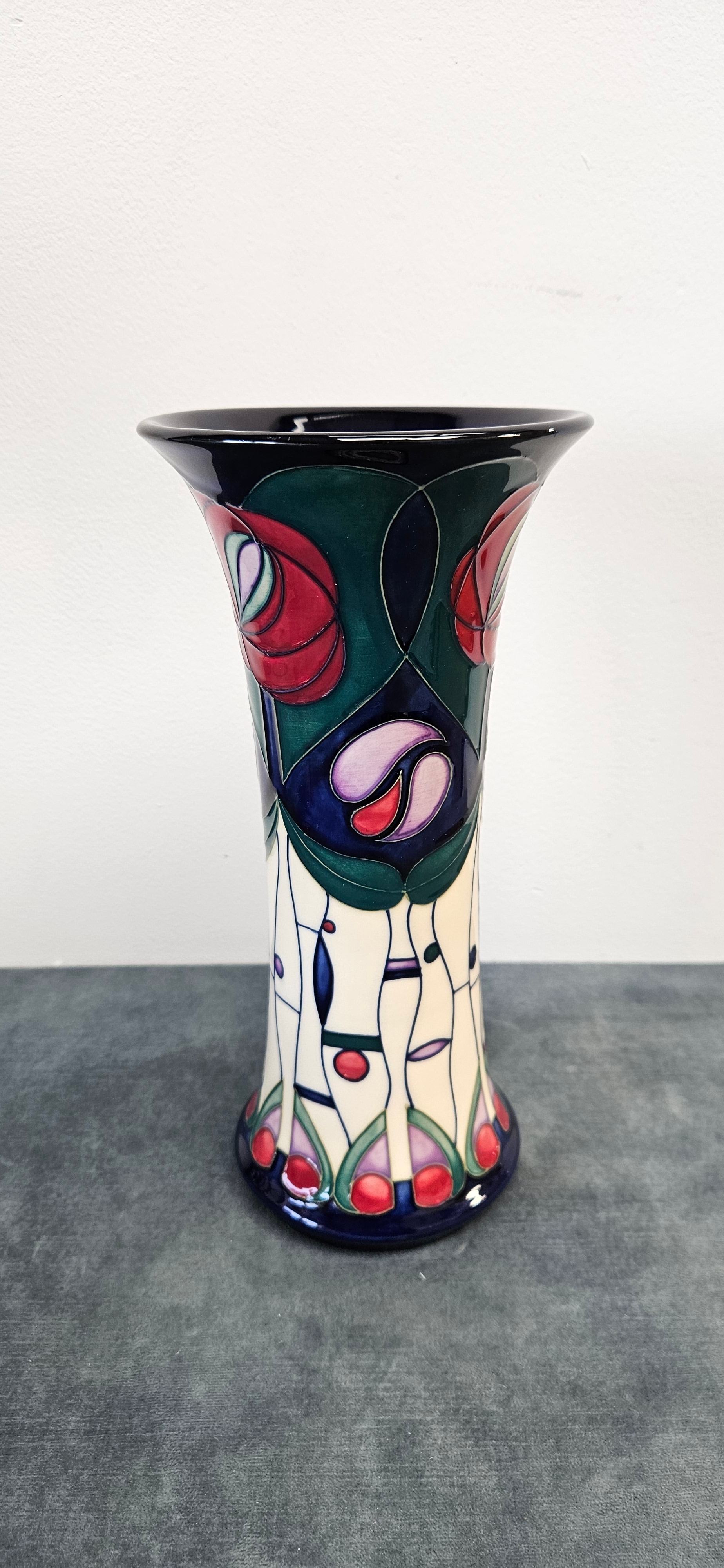
Primary live lot today
Moorcroft Pottery vase ‘Tribute to Charles Rennie Mackintosh’ pattern, designed by Rachel Bishop, Lot 161
Auction house: Deal Auction House
View live lot listing
Estimate: No estimate published
Auction end in listing: 25 Apr 2026 from 7pm BST
Catalogue note: Moorcroft Pottery vase in the ‘Tribute to Charles Rennie Mackintosh’ pattern, designed by Rachel Bishop
Why this lot is interesting
This vase is interesting because it sits in a very readable UK buying lane. Moorcroft has its own loyal collector base, Mackintosh remains one of those names that still carries cultural charge well beyond specialist ceramics, and Rachel Bishop’s design work gives later Moorcroft pieces enough confidence to appeal to buyers who want a strong room object rather than a museum footnote. In other words, the lot has crossover. It can pull in Moorcroft buyers, Arts and Crafts admirers, and interior-led bidders who simply want one decorative ceramic with authority.
The risk is equally clear. Tribute patterns can slide into licensed-looking sentiment if the tube-lining goes soft, the colours flatten, or the shape feels less resolved than the pattern wrapped around it. Deal Auction House’s photograph set is what makes this publishable: you can read the profile, surface, and base well enough to decide whether the pot is carrying the Mackintosh association with conviction instead of leaning on it as a sales crutch.
Who buys this and why
- Moorcroft collectors: they are buying pattern, condition, and designer attribution together, and will care about line sharpness, glaze freshness, and how comfortably this piece sits beside other late Moorcroft work.
- Arts and Crafts or Mackintosh-minded interior buyers: they want a vase that signals Glasgow-school geometry and British design literacy without needing a full Mackintosh room budget.
- Dealers and decorative resellers: they will like the recognisable names, but only if the base marks, foot, and colour remain tidy enough to make resale a conversation about design rather than condition explanations.
Condition pressure points
- Tube-lining definition: the dark outline work needs to stay raised and crisp. Soft or interrupted lines can make a Mackintosh-derived pattern look tired very quickly.
- Rim and shoulder integrity: check the top edge for tiny chips, glaze nicks, or over-cleaned spots. With decorative pottery, small damage at the rim often does more visual harm than buyers expect.
- Foot wear and base marks: ask for the clearest possible base view and confirm the marks are legible, not scrubbed or partly obscured by later residue.
- Glaze depth: a lot of the appeal sits in the contrast between the darker ground and the floral panels. Cloudiness, scratches, or kiln-related dullness can drain that contrast.
- Shape discipline: make sure the vase still reads as a convincing form in profile rather than a serviceable body doing delivery work for the pattern alone.
Comparator lots
These comparators stay within the same live Deal Auction House sale and help frame the choice sensibly: pattern prestige versus decorative ease, and named design reference versus straightforward vase quality.
- Moorcroft ‘Elizabeth’ pattern vase designed by Emma Bossons for the Queen’s 80th birthday, Lot 160 — Auction house: Deal Auction House. No estimate published. A commemorative Moorcroft with royal crossover appeal, useful for judging how much extra weight you place on story-led design references. view lot
- Moorcroft Inglewood pattern vase with hand-painted bird and woodland berry decoration, Lot 162 — Auction house: Deal Auction House. No estimate published. The nature-led alternative if you prefer painterly surface charm over a design-school reference. view lot
- Moorcroft Pottery ‘Queens Choice’ vase, Lot 164 — Auction house: Deal Auction House. No estimate published. A simpler comparator for buyers deciding whether they want named-pattern theatre or just a well-resolved Moorcroft vase. view lot
UK media & culture context
Mackintosh still has unusual reach in Britain because his designs work at several levels at once: Glasgow-school seriousness for design historians, recognisable floral geometry for decorative buyers, and enough mainstream familiarity to register even with people who have never read an Arts and Crafts catalogue. That makes this vase commercially legible in the UK in a way many late-twentieth-century art pottery pieces are not.
- Moorcroft, Rachel Bishop — useful for confirming the designer’s place within the Moorcroft story rather than treating the Mackintosh reference as an anonymous house pattern.
- Moorcroft Heritage Centre — a practical reminder of how strongly the pottery still trades on British maker identity and continuity.
- The Mackintosh Architecture Project, University of Glasgow — direct context for why Charles Rennie Mackintosh remains such a durable cultural shorthand in the UK design market.
Bottom line
This is the kind of Moorcroft lot I would rather buy from good photographs than from a breathless title alone, and thankfully Deal Auction House gives enough visual evidence to make that possible. If the rim is clean, the base marks are honest, and the tube-lining stays sharp right around the body, Lot 161 has the crossover appeal to justify a firm bid. If the form feels ordinary once the Mackintosh association is stripped away, let somebody else pay for the borrowed halo.
Editorial analysis for educational purposes only. Final bidding decisions, fees, tax, shipping, collection, condition verification, authenticity, restoration disclosure, and contract terms are handled by the auction house.