
Daily Deep Dive · 27 Apr 2026 · Silver
Lot Spotlight: a Victorian silver cream jug that only earns its polish if the detail still feels crisp when the room goes quiet
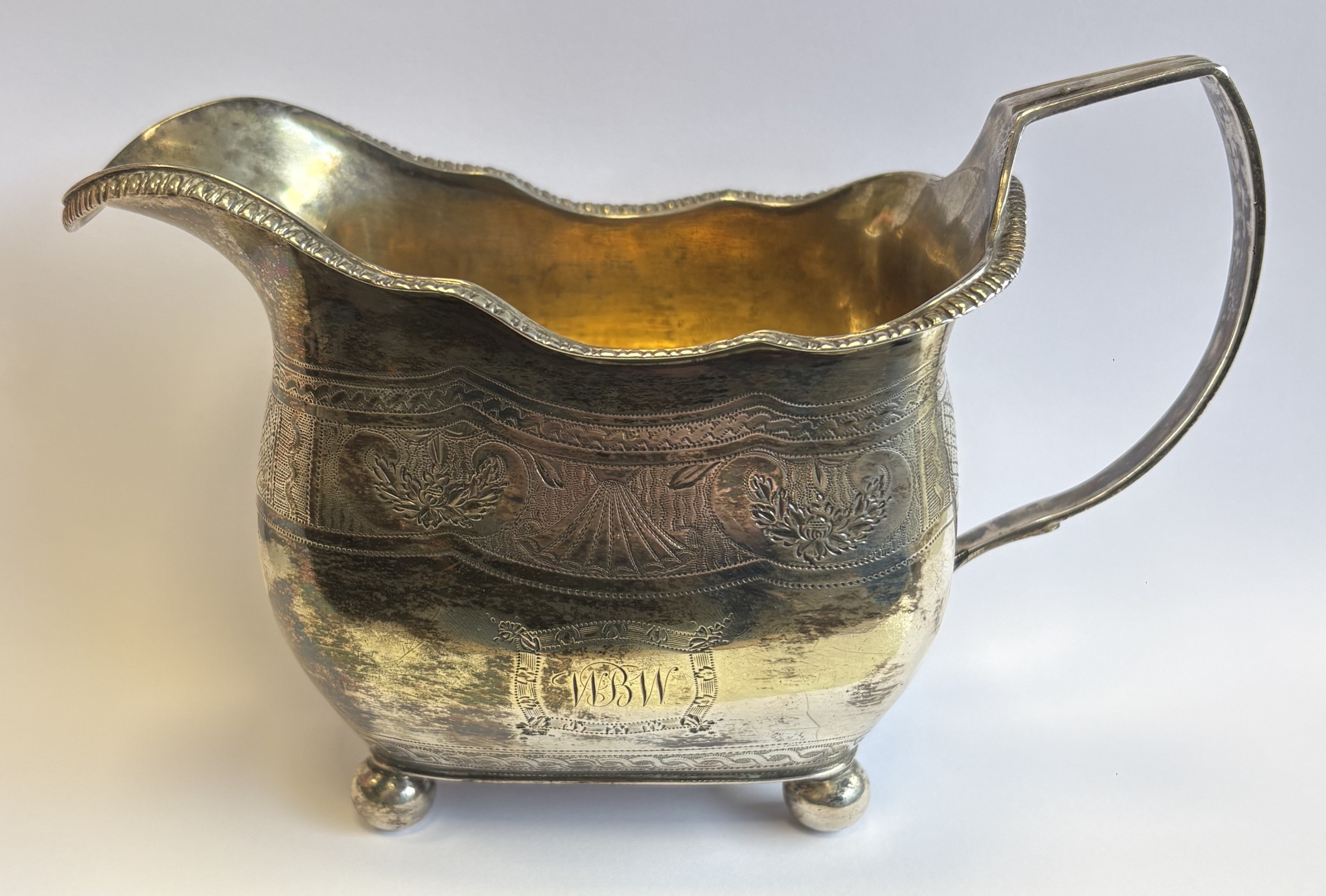
Small Victorian silver can be dangerously easy to overvalue because it photographs with instant confidence. Whittons Auctions Ltd’s Lot 1 avoids that trap better than most: the London 1889 cream jug is shown in four clear photographs, and the underlying image family resolves to a true 2500px file rather than a catalogue crumb. That gives bidders enough evidence to judge the engraved surface, the ball feet, the lip, and the hallmarking with some discipline. The appeal here is not rarity theatre. It is the older and more durable British buying lane of table silver that still looks alert enough to use, display, or resell without needing a heroic story wrapped around it.
Primary live lot today
A large Victorian silver cream jug with engraved decoration on four ball feet, London 1889, Lot 1
Auction house: Whittons Auctions Ltd
View live lot listing
Estimate: £200–£300
Auction date in listing: 29 Apr 2026
Catalogue note: A large Victorian silver cream jug with engraved decoration on four ball feet. London 1889.
Why this lot is interesting
This is not grand Georgian silver pretending to be a once-in-a-decade find. It is something more tradable and, for many buyers, more useful: a late-Victorian jug with enough size, surface work, and period legibility to sit comfortably in the middle of the market. That matters because silver buyers are often choosing between three lanes at once — pure scrap logic, collector logic, and decorative-household logic — and this lot has a credible foot in all three.
The engraved decoration gives it some presence, but the four ball feet are what stop it feeling generic. They make the silhouette read properly from a distance, and they also create a very practical test for condition. If the jug has been knocked, over-cleaned, or softened by repair, the feet, the base stance, and the pouring line usually tell on it quickly. Whittons’ photographs are strong enough to make those checks worth doing before the bidding energy arrives.
Who buys this and why
- Silver collectors: they want clean hallmarking, a sensible period date, and enough decorative work to make the piece feel like more than bullion with a handle.
- Interior buyers: they are buying reflective warmth and country-house dining atmosphere, but they still need the lip, body, and feet to look decisive rather than fussy.
- Dealers: they will like the estimate because there is room for a disciplined buy if the weight, hallmarks, and overall crispness survive closer inspection.
What to inspect in the photos
- Hallmarks first: ask for the clearest possible close view of the London marks and date letter. With Victorian silver, the romance is cheap; the legible evidence is the value anchor.
- Engraving sharpness: check whether the decorative work still has cut and sparkle or whether repeated polishing has started to blur the pattern into a pleasant but tired shimmer.
- Ball feet and stance: make sure the four feet sit evenly. A jug that rocks or looks slightly uneasy on the table may be telling you about old knocks or a distorted base.
- Lip and handle junctions: look hard where the handle meets the body and where the pouring lip turns out. Those are the places where repairs, thinning, or strain can hide in plain sight.
- Interior honesty: if additional photos are available, check for gilding remnants, staining, or an uneven interior surface that might hint at heavy use or later work.
Risk flags
- Surface softness: Victorian engraved silver loses authority quickly when polishing has flattened the decorative work.
- Base distortion: four-footed silver often reveals old knocks through an uneven stance before anything else becomes obvious.
- Weak hallmark evidence: if the London marks cannot be read cleanly, the catalogue confidence should not substitute for your own verification.
- Repair drag: handle joins and the lip are the places most likely to hide strengthening, solder, or tidying work that affects resale confidence.
Comparator lots
These two Whittons comparators stay in the same silver lane and help frame the decision sensibly: whether you want period table silver with visual authority, or a smaller object where presentation and sentiment do more of the work.
- Edwardian silver christening mug in fitted case, Lot 2 — Auction house: Whittons Auctions Ltd. Estimate £120–£150. A more gift-led silver lot, useful for judging how much you value original presentation and sentiment against the stronger room presence of the cream jug. view lot
- Embossed silver-mounted part vanity set with mother-of-pearl decoration, Lot 3 — Auction house: Whittons Auctions Ltd. Estimate £20–£30. A lighter comparator that shows how quickly silver value changes when utility gives way to dressing-table charm and mixed-material condition questions. view lot
UK media & culture context
Victorian domestic silver still has a very British afterlife because it sits between collecting and use. A cream jug like this can live in a cabinet, on a drinks trolley, or on an actual table without looking like museum cosplay. That flexibility is why modest-period silver keeps finding buyers long after the grand services have moved into a different price conversation.
- Goldsmiths’ Company Assay Office, London — useful practical context for why London hallmarking still carries real weight in British silver buying.
- The Silver Society — a good reminder that small domestic silver remains a living collector category in the UK, not just a scrap-metal calculation.
- Whittons Auctions Ltd — the auction house’s own Devon base matters here because regional British silver sales are often exactly where practical, middle-market pieces still get judged on object quality rather than hype.
Bottom line
This is a sensible silver lot, which is a compliment. Whittons Auctions Ltd has given bidders enough visual evidence to make the right sort of decision: not whether Victorian silver is glamorous in the abstract, but whether this particular jug still has the crisp engraving, stable stance, and honest hallmarking to feel satisfying once the shine stops doing all the talking. If those details hold up, the estimate is fair. If the marks are weak and the feet look uneasy, there will be better ways to buy British silver this season.
Editorial analysis for educational purposes only. Final bidding decisions, fees, tax, shipping, collection, condition verification, authenticity, restoration disclosure, and contract terms are handled by the auction house.