
Daily Deep Dive · 28 Apr 2026 · Decorative Arts
Lot Spotlight: a Cleo Mussi elephant that is funniest once you accept the damage is part of the buying decision, not a footnote to it
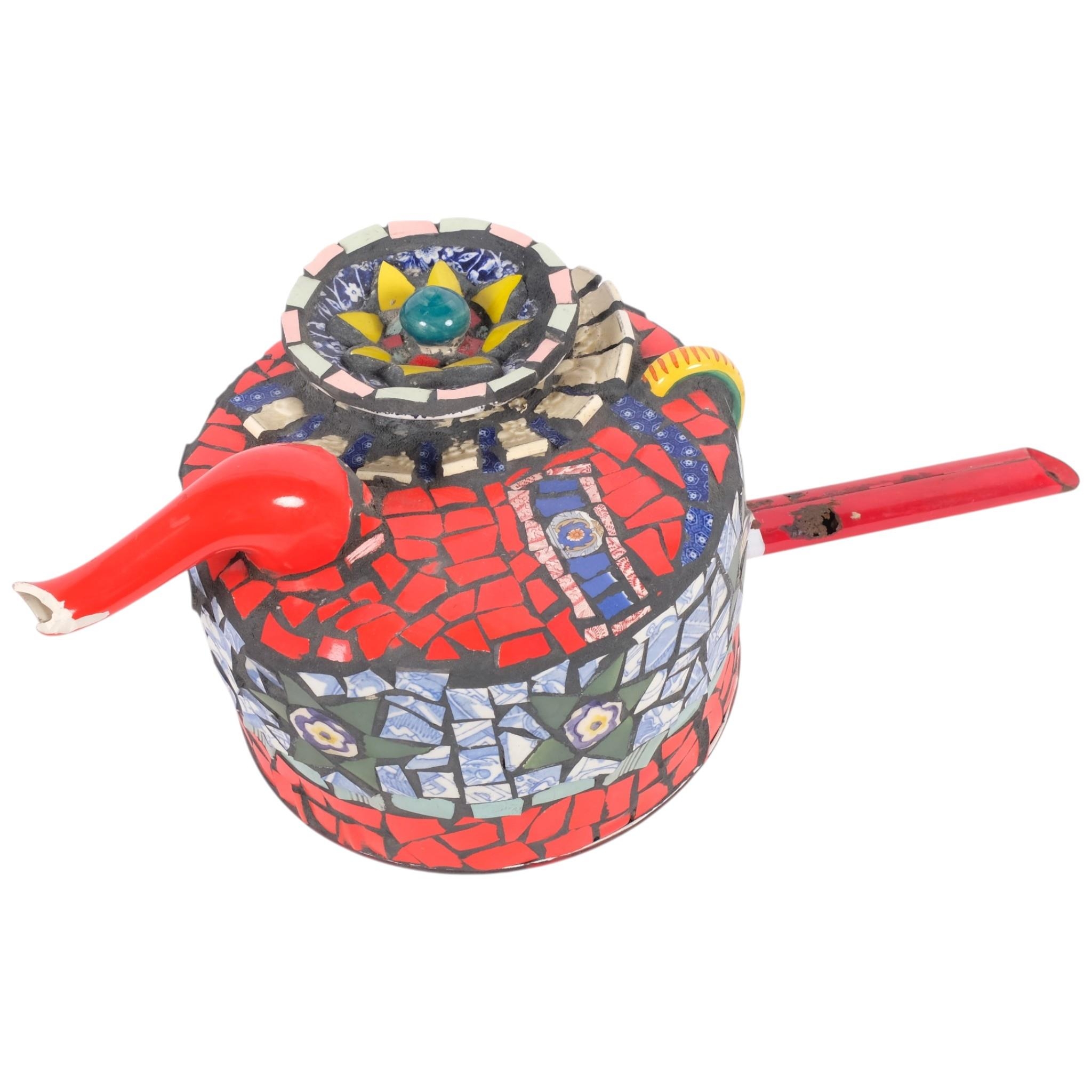
Cleo Mussi’s Red Elephant is exactly the sort of British studio object that can win a room in one glance and disappoint a buyer ten minutes later if the practical questions are ducked. Burstow & Hewett’s live Lot 225 has the advantage of being specific, dated 1993, and visually legible at a true 2048px image size: an elephant assembled as ceramic mosaic across an old saucepan, with the artist’s wit doing real structural work rather than merely decorating the surface. The hard part is equally clear from the catalogue note. The spout, used as the trunk, is damaged. That does not kill the lot, but it changes the lane completely. This stops being a neat novelty purchase and becomes a judgement call about whether Mussi’s humour, material intelligence, and early-date appeal still outweigh the break and the inevitable questions around hanging, weight, and future resale.
Primary live lot today
CLEO MUSSI (born 1965), “Red Elephant”, wall hanging sculpture, ceramic mosaic on saucepan, signed and dated 1993 to interior, length 50cm, Lot 225
Auction house: Burstow & Hewett
View live lot listing
Estimate: £80–£120
Auction date in listing: 29 Apr 2026
Catalogue note: Damage to spout/trunk of elephant, otherwise good condition. Rust to pan handle probably prior to manufacture.
Why this lot is interesting
The best Cleo Mussi pieces do not merely recycle old pottery. They turn damaged or ordinary domestic material into something with a second social life, and here the saucepan is not a gimmick bolted on afterwards. It is the body. The handle becomes part of the silhouette, the broken spout becomes the tension point, and the red-and-cream tesserae keep the whole thing hovering between folk charm and properly authored contemporary ceramics.
That is why this lot deserves a serious look even with declared damage. British buyers still respond to pottery that carries a recognisable sense of place, and Mussi’s Stoke-on-Trent background matters because this sort of object sits inside the Potteries tradition while refusing to behave like tableware. It is wall art, salvage, mosaic, and ceramic sculpture all at once. If you like contemporary decorative objects that make a room less polite, there is more here than the estimate suggests. If you need immaculate condition, the catalogue has already told you to stay cold-blooded.
Who buys this and why
- Contemporary ceramics buyers: they are drawn to named British makers, early dated work, and the way Mussi turns broken domestic material into something authored rather than merely crafty.
- Interior-led buyers: they want a witty wall piece with colour, texture, and a story, but they will be less tolerant of damage if the object is meant to carry a whole corner of the room by itself.
- Dealers and design pickers: they will see a sensible estimate, but only if the break reads as honest catalogue disclosure rather than the start of a wider structural problem around mounting or old repairs.
Where the risk sits
- Read the trunk damage properly: ask for the clearest close view of the broken spout edge. A small, old loss can feel integrated; a jagged fresh break can dominate the whole joke.
- Check the mosaic joins: look for missing tesserae, open grout lines, or later fills where the coloured ceramic has shifted away from the saucepan body.
- Inspect the hanging logic: wall pieces only stay charming if they feel secure. Ask how it mounts, whether the fixing points are original, and whether any strain is visible around them.
- Study the saucepan handle: the catalogue notes rust probably predates manufacture, which is plausible, but you still want to know whether corrosion is stable or active enough to mark walls or weaken the handle area over time.
- Look inside for the signature and date: signed, dated work is part of the case for value here, especially when condition is not perfect.
Comparator lots
These comparators stay in the same named-decorative-ceramics lane at Burstow & Hewett, even though they solve the room in different ways. They help frame whether you want authored contemporary wit, branded luxury porcelain, or a smaller studio-pottery accent buy.
- Rosenthal Versace Medusa Rosso porcelain vase, Lot 143 — Auction house: Burstow & Hewett. Estimate £80–£120. A cleaner and more polished decorative ceramics buy where brand theatre does most of the talking, useful as a check on whether you want surface glamour or Mussi’s rougher British intelligence. view lot
- Isis ceramic blue and white brick vase by Deborah Seers, Lot 465 — Auction house: Burstow & Hewett. Estimate £80–£120. Another named contemporary ceramic, but smaller and more contained, which helps calibrate how much extra you are really paying for wall presence, humour, and sculptural oddness. view lot
UK media & culture context
This lot makes more sense in Britain than it might anywhere else because it belongs to the long Potteries habit of turning everyday ceramic knowledge into personality rather than perfection. Mussi’s elephant is not trying to be fine porcelain. It is closer to a Stoke-on-Trent in-joke that escaped the kitchen and found a wall.
- British Ceramics Biennial — a useful reminder that Stoke-on-Trent remains a live centre for contemporary clay practice, not just a heritage backdrop.
- Ceramic Review — useful UK media context for how contemporary clay and ceramic storytelling still carry a serious audience beyond the antiques trade.
- Burstow & Hewett — relevant here because regional British interiors sales are often where quirky named contemporary ceramics still trade on object quality rather than trend chatter.
Bottom line
This is a damaged lot, but not a dead one. If the trunk break looks old and settled, the mosaic remains tight, and the signature/date read cleanly, Burstow & Hewett’s estimate leaves room for a buyer who genuinely likes British ceramic wit with a bit of scar tissue still showing. If the break feels ugly in person or the hanging structure looks improvised, let somebody else pay for the punchline.
Editorial analysis for educational purposes only. Final bidding decisions, fees, tax, shipping, collection, condition verification, authenticity, restoration disclosure, and contract terms are handled by the auction house.