
Daily Deep Dive · 30 Apr 2026 · Ceramics
Lot Spotlight: a Hannah Barlow cattle vase that only earns real attention if the hand-cut frieze still feels alive once the Royal Doulton name is stripped away
Not every Doulton Lambeth buy needs theatrical colour to be interesting. Amersham Auction Rooms’ Lot 138 is quieter and better for it: a 12-inch stoneware vase with Hannah Barlow’s cattle circling the body, a shape large enough to read across a room, and five catalogue photographs that are just detailed enough to separate carved character from tired brown pottery. This is the lane where buyers get rewarded for slowing down. The value is not in merely owning something stamped Royal Doulton. It is in whether the incised animal band still has spring in it, whether the neck and rim stay clean, and whether the salt-glaze surface has the dry, crisp authority that makes late-Victorian Lambeth stoneware feel authored rather than merely antique.
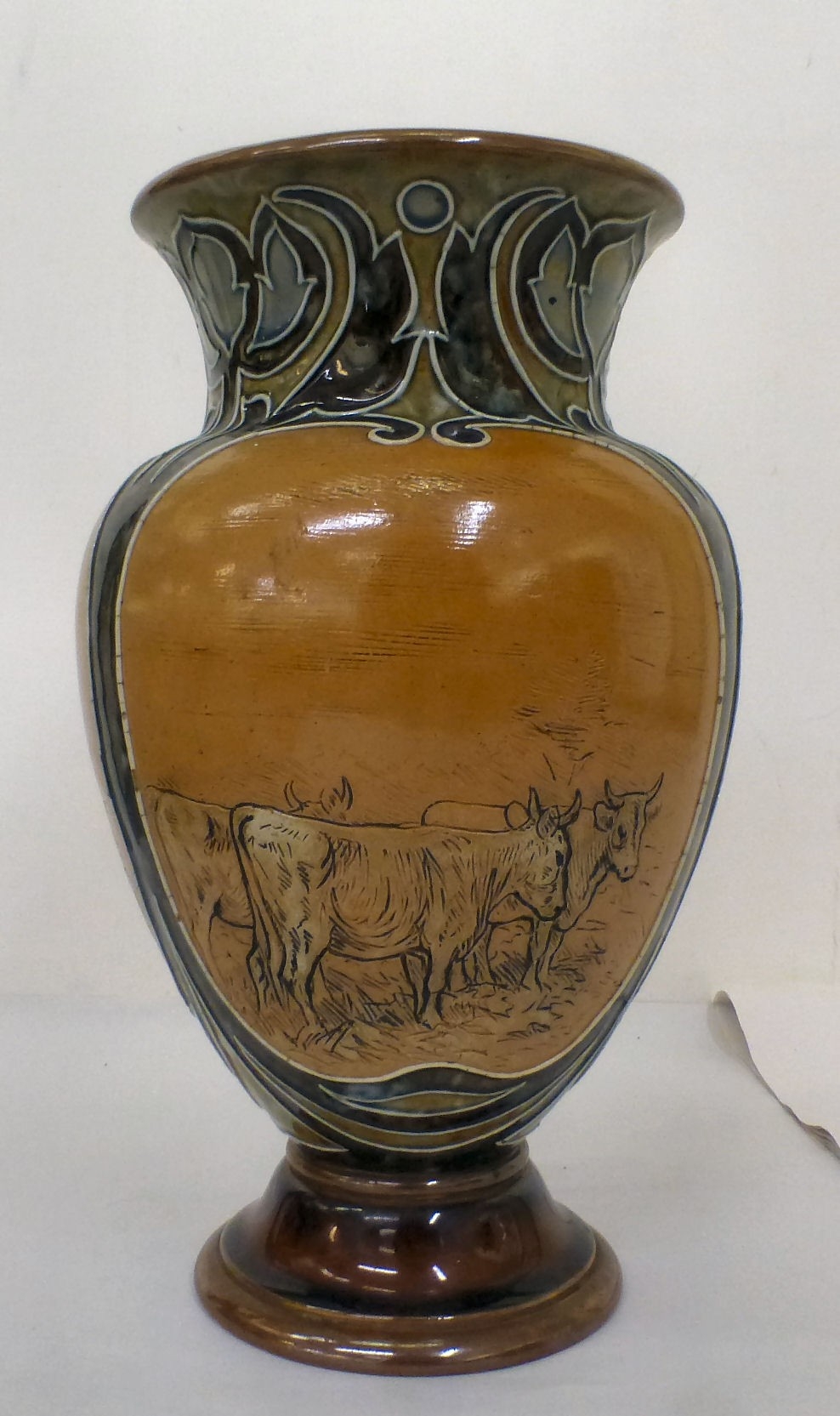
Primary live lot today
A Royal Doulton Hannah Barlow stoneware vase, decorated with cattle, 12in high, Lot 138
Auction house: Amersham Auction Rooms
View live lot listing
Estimate: £100–£200
Auction date in listing: 30 Apr 2026
Catalogue note: Royal Doulton Hannah Barlow stoneware vase decorated with cattle, 12 inches high.
Why this lot is interesting
Hannah Barlow is one of the few names in British art pottery that can pull a specialist and a general decorative buyer into the same conversation. Her animals are not decorative filler. They are the point. When the carving remains clear, the spacing stays rhythmic, and the pot has enough scale to let the frieze breathe, even a restrained brown-and-beige piece can outperform much louder ceramics in a room.
The estimate is also pitched in a sensible zone. At £100–£200, this is not a museum-ticket price for a signature alone, but it is high enough that the lot still needs to prove itself as an object. A Hannah Barlow vase only works when the cut cattle still look alert and individual rather than rubbed into a generic procession, and when the body shape supports the decoration instead of merely carrying it.
Who buys this and why
- Victorian art pottery collectors: they want named Doulton Lambeth work where the artist’s hand is visible, not just factory respectability.
- Traditional interior buyers: they are drawn to sober, textural ceramics that add authority to a shelf, bookcase, or hall table without needing bright glaze to announce themselves.
- Dealers buying for detail-led clients: they will focus on whether the cattle band still has enough movement and crispness to justify the estimate after premium, shipping, and any restoration risk are added back in.
Where the buying case can go wrong
- Read the cattle, not the backstamp first: the whole point of a Hannah Barlow piece is the hand-incised frieze. If the animals look soft, flat, or visually interrupted by wear, the name does less work than people hope.
- Inspect the rim and neck with no romance at all: dark stoneware can hide fleabites, restored nicks, and glaze disruptions surprisingly well in warm catalogue lighting.
- Check the body for firing stress and later cracks: tall stoneware forms can carry old hairlines or knocks around the shoulder and foot that only reveal themselves when the light changes angle.
- Study how the frieze meets the form: on a good example, the decoration wraps the vase with rhythm. If the carving bunches awkwardly or loses confidence around the curve, the piece becomes more ordinary than the name suggests.
- Ask for the foot and base marks clearly: impressed marks, wear, and any grinding or over-cleaning around the underside help tell you whether the vase has aged honestly.
Comparator lots
These comparators stay in the Doulton Lambeth stoneware lane, but they test different kinds of appeal: single-vase authority, paired decorative symmetry, and a more elaborate garniture story.
- 19th Century Doulton Lambeth hand-painted vase, Lot 49 — Auction house: AJ Auctions Fife Ltd. Estimate £60–£90. A cheaper single-vase route into the same broad buying lane, useful if you care more about period presence than artist-specific animal carving. view lot
- Doulton Lambeth stoneware garniture set, Lot 325 — Auction house: NLB Auctions. Estimate £70–£90. Four pieces for less money sounds tempting, but it helps underline how much of the Amersham vase’s value sits in authorship and focus rather than simple quantity. view lot
- Royal Doulton Lambeth vase, Bessie Newbery floral design on green ground, Lot 240 — Auction house: Potteries Auctions Ltd. Estimate £35–£70. A good check on whether you want artist-led animal carving or the more decorative Art Nouveau floral branch of the same Doulton Lambeth world. view lot
UK media & culture context
Doulton Lambeth still lands in Britain because it sits in a recognisable national story: the late-Victorian moment when serious design, factory production, and individual decorators briefly lined up. Hannah Barlow’s animals are especially appealing because they keep that story human. They are not grand historical painting shrunk onto a vase. They are observed creatures, scratched into clay by someone who understood that a quiet pot can still have narrative bite.
- V&A on the aesthetic home — useful museum context for why Doulton Lambeth stoneware moved beyond utility into a serious British design category, with women decorators playing a real role in that shift.
- V&A ceramics collections — a reminder that the British museum view of ceramics makes room for factory art pottery and not only for porcelain prestige pieces.
- The Potteries: Hannah Barlow — handy specialist context on the artist whose animal carving gives this lot its real reason to exist.
Bottom line
This is the sort of vase that rewards a buyer who likes restraint but still wants authorship. If the cattle frieze stays crisp, the rim and shoulder are clean, and the base wear looks honest, Amersham Auction Rooms has a live lot that deserves a firmer bid than the modest estimate first suggests. If the carving is tired or the pot only reads as generic brown Doulton once the catalogue glow drops away, leave it to someone buying the surname rather than the object.
Editorial analysis for educational purposes only. Final bidding decisions, fees, tax, shipping, collection, condition verification, authenticity, restoration disclosure, and contract terms are handled by the auction house.