
Daily Deep Dive · 4 May 2026 · Ceramics
Lot Spotlight: a Royal Doulton flambe bottle vase that only works if the shape stays disciplined once the red glaze has had its first dramatic say
Flambe is one of those ceramic finishes that can flatter a weak object for longer than it deserves. Potteries Auctions Ltd has a live Royal Doulton bottle vase, shape 1618, at a modest £30–£60 estimate, and the buying case is not complicated: the oxblood colour needs to move cleanly across the shoulders, the neck has to stay elegant rather than pinched, and the foot must still read as an honest working base rather than a tired ring hidden beneath theatrical glaze. If those basics hold, Lot 64 is a neat way into the British art-pottery lane without paying for a rarer pictorial example.
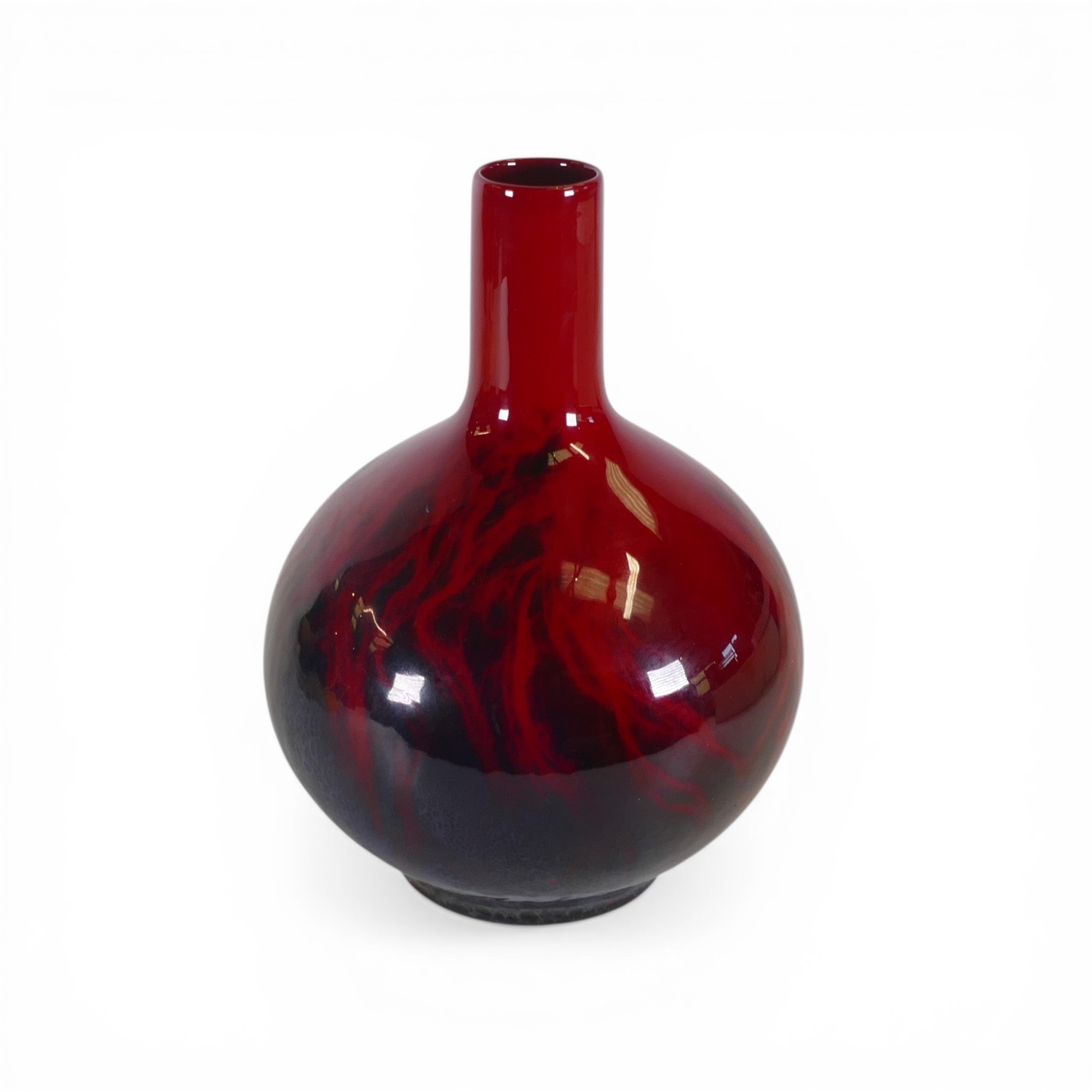
Primary live lot today
Royal Doulton flambe globular bottle vase 1618, Lot 64
Auction house: Potteries Auctions Ltd
View live lot listing
Estimate: £30–£60
Auction date in listing: 8 May 2026
Catalogue note: Royal Doulton, flambe globular bottle vase 1618. (H: 24.5cm)
Why this lot is interesting
This is a shape-led Doulton buy. There is no scenic panel, no special commemorative hook, and no comforting narrative beyond the factory name and the finish. That is precisely why it is useful. Buyers can judge the object on the things that matter most in this corner of the market: silhouette, glaze control, surface freshness, and whether the pot still looks composed when you imagine it on a shelf without catalogue lighting helping it along.
The estimate also leaves room for thought. At £30–£60, this is not being pitched as a trophy flambe piece. It sits in the sensible collecting zone where a buyer can stretch for clean colour and pleasing proportion, but should not forgive rim damage, a scrubbed foot, or a muddy, lifeless red just because the word flambe is doing the marketing work.
Who buys this and why
- Royal Doulton collectors: they want a recognisable factory form with enough glaze quality to feel deliberate rather than merely decorative.
- Interior buyers building a British art-pottery shelf: they are buying atmosphere, colour, and profile, but still need the vase to look authoritative in daylight rather than only seductive in a catalogue crop.
- Dealers and decorators shopping the middle market: they will see a low-entry Doulton lot that can work quickly if the surface is fresh and the foot ring has not been abused by cleaning or old labels.
Where the risk sits in the photos
- Read the shoulder transition carefully: on a good flambe vase the red should deepen and break with confidence, not collapse into a dull brown mush around the curve.
- Inspect the neck and lip without mercy: small chips on dark glossy pottery can hide in reflections, especially on a narrow bottle rim.
- Look for over-cleaning and scratch haze: a flambe finish should feel rich and pooled, not rubbed flat by enthusiastic polishing.
- Ask for the foot ring close up: honest wear is fine; grinding, clumsy label removal, or a dirty-looking restoration line is not.
- Check whether the shape still feels balanced: this model earns its keep through proportion. If the neck looks awkward or the body seems visually heavy from one angle, the glaze alone will not save it.
Comparator lots
These comparators stay in the Royal Doulton flambe lane but show three different reasons buyers pay up: scenic decoration, hunting-subject narrative, or a smaller straightforward form.
- Royal Doulton flambe long-necked vase with thatched cottage landscape, Lot 575 — Auction house: Griffin's Auctioneers. Estimate £20–£30. A useful check on how much extra you personally value pictorial decoration over pure form and glaze. view lot
- Royal Doulton flambe woodcut 1616 vase with hunting scene, Lot 577 — Auction house: Griffin's Auctioneers. Estimate £30–£40. Same broad factory language, but with subject matter doing more of the selling. Good for testing whether you want oxblood mood or narrative decoration. view lot
- A Royal Doulton flambe vase no. 1612, height 20cm, Lot 878 — Auction house: Ashley Waller Ltd. Estimate £20–£40. A smaller, simpler flambe route that helps anchor the price bracket for unpretentious Doulton examples. view lot
UK media & culture context
Royal Doulton still matters in Britain because it sits at the meeting point of factory production, art-school influence, and domestic taste. The official Royal Doulton company history tracks the move from Lambeth utility wares into a design-led brand, while the V&A's writing on the Aesthetic home explains why late-19th-century British interiors learned to treat ceramics as mood-setting objects rather than just useful containers. That is the right lens for this vase: not a masterpiece, but a disciplined little lesson in how colour and silhouette can make ordinary shelf space look richer.
- Royal Doulton: Our Story — company history from Lambeth through the Royal Warrant years and later Stoke production.
- V&A: Furnishing the aesthetic home — useful context for why decorative pottery became part of respectable British interior taste.
- V&A ceramics collections — a broader museum reminder that 19th-century art pottery and exhibition ceramics remain a serious collecting lane, not just nostalgic mantelpiece filler.
Bottom line
This is a sensible low-stakes Doulton decision, not a heroic one. If the rim is clean, the glaze keeps its depth, and the foot ring looks untouched by bad habits, Potteries Auctions Ltd has a live flambe vase that can justify a firm bid within estimate. If the red looks tired or the shape starts to feel ordinary once the catalogue glow fades, keep your powder dry for a better silhouette.
Editorial analysis for educational purposes only. Final bidding decisions, fees, tax, shipping, collection, condition verification, authenticity, restoration disclosure, and contract terms are handled by the auction house.