
Daily Deep Dive · 6 May 2026 · Ceramics
Lot Spotlight: a Moorcroft hibiscus vase that only earns its keep if the fluting still gives the flowers backbone
Pattern is not enough with Moorcroft. Nock Deighton has a live Hibiscus Pattern fluted vase, Lot 134, and the listing gives six photographs plus a verified 2500px image family to judge the part buyers too often skip past: whether the ribs of the body still make the decoration feel intentional rather than merely pretty. That matters because fluted Moorcroft has to do two jobs at once. The flowers need freshness and the form needs control. If the tube-lining is lively, the rim is clean, and the foot has not been scrubbed into submission, this is exactly the sort of British art-pottery lot that can make a shelf look more self-assured without needing trophy-level money.
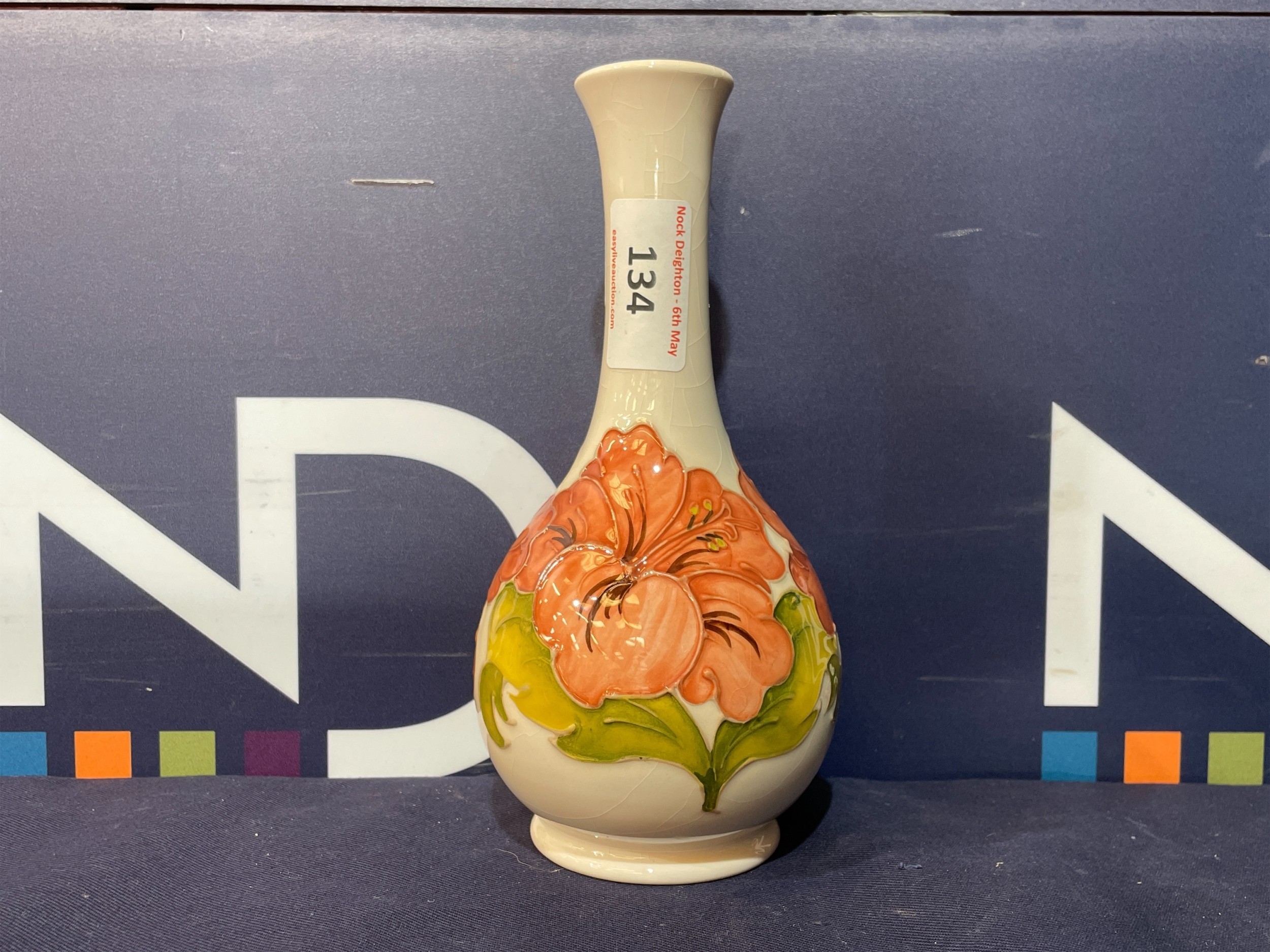
Primary live lot today
Moorcroft Hibiscus Pattern fluted vase, Lot 134
Auction house: Nock Deighton
View live lot listing
Estimate: No estimate published
Auction date in listing: 6 May 2026
Catalogue note: Moorcroft Hibiscus Pattern fluted vase
Why this lot is interesting
This is a good ceramics lot because the shape is doing real work. Plenty of floral art pottery relies on surface charm alone. A fluted body is less forgiving. Each rib can sharpen the pattern or make it look busy, depending on how well the line, glaze, and profile hold together. That makes the lot more than a generic Moorcroft name-check.
It also sits in a very practical British collecting lane. Moorcroft still has crossover appeal between dedicated pottery buyers, interior-led decorators, and the trade. The best examples feel rooted in Stoke-on-Trent making rather than in gift-shop prettiness. Nock Deighton’s photo set is what makes this publishable: there is enough visual evidence to judge whether the hibiscus decoration has real lift and whether the vase still looks convincing in profile once the colour has stopped flattering it for free.
Who buys this and why
- Moorcroft collectors: they want the pattern, glaze, and base condition to line up cleanly enough that the vase still feels like proper pottery rather than branded decoration.
- Interior buyers building a British ceramics shelf: they are buying room colour and silhouette, but the fluted body has to look crisp enough that the vase reads as design, not filler.
- Dealers and decorative resellers: they will like the recognisable name and floral subject, but only if the rim, tube-lining, and foot stay tidy enough that resale does not become a condition seminar.
Where the risk really sits
- Read the tube-lining across the ribs: Moorcroft decoration needs raised definition. On a fluted body, broken or softened line work shows up quickly because the ribs are supposed to give the pattern structure.
- Inspect the rim without trusting reflections: small chips on glossy floral pottery can hide easily in bright catalogue light, especially on a shaped lip.
- Check glaze depth in the recesses: the valleys between the flutes should still carry colour confidently. If they look greyed out or scratched, the vase will feel flatter in person than it does online.
- Ask for the clearest possible base view: honest foot wear is fine. Hard cleaning, grinding, or a dirty restoration line is not. The base is where a decorative buy becomes a disciplined one.
- Make sure the profile still feels calm: this is the sentence that matters most: if the fluting looks fussy rather than architectural, the flowers are not enough to rescue the pot.
Comparator lots
These comparators stay in the same live Moorcroft buying lane but test three different priorities: designer attribution, licensed floral crossover, or straightforward anemone-pattern scale.
- Moorcroft Demeter Pattern vase by Emma Bossons, Lot 135 — Auction house: Nock Deighton. Estimate No estimate published. The immediate next-lot comparison in the same sale, useful for judging whether you want a named contemporary designer angle or the calmer pull of the Hibiscus vase. view lot
- A Moorcroft 3-inch vase, RHS Luteola, Emma Bossons, Lot 1128 — Auction house: Ashley Waller Ltd. Estimate No estimate published. Helpful if your taste leans toward smaller modern floral Moorcroft with an overt British horticultural link. view lot
- A Moorcroft pottery anemone patterned vase standing approx. 19 1/2cm tall, Lot 858 — Auction house: Bulstrodes Auctions. Estimate No estimate published. A taller floral comparator that helps test whether today’s fluted example wins on shape discipline or simply on familiar pattern comfort. view lot
UK media & culture context
Moorcroft still lands in Britain because it sits inside a very specific national story: Stoke-on-Trent pottery as both industry and cultural identity. The Moorcroft Heritage Centre leans into that continuity, while Visit Stoke’s official tourism material still presents the city as a ceramics capital rather than a nostalgic afterthought. The V&A’s ceramics collections page is the reminder that British art pottery remains part of a serious museum conversation, not just sideboard decoration. That is the right frame for this lot. It is not rare enough to hide behind scarcity, so it has to succeed as a well-resolved object from a still-legible British pottery tradition.
- Moorcroft Heritage Centre — direct maker context for the factory, bottle oven, and Stoke-on-Trent continuity behind the brand.
- Visit Stoke: World Capital of Ceramics — current UK context for why pottery from The Potteries still carries cultural weight beyond specialist collectors.
- V&A ceramics collections — a broader museum lens on why British pottery still belongs in a serious collecting conversation.
Bottom line
The attraction here is not just hibiscus, or even just Moorcroft. It is whether the form still has enough nerve to stop the decoration becoming soft. If the rim is clean, the tube-lining stays raised, and the foot looks honest, Nock Deighton’s Lot 134 is the sort of floral British art-pottery buy that can feel quietly smart. If the fluting looks blurred, over-cleaned, or structurally timid, let the next bidder pay for the name.
Editorial analysis for educational purposes only. Final bidding decisions, fees, tax, shipping, collection, condition verification, authenticity, restoration disclosure, and contract terms are handled by the auction house.