
Daily Deep Dive · 7 May 2026 · Lighting
Lot Spotlight: a Herbert Terry anglepoise that only earns romance after the springs, joints, and fixing hardware pass the workshop test
This is the sort of lamp dealers notice in a second and private buyers can sentimentalise too quickly. Locke's Auctioneers has a live Herbert Terry anglepoise machinists lamp, Lot 14, with four catalogue photographs and a verified 2500px image family, which is enough to ask the useful first question: are you buying surviving British task lighting or a rewiring project with the right silhouette. Industrial Anglepoise lamps are not really about charm. They are about balance, reach, hardware, and the honesty of wear. If the springs still pull evenly, the pivots have not been bullied, the shade edge is clean, and the mounting arrangement is complete, this is a sharp little slice of British design history rather than just workshop nostalgia.
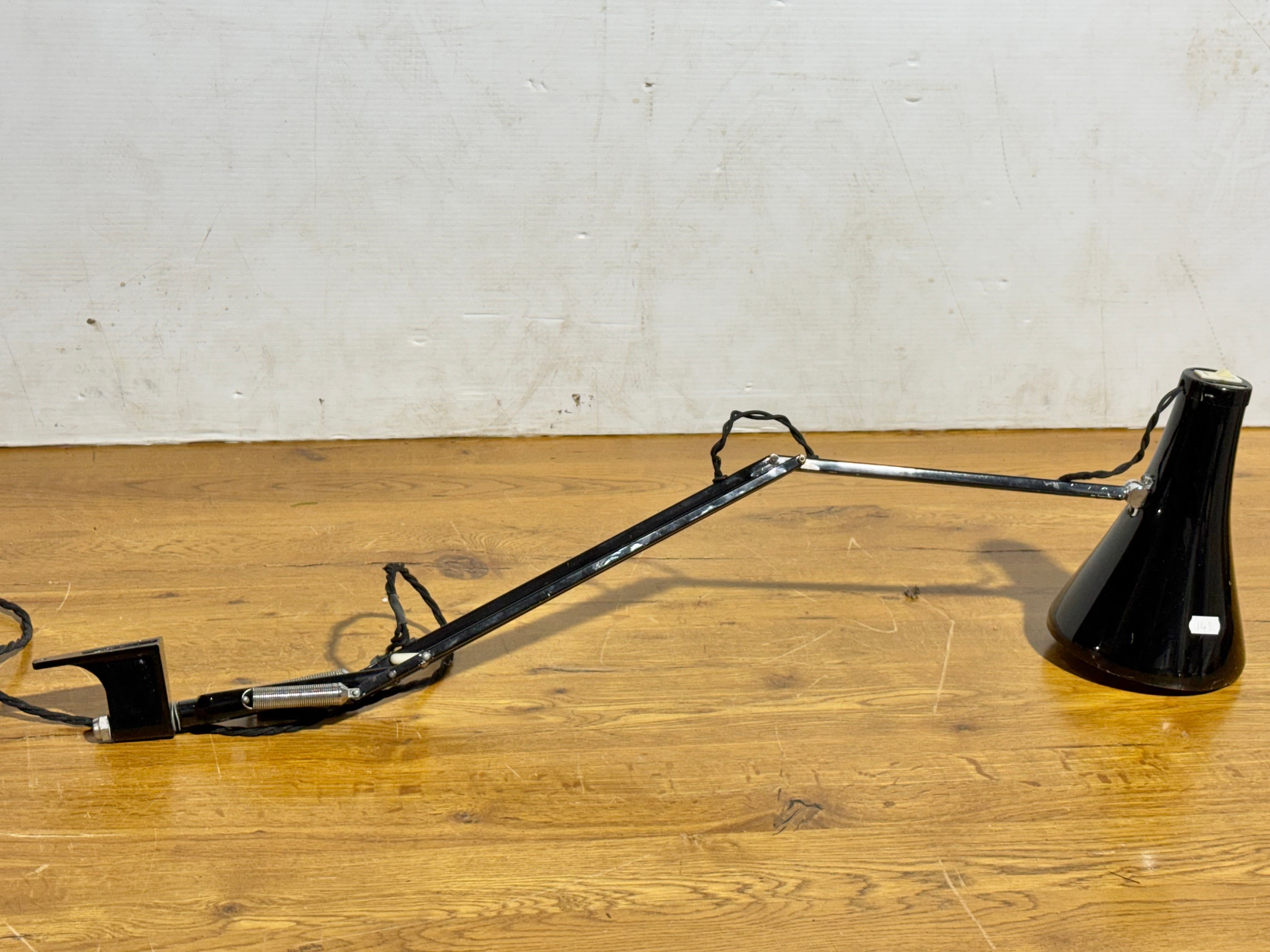
Primary live lot today
Herbert Terry anglepoise machinists lamp, Lot 14
Auction house: Locke's Auctioneers
View live lot listing
Estimate: No estimate published
Auction date in listing: 7 May 2026
Catalogue note: A Herbert Terry anglepoise machinists lamp.
Why this lot is interesting
The appeal here is not decorative. It is functional design with the casing left visible. Herbert Terry sits close to the core Anglepoise story because George Carwardine's spring idea only became a durable production object once Herbert Terry & Sons started making it in the mid-1930s. A machinists lamp keeps more of that industrial DNA than the later domestic versions most buyers know from desks and studies.
That makes this a good live-lot choice for anyone who likes British design with a bit of grease still under its fingernails. The photos suggest a lamp that could work in three lanes at once: industrial-design collecting, office or studio use, and interiors that want real utility rather than faux-factory mood. The gap between those lanes is where bids can get sloppy, so condition discipline matters more than the familiar name.
Who buys this and why
- Industrial design collectors: they want the Herbert Terry connection, the exposed spring logic, and hardware that still looks mechanically convincing rather than prettified.
- Interior buyers fitting out a study or studio: they are buying the authority of a genuine workshop lamp, but they still need a usable mounting setup and a rewiring story that does not turn the purchase into a nuisance.
- Dealers, stylists, and set dressers: they like Anglepoise because it reads instantly on camera and on a desk, but only if the shade, arms, and finish still feel authentic enough to avoid looking like reproduction salvage.
Where the risk sits
- Check spring tension and symmetry: the two sides should look balanced. Slack or mismatched springs turn a clever lamp into dead weight.
- Inspect the pivots and wing fittings: stripped screws, later bolts, or joints tightened into rigidity can mean the lamp no longer does the one job it was designed to do.
- Read the shade edge coldly: bends, splits, or crude repainting around the rim matter because this is a lamp people often "improve" too enthusiastically.
- Ask what the lamp actually fixes to: machinists lamps are frequently separated from their clamp, bracket, or proper base. If the mounting arrangement is incomplete, the estimate is not the real cost.
- Look at the cable and lampholder without romance: recent rewiring can be fine, but improvised fittings or perished wiring mean you are buying a repair job before you are buying a design object.
- Watch for over-restoration: honest paint loss is often preferable to a glossy repaint that flattens the lamp into generic vintage decor.
Comparator lots
These live comparators stay in the same articulated task-light lane but test three different buying instincts: named Herbert Terry lineage, cheaper domestic-era recognition, or pure industrial utility.
- A Herbert Terry & Sons 'The Anglepoise' lamp, Lot 579 — Auction house: Wotton Auction Rooms. Estimate £40 - £60. A good comparison if you want the name and mechanism in a more recognisably domestic presentation. view lot
- A vintage Herbert Terry Anglepoise lamp, Lot 535 — Auction house: Ringwood Auctions. Estimate £25 - £30. Useful for judging how much extra confidence you place in condition and presentation when the title stays recognisable but the estimate is lighter. view lot
- EDL 2arm industrial machinist's lamp on turret base, Lot 27 — Auction house: Chrystals Auctions. Estimate £50 - £60. Not Herbert Terry, but firmly in the same industrial task-light buying lane if your taste is more workshop than design-classic. view lot
UK media & culture context
The reason Anglepoise still lands in Britain is that it bridges two stories at once: workshop problem-solving and design-classic afterlife. The Design Museum still treats the lamp as a foundational British object, tracing George Carwardine's spring mechanism and Herbert Terry's role in getting it into production. Anglepoise's own history now leans hard on repair, reuse, and long life, which suits an industrial lamp better than any amount of vintage theatre. The Guardian's design coverage has made the same point from another angle, treating the Anglepoise as one of those British objects that escaped its original job description and became part of the national visual vocabulary.
- Design Museum: Anglepoise — the clearest museum-level summary of how Carwardine's 1932 spring idea and Herbert Terry's production partnership turned a work lamp into a British design staple.
- Anglepoise history — the maker's own account of the lamp's development, with a useful emphasis on longevity, repair, and why these are still equipment before they are collectibles.
- The Guardian: Great British design, six favourites — a neat reminder that the Anglepoise sits in the wider British-design canon because the mechanism remains so hard to improve on.
Bottom line
This is a buy for someone who wants the mechanism and the industrial honesty, not just the outline. If the springs still hold, the joints move properly, the shade is not chewed up, and the mounting hardware is complete, Locke's Auctioneers' Lot 14 looks like a smart, usable British lighting lot. If the fixing arrangement is missing or the finish has been over-sanitised into generic vintage decor, the romance evaporates quickly.
Editorial analysis for educational purposes only. Final bidding decisions, fees, tax, shipping, collection, condition verification, authenticity, restoration disclosure, and contract terms are handled by the auction house.