Daily Deep Dive · 8 May 2026 · Wine & Spirits
Lot Spotlight: a 1971 case of Château Giscours where the real bid lives in ullage, wood, and whether all twelve bottles still pull in the same direction
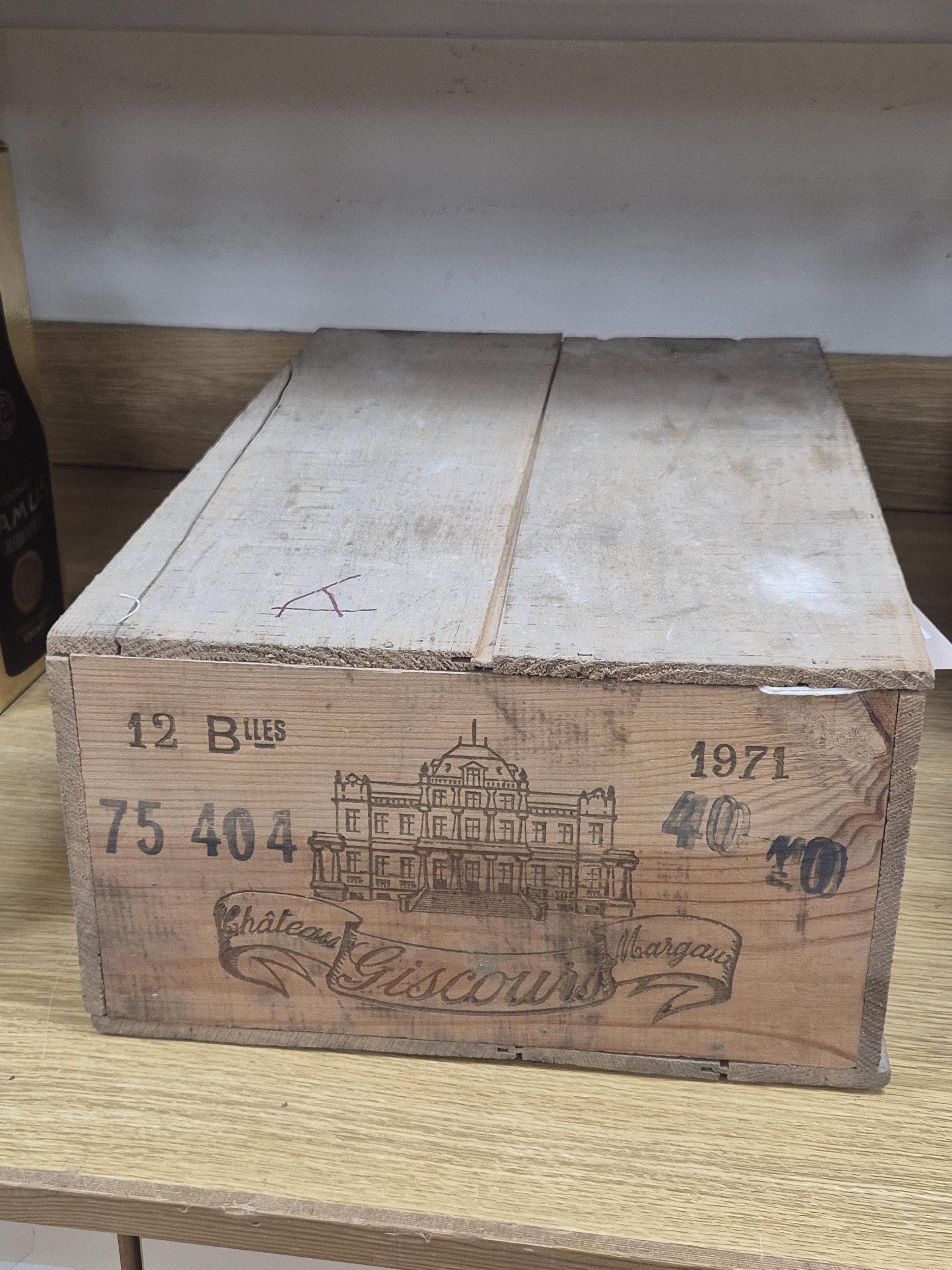
A full case of mature Margaux only works when the storage story looks calmer than the estimate. Gorringe's has a live 12-bottle case of Château Giscours 1971, Lot 233, with a verified 2500px hero image and a second catalogue photograph that at least lets you read the basics of bottle uniformity and case presentation before asking for more. That is enough to make this a proper buying exercise rather than a château-name daydream. With older claret, the expensive mistake is treating the label as the asset and the condition as a footnote. Here, the case, fills, capsules, labels, and signs of long quiet storage matter just as much as the Third Growth name on the front.
Primary live lot today
Chateau Giscours Margaux, 1971, OWC, cased (12), Lot 233
Auction house: Gorringe's
View live lot listing
Estimate: £250 - £350
Auction date in listing: 12th May 2026 at 10am BST
Catalogue note: Original wooden case, 12 bottles
Why this lot is interesting
This is not really a single-bottle romance purchase. It is a case-format confidence purchase. Buyers who like mature Bordeaux know that a named château helps, but the format is doing heavy lifting here: twelve bottles in original wood gives the lot a more disciplined, merchant-like feel than one loose bottle with a flattering label shot. The estimate is also what makes it live. At this level, you are not paying blue-chip Margaux money. You are being asked whether a complete older case from a recognisable estate still holds together well enough to justify the storage and drinking gamble.
Giscours itself gives the lot enough backbone to matter. The château remains one of the classed growths that helps define Margaux's reputation for perfume, finesse, and structure, but this should not be bought as if every old bottle automatically cashes that promise. The attraction is the tension between name, age, and format: a 1971 vintage, a complete original case, and a sensible estimate that leaves room for the buyer who values old claret as an object as much as a drink.
Who buys this and why
- Private cellar buyers who actually want to drink mature claret: they are buying the prospect of opening several bottles across dinners rather than gambling everything on one solitary survivor.
- Merchants, brokers, and resale-minded buyers: they care about uniformity, original wood, and whether the case still looks coherent enough to sell on bottle by bottle without apologising for condition drift.
- Interior-led wine buyers and hosts: they like the theatre of an old Margaux case, but only if the packaging and bottle line still feel authentic rather than tired prop dressing.
Condition pressure points
- Ask for ullage across all twelve bottles: one neat hero image is not enough. Mature claret wants bottle-by-bottle fill confirmation, not a generic assumption that the whole case matches.
- Read the capsules for seepage, corrosion, and disturbance: older foil and capsule wear can be honest, but leakage or irregularity changes the lot from cellar candidate to decorative relic very quickly.
- Check label consistency: slight variation is normal, but heavy mismatching, replacement-looking labels, or one bottle that reads differently from the rest should slow the bid down.
- Treat the original wooden case as evidence, not proof: OWC helps with confidence and presentation, but it does not certify perfect storage. Look for splits, heavy staining, crude re-nailing, or signs the case and bottles have lived separate lives.
- Clarify provenance and storage conditions if possible: the catalogue title gives format, not cellar history. With older Bordeaux, storage silence is part of the risk budget.
- Price in logistics before you fall for the romance: a 12-bottle case of mature wine can become expensive once premium, VAT where applicable, collection, shipping, and breakage risk are back on the table.
Comparator lots
These comparators stay inside the same live Gorringe's Margaux lane, but they test three different instincts: older single-bottle prestige, larger but less glamorous case quantity, or younger drink-later case buying.
- 1966 Château Malescot St-Exupéry, Margaux, 3ème Grand Cru Classé, numbered bottle, magnum, Lot 232 — Auction house: Gorringe's. Estimate £100 - £150. Useful if your taste runs toward one dramatic mature-format bottle rather than a full case commitment. view lot
- 1978 Chateau D' Angludet Margaux-Cantenac, two wooden cases (24), Lot 234 — Auction house: Gorringe's. Estimate £200 - £300. A good comparator if quantity and case format matter more to you than the specific château name. view lot
- 2011 Marquis de Terme Margaux, cased (12), Lot 236 — Auction house: Gorringe's. Estimate £200 - £300. This is the younger, cleaner, less romantic case buy for anyone who wants Margaux with less bottle-age anxiety. view lot
UK media & culture context
Old Margaux still makes sense in Britain because the category sits in a familiar cultural lane: merchant claret, cellar talk, and case buying rather than instant-flex bottle culture. Berry Bros. & Rudd's Margaux guide leans on the appellation's long English trade history and the commune's reputation for perfume and finesse. Decanter's regional profile makes the same point from the critic's side, treating Margaux as the Médoc's most seductive commune rather than simply the most powerful one. Giscours then adds the estate-level layer: a Third Growth still presented by the château itself as a wine of structure, charm, and refined tannin. That combination is why a scruffy old case can still interest serious UK buyers, but it is also why presentation and storage honesty matter so much: this is a category where buyers are trained to read the details.
- Berry Bros. & Rudd: Rediscovering Margaux — useful on Margaux's reputation, English trade history, and why the commune still carries weight beyond the First Growth headline.
- Decanter: Regional profile — Margaux — a strong overview of the commune's scale, style, and why finesse rather than brute force is the usual buying promise.
- Château Giscours official profile — helpful for estate identity, classification, and the house view of what Giscours is meant to deliver as a Margaux wine.
Bottom line
This is a grown-up buy if you want old claret in case format and you are willing to interrogate it like a case, not admire it like a poster. If Gorringe's can support the bottle condition with sensible ullage and capsule confidence, Lot 233 looks like a credible way into mature Margaux without trophy pricing. If the case is doing more storytelling than the bottles are, walk away and let someone else pay for the wood.
Editorial analysis for educational purposes only. Final bidding decisions, fees, tax, shipping, collection, storage verification, condition confirmation, and contract terms are handled by the auction house.