
Daily Deep Dive · 11 May 2026 · Ceramics
Lot Spotlight: a Sally Tuffin Moorcroft Cluny vase where the bid only stays clever if the tube-lined trees still hold their nerve
Cheap Moorcroft is where buyers get lazy. Wotton Auction Rooms has a live Cluny-pattern vase by Sally Tuffin, Lot 78, with four catalogue views and a verified 2048px image family, which is enough to ask the only question that really matters at this estimate: does the decoration still feel properly built into the pot, or are you mainly paying for a name and a dark glossy ground. Cluny wants more than pretty colour. It wants crisp tubelining, clean transitions around the shoulder, and a foot that has not been scrubbed into anonymity. If those things still read well, this is the sort of modest British art-pottery buy that can make a shelf look sharper without asking trophy money.
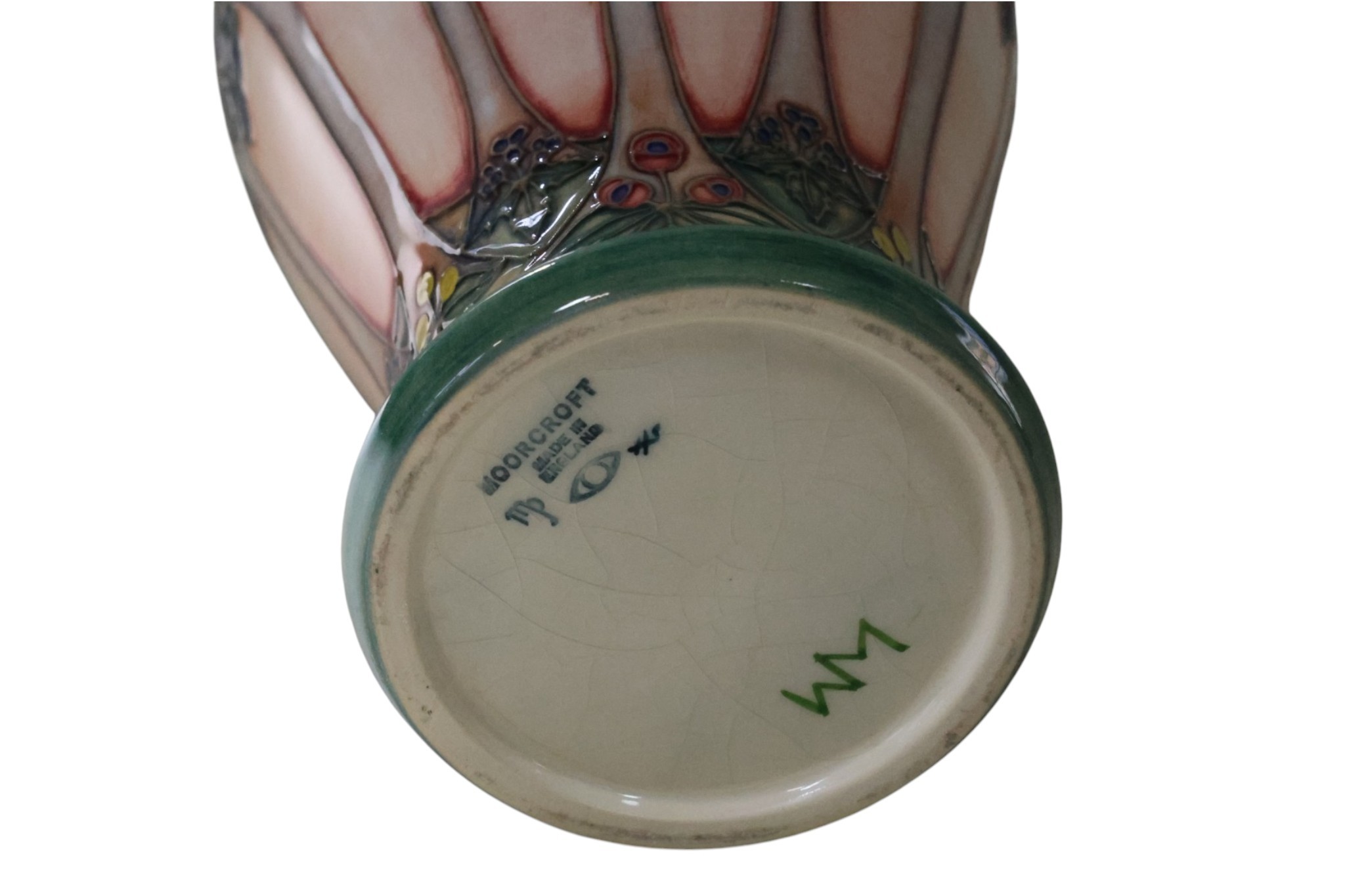
Primary live lot today
Moorcroft vase in the Cluny pattern, designed by Sally Tuffin, Lot 78
Auction house: Wotton Auction Rooms
View live lot listing
Estimate: £40 - £60
Auction date in listing: 12th May 2026 at 9:30am BST
Photo coverage: 4 catalogue images, with a verified 2048px full-size source
Why this lot is interesting
The estimate is what makes this live. There is enough Moorcroft appetite in the market that anything with a named pattern and a recognisable designer can tempt bidders into switching off their judgement. That would be a mistake here, because the price bracket is exactly where condition, line quality, and decorative confidence decide whether a vase feels collected or merely accumulated. If the pot still has snap in the tubelining and the dark ground has not gone dull or over-cleaned, Wotton's estimate leaves room for a buyer to get a genuinely decorative piece of late-20th-century British pottery without paying a specialist-premium number.
It is also a useful Sally Tuffin object rather than a generic Moorcroft placeholder. The Cluny pattern, at least from the catalogue photographs, reads as a tightly organised little landscape of stylised trunks, leaves, and jewel-like colour blocking rather than a loose floral wash. That gives the buyer something concrete to judge. You are not being asked to fall for a single dramatic bloom. You are judging rhythm, spacing, and whether the pattern still travels around the body with control.
Who buys this and why
- Interior buyers who want one confident British pottery note in a room: they are buying colour, silhouette, and shelf presence, but they need the foot, rim, and gloss to stay clean enough that the vase still feels composed up close.
- Moorcroft collectors trading below top-ticket levels: they care about named design, base marks, painter and tubeliner interest where visible, and whether this is an honest example rather than a compromised one dressed up by a low estimate.
- Dealers and fair traders: they are thinking about margin, yes, but also about how easily the vase can be shown and sold on. A modest Moorcroft buy works best when no apology has to be attached to crazing, restoration, or a tired footrim.
Where the risk sits
- Read the tubelining, not just the colours: with Moorcroft, the raised slip is structural. You want lines that still separate leaves, trunks, and ground cleanly rather than soft edges that have gone muddy under glaze.
- Slow down at the rim and shoulder: these are the pressure points for knocks, tiny flakes, and rubbed glaze. One flattering frontal image is never enough.
- Check the foot for honest wear and legible marks: Moorcroft's own guidance notes that the base tells the story of designer, date, painter, and tubeliner. If the foot has been aggressively cleaned, some of that confidence disappears.
- Ask directly about crazing, even if none is obvious in the images: Moorcroft itself says crazing is a natural ageing process in its earthenware, but the buying decision still changes depending on whether you are looking at light age-consistent crazing, a distracting network, or restoration around it.
- Look for colour fatigue: dark-ground Moorcroft needs depth. If the blue-black field looks cloudy, grey, or patchy in more than one image, the pattern can lose authority very quickly.
- Budget the full landed cost, not the estimate: this is exactly the sort of lot where premium, VAT where applicable, shipping, and breakage risk can turn a cheap hammer into an average buy.
Comparator lots
These stay in the same live Moorcroft lane and help triangulate whether you want another Sally Tuffin design, a safer anemone crowd-pleaser, or a larger example with a disclosed condition note already in play.
- A Moorcroft Finches and Fruit vase, designed by Sally Tuffin, late 20th century, 20cm high, Lot 370 — Auction house: Mellors & Kirk. Estimate £80 - £120. Useful as the stronger-design, higher-estimate Tuffin comparator if you want to see what the market asks when the decoration becomes more overtly pictorial. view lot
- A Moorcroft anemone pattern vase, 17cm high, Lot 8 — Auction house: Wotton Auction Rooms. Estimate £40 - £60. This is the nearest same-house comparator if you prefer a pattern with easier instant appeal and want to compare how much structure versus floral charm you are really paying for. view lot
- A Moorcroft Anemone vase, 1992, 27.5cm high, Lot 395A — Auction house: Mellors & Kirk. Estimate £50 - £80. Mellors & Kirk already notes crazing on this one, which makes it the practical comparator if you want to measure how much disclosed condition risk should move your bidding ceiling. view lot
UK media & culture context
Moorcroft still sits in a specifically British collecting lane: Stoke-on-Trent craft history, Liberty-era art pottery prestige, and a modern market that still rewards visible hand labour. Moorcroft's own history page roots the firm in Burslem and its tubelined, hand-painted methods, and notes both the 2025 collapse and the June 2025 revival under Will Moorcroft. The Guardian used a Moorcroft painter as its image for a feature on endangered British craft skills, which says a lot about how the pottery still functions culturally in Britain: not merely as decoration, but as evidence of living technique. The Independent's 1997 feature on Moorcroft's rescue is also useful because it places Sally Tuffin directly inside the company's design rebuild, not at the edges of it. That makes a modest Tuffin-designed vase like this more interesting than its estimate suggests.
- Moorcroft: About Us / company history — useful on Burslem roots, tubelining, hand-painted production, royal warrant history, and the company's June 2025 revival.
- The Guardian: the fight to save British crafting skills — notable because the article illustrates the story with a Moorcroft painter in Stoke-on-Trent, underlining the pottery's place in the UK craft-survival conversation.
- The Independent: “Throwing a pot of gold” — helpful on Moorcroft's late-20th-century rescue and on Sally Tuffin's role in shaping the firm's design image during that recovery.
- Moorcroft FAQs — practical for understanding marks, painter and tubeliner initials, and why age crazing in Moorcroft should be read carefully rather than treated as automatic disaster.
Bottom line
This is a good small-lane buy if you want real Moorcroft character without paying for one of the louder trophy patterns. Stay interested only if the linework, gloss, and foot still look sharp enough to support the name. If Wotton confirms clean condition, Lot 78 looks sensible. If the catalogue has been flattering a tired surface, let it go and buy the better pot another day.
Editorial analysis for educational purposes only. Final bidding decisions, fees, tax, shipping, collection, condition confirmation, and contract terms are handled by the auction house.