
Daily Deep Dive · 12 May 2026 · Jewellery
Lot Spotlight: an Essex crystal brooch with wild geese that only earns the bid if the little painting still looks alive through the dome
Country jewellery can turn sentimental very quickly. Sheppards Irish Auction House has a live Essex crystal brooch with wild geese, Lot 539, carrying five catalogue images and a verified 2298px image family, which is enough to make this a practical buying decision rather than a misty one. The attraction is obvious: a reverse-painted sporting image that feels lighter and more wearable than the usual fox mask or terrier head. The risk is equally obvious. Essex crystal only works when the miniature scene stays crisp, the crystal surface stays clean enough to let the illusion do its job, and the brooch hardware looks trustworthy from the back as well as the front.
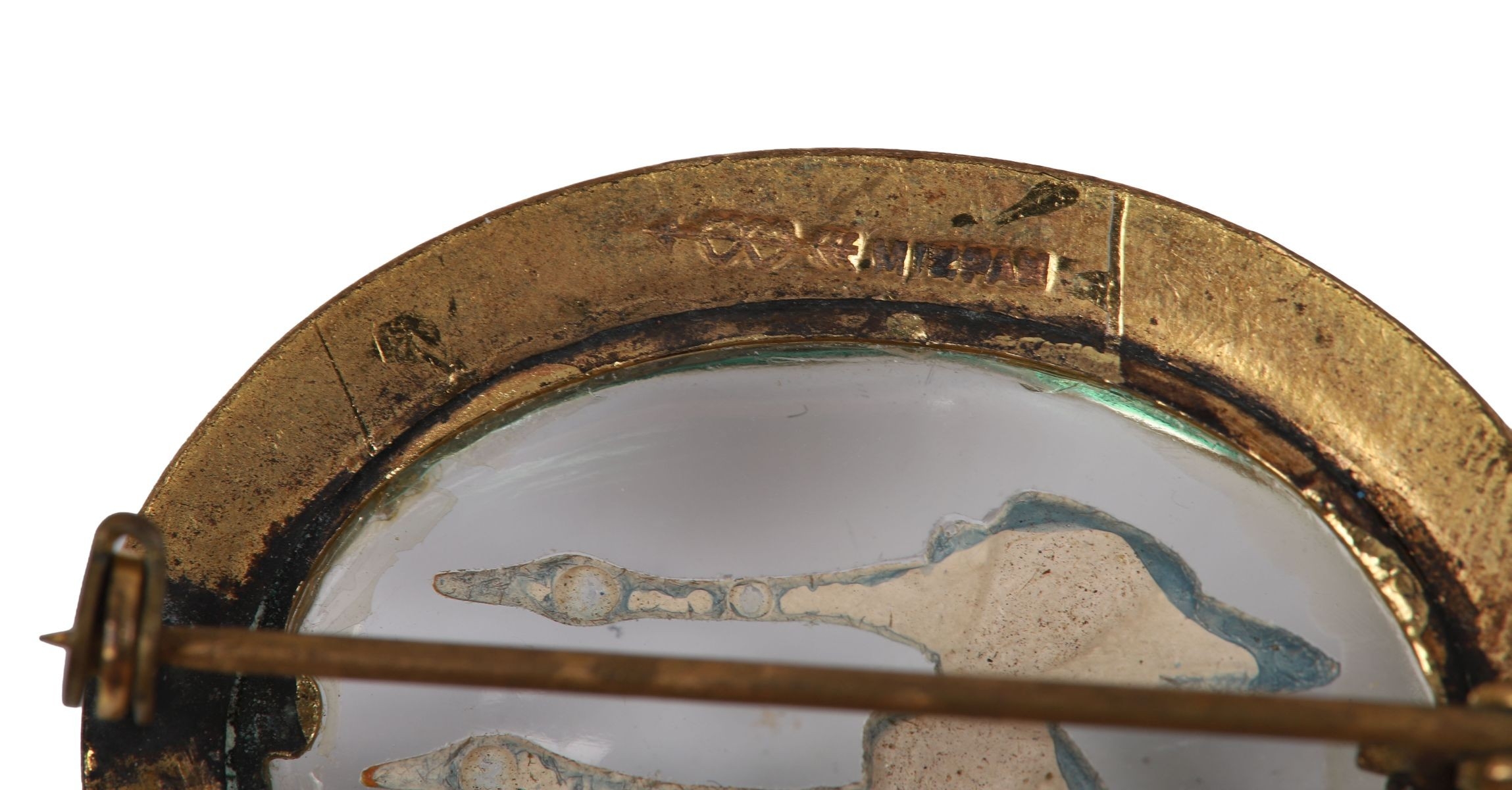
Primary live lot today
Essex crystal brooch with wild geese, Lot 539
Auction house: Sheppards Irish Auction House
View live lot listing
Estimate: €80 - €120
Auction date in listing: 19th May 2026 at 10am BST
Photo coverage: 5 catalogue images, with a verified 2298px full-size source
Why this lot is interesting
This is the quieter end of the Essex crystal lane, and that is exactly why it deserves a look. A lot of reverse-intaglio brooches ask buyers to pay up for a very obvious country-house signal: foxes, dogs, stags, heavy gold, lots of intent. Wild geese in flight are subtler. The image is still recognisably sporting, but it wears more like a small landscape than a club badge. That broadens the buying lane. A collector can enjoy the technique; a jewellery buyer can enjoy the picture; a dealer can see a piece that is easier to place with someone who wants period character without full hunting-theatre energy.
The estimate is the second reason to pay attention. Sheppards also has a higher-estimate Essex crystal brooch in the same sale, which helps frame this one as an accessible entry point rather than a lesser object by default. At this level the premium question is simple: does the scene still feel vivid enough that you would want to look at it twice? If yes, the estimate is live. If the crystal is scratched, the painting looks dulled, or the mount feels tired from the rear, the apparent bargain disappears very fast.
Who buys this and why
- Antique jewellery buyers who want something more individual than a standard gem cluster: they are buying the illusion effect, the miniature painting, and the fact that the brooch reads as conversation-piece jewellery rather than generic sparkle.
- Country-house and sporting collectors: they like the subject matter, but this is a softer, less heraldic version of that taste, which can make it easier to wear and easier to place in a mixed collection.
- Dealers and fair traders: they will be asking whether the image is still crisp enough to sell from a tray under ordinary light, and whether the back fittings look honest enough that no awkward explanation has to come first.
Condition pressure points
- Read the crystal before you read the geese: Essex crystal depends on clear viewing. Scratches, chips, clouding, or a dull surface can flatten the whole illusion.
- Study the painted birds for sharpness: the wings, necks, and spacing need to stay precise enough that the subject still looks intentional rather than foggy or over-romantic.
- Use the rear photographs properly: the hinge, pin, and catch matter. Brooches in this lane are often sold on the front image alone, but tired fittings change wearability and resale confidence straight away.
- Look hard at the join between crystal and mount: any movement, crude solder, later repairs, or uneven setting can turn a lovely little picture into a maintenance job.
- Ask whether there is any paint loss or internal disturbance: reverse-painted decoration is part of the value. Once the image stops looking clean, you are not buying the same thing anymore.
- Keep the full landed cost in mind: premium, shipping, and currency conversion can make a modest estimate less modest by the time the brooch reaches your hand.
Comparator lots
These stay in the Essex crystal brooch lane and help judge where this gentler wildfowl subject sits against stronger sporting motifs and more gold-forward examples.
- Essex crystal brooch depicting a sporting subject, Lot 533 — Auction house: Sheppards Irish Auction House. Estimate €350 - €550. Useful as the same-sale step-up comparator if you want to see how much more money the market asks when the subject and presentation read more overtly important. view lot
- Essex Crystal Dog Portrait Gold Bar Brooch, 4g, Lot 391 — Auction house: Luxoris Auctions. Estimate £240 - £280. Helpful for comparing this quieter geese subject with a more traditional dog-portrait buying lane where gold content and animal charm carry more of the pitch. view lot
- An Essex crystal reverse-intaglio brooch painted with a fox mask, Lot 350 — Auction house: Chilcotts Auctioneers. Estimate £100 - £200. This is the practical comparator if you want to measure how much a classic British sporting motif can push value even when the underlying technical questions stay the same. view lot
UK media & culture context
Essex crystal sits in a distinctly British collecting lane because it combines country-sport imagery, miniature painting, and jewellery that reads as personality rather than pure gemstone value. The V&A's guide to glass is useful here because its section on reverse painting explains the central technical vulnerability: the paint is applied on the back of the glass and is not fired, which is exactly why clarity and condition matter so much in a brooch like this. Country Life's recent piece on the brooch revival is also relevant. It makes the broader point that brooches have returned as expressive objects rather than dutiful accessories, and that helps explain why a small period piece with a recognisable subject can still feel current. Set beside the fox-mask and dog-portrait comparators in today's market lane, this geese example starts to look like a sensible, wearable entry into that world rather than a novelty buy.
- V&A: A–Z of glass — especially useful for the reverse-painting section, which explains why behind-glass decoration is visually attractive but condition-sensitive.
- Country Life: why the brooch is back in fashion — helpful on the current British appetite for brooches as expressive pieces with history and personality.
Bottom line
This is attractive because it is less loud than most of its rivals. If the crystal is clean, the painting still snaps into focus, and the back fittings look calm, Sheppards' estimate leaves room for a clever buy. If the scene only works because the catalogue has been kind, let the geese fly past and wait for the sharper brooch.
Editorial analysis for educational purposes only. Final bidding decisions, fees, tax, shipping, collection, condition confirmation, and contract terms are handled by the auction house.