
Daily Deep Dive · 14 May 2026 · Jewellery
Lot Spotlight: a Charles Horner-led brooch tray where the backs, pins, and enamel losses matter more than the prettiest front view
Jewellery trays like this sell on colour first and discipline second. Luxoris Auctions has a live antique enamel sterling silver brooch collection including Charles Horner, Lot 251, with five catalogue images and a verified 2500px full-size source, which is enough to treat it as a real buying exercise rather than a vague Victorian rummage. The attraction is obvious: a grouped run of silver brooches with enamel interest, maker excitement, and the sort of display charm that can make buyers forgive too much. The harder question is whether the reverse shots, hinges, pin stems, and enamel edges still look honest enough that you are buying wearable Edwardian design rather than paying for the one best brooch to drag the rest of the tray along behind it.
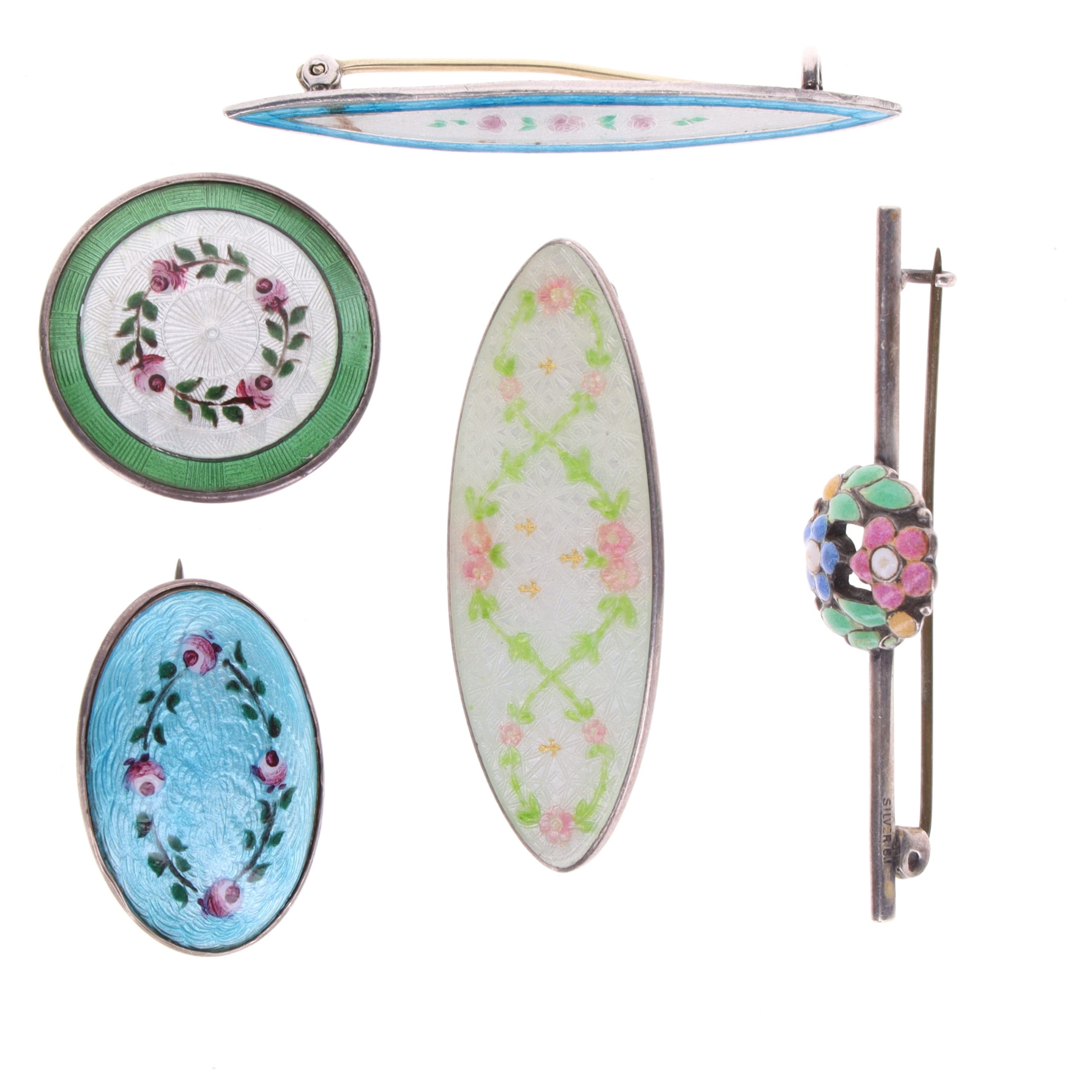
Primary live lot today
Antique Enamel Sterling Silver Brooch Collection including Charles Horner, Lot 251
Auction house: Luxoris Auctions
View live lot listing
Estimate: £60 - £80
Auction date in listing: 14th May 2026 at 11am BST
Photo coverage: 5 catalogue images, with a verified 2500px full-size source
Why this lot is interesting
The strongest thing about this tray is that it sits in a proper British collecting lane rather than in generic mixed-jewellery limbo. Charles Horner still carries real pull because buyers recognise the Halifax workshop, the Chester-marked silver tradition, and the way enamelled brooches from this world can feel authored without needing precious stones to do the talking. That makes a grouped lot more interesting than it first appears. You are not just buying a handful of wearable antiques. You are buying access to a maker story, a design language, and the possibility that one or two pieces could outshine the estimate on their own if the catalogue has been disciplined rather than flattering.
The catch is that grouped brooch lots only stay clever when the weak pieces are still competent objects. A tray like this can be worthwhile because it gives a private buyer instant variety or gives a dealer room to split and resell, but that same mix can hide dead hinges, tired pins, replacement catches, or small enamel losses that are easy to miss when the front shot is doing all the seduction. Collection lots earn their keep when the least glamorous brooch still deserves the box. If the whole valuation logic depends on one Horner piece carrying the rest, the bid wants cooling down.
Who buys this and why
- Charles Horner and British silver jewellery followers: they are buying the Halifax maker association, the chance of Chester-marked pieces, and the appeal of enamelled silver that still feels rooted in an identifiable workshop tradition.
- Dealers and fair-traders: they want a tray with enough spread to split into individual brooch sales, provided the backs, catches, and wear levels suggest each piece can stand on its own.
- Private buyers building a wearable antique jewellery box: they are not chasing one trophy jewel; they want several brooches with more character than modern silver at the same money usually offers.
Where the risk sits
- Use the reverse views properly: brooches live and die on catches, hinges, and pin stems. If the backs are vague, do not assume the mechanics are fine just because the enamel fronts are attractive.
- Read the enamel edges, not just the centre colour: small losses, stress lines, or over-cleaned patches often show first at borders and corners.
- Check whether the maker excitement is evenly distributed: if the Charles Horner association appears to rest on one brooch while the rest are ordinary fillers, value the tray accordingly.
- Look for consistency of age and finish: mixed lots can hide later replacements, repaired clasps, or pieces that have been grouped for convenience rather than because they belong together aesthetically.
- Do not treat weight as shorthand for quality: 26g sounds reassuring, but with brooches the practical test is construction, surface survival, and hallmarks, not grams alone.
- Price the fees into the real spend: Luxoris keeps the estimate sensible, but buyer premium still matters at this level because small-condition compromises can quickly wipe out the apparent bargain.
Comparator lots
These comparators stay in the brooch lane rather than drifting off into general vintage jewellery, which is the right way to judge whether today’s mixed tray is genuinely useful.
- Charles Horner Sterling Silver Brooch Pair, Lot 186 — Auction house: Luxoris Auctions. Useful as the nearest same-maker check: if a cleaner dedicated Horner pair is available elsewhere in the same house’s catalogue history, today’s mixed tray needs to justify itself on breadth and condition, not just on the Horner name. view lot
- An attractive vintage sterling silver oval brooch with mottled blue and green art glass, Lot 188 — Auction house: Tower Auctions. This is the lower-frills buying lane: a single wearable silver brooch where all the value sits in whether the front still looks alive and the pin remains tidy. It helps test whether the Luxoris tray is really offering more than several ordinary sub-£25 brooch decisions bundled together. view lot
- A 9ct tri-colour textured gold and enamel eagle brooch, Lot 151 — Auction house: Willingham Auctions. This is the richer end of the same room function: one statement brooch with real material value and stronger single-object theatre. It is a useful reminder that mixed silver trays and standout enamel brooches can attract entirely different buyers, so the Luxoris lot only makes sense if you want spread and maker interest rather than one punchy hero piece. view lot
UK media & culture context
This is one of those jewellery lots where the British context is doing real work. The British Museum’s biography of Charles Henry Horner places the firm in Halifax and notes the workshop’s broad production of silver jewellery, including enamelled pieces, while its collection entry for a circa-1903 Horner brooch points out how these designs often sat close to the Liberty & Co taste for abstract linear motifs and were commonly assayed at Chester. That matters here because a tray like today’s should be judged not as random pretty silver but as part of a recognisable British design and hallmark tradition. Halifax Art Society’s feature on Charles Horner also shows that the local design identity still lands culturally in Yorkshire, which helps explain why these brooches keep a following well beyond scrap-or-curio status. The V&A’s broader history of jewellery is useful too: around 1900, enamel and design intelligence often mattered as much as preciousness, which is exactly the lane where a lot like this either becomes a smart buy or falls apart under close inspection.
- British Museum: Charles Henry Horner — helpful for the Halifax workshop background and why the maker name still carries weight.
- British Museum: Charles Horner brooch, circa 1903 — a useful benchmark for enamel, silver, and the kind of design vocabulary buyers associate with the firm.
- Halifax Art Society: Charles Horner of Halifax — local cultural context for why Horner remains more than just a hallmark for West Yorkshire collectors.
- V&A: A history of jewellery — useful background on the late-19th- and early-20th-century shift toward design-led jewellery where enamel and line mattered as much as gem value.
Bottom line
If the backs are sound, the enamel losses stay modest, and the best Horner-linked piece is not being asked to rescue a weak supporting cast, this is a sensible little tray with real British design character. If the catalogue leaves the mechanics murky, buy a single better brooch instead.
Editorial analysis for educational purposes only. Final bidding decisions, fees, tax, shipping, collection, condition confirmation, and contract terms are handled by the auction house.