
Daily Deep Dive · 18 May 2026 · Furniture
Lot Spotlight: an Ercol dresser that only works if the glazing, split line, and door alignment stay calmer than the golden glow
This is the sort of Ercol lot that tempts buyers into furnishing a mood rather than buying a piece of cabinet work. Acanthus Auctions Ltd has a live glazed and shelved Ercol dresser, Lot 85, measuring 196cm high by 97.5cm wide and 49.5cm deep, backed by five catalogue photographs from a verified 2500px image family. That is enough to treat it as a proper furniture decision. The badge and warm timber will do their part. The real question is whether the glass, shelf arrangement, two-piece join, and door lines still look disciplined enough that you are buying useful British storage rather than a cottage-style shortcut.
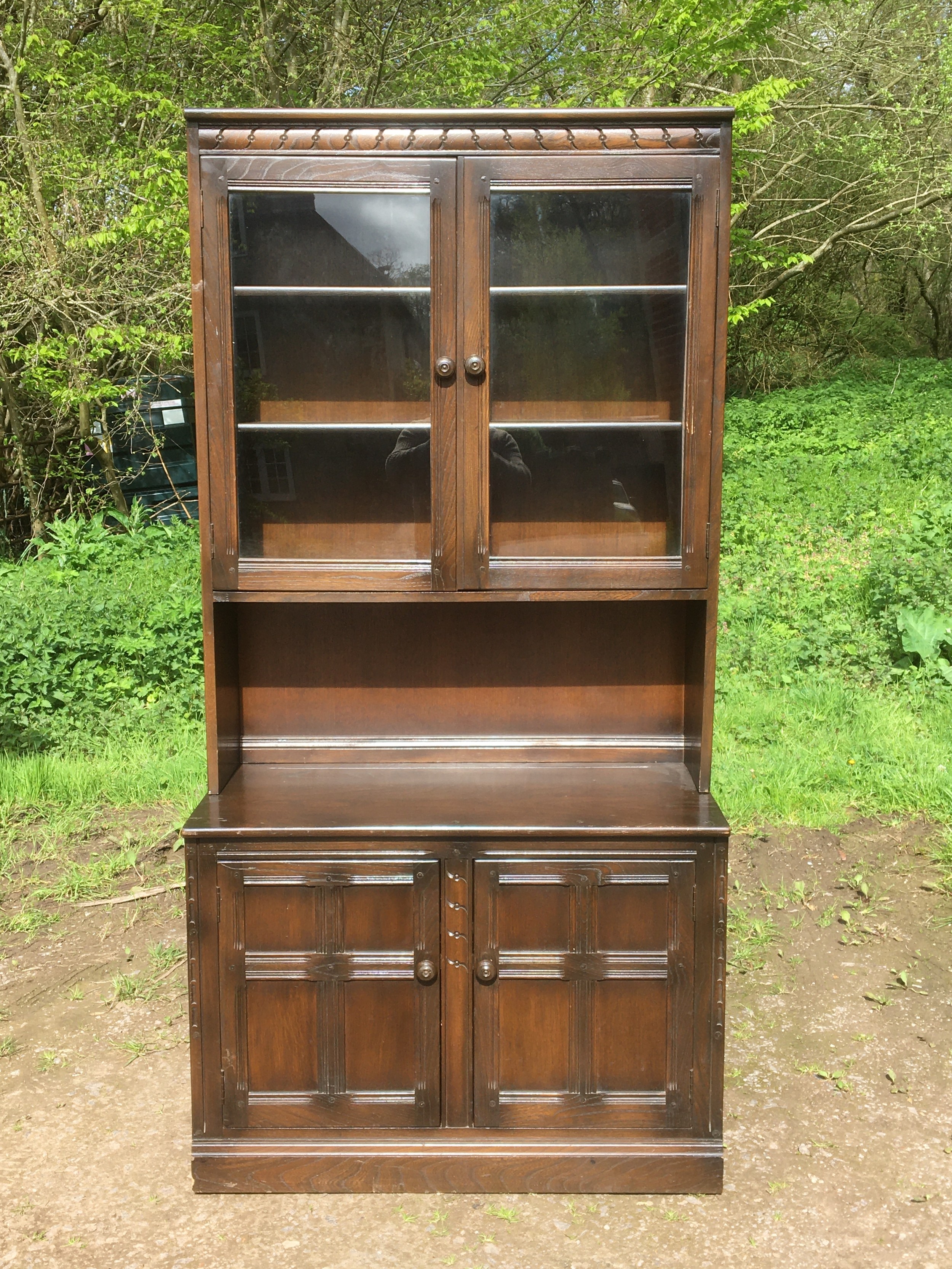
Primary live lot today
Ercol glazed and shelved dresser, Lot 85
Auction house: Acanthus Auctions Ltd
View live lot listing
Estimate: No estimate stated
Auction end in listing: 19th May 2026 from 7pm BST
Photo coverage: 5 catalogue images, with a verified 2500px full-size source
Why this lot is interesting
An Ercol dresser is never really just a badge exercise. When this sort of piece works, it gives you the exact thing British storage furniture does best: the upper half light enough to display pottery, glass, books, or kitchenware without feeling bulky, and the lower half solid enough to hide the untidy work of living. That balance is harder to keep than buyers think. If the glazing feels flimsy, the shelves sag, or the lower doors stop sitting square, the whole piece slides from useful into stage-set very quickly.
The two-piece construction is what makes this lot better than a generic nostalgic buy. Splitting the dresser into upper and lower sections is practical, especially for transport and stair access, but it also creates the exact place where bad storage, warping, and casual reassembly show themselves. A dresser like this should look settled. If the top section sits cleanly, the sight lines stay straight, and the timber still carries its colour evenly, you get a piece that can live comfortably in a kitchen, dining room, or boot room without asking you to pretend it is rarer than it is.
Who buys this and why
- Ercol loyalists: they are not chasing one of the famous chair silhouettes here; they are buying the quieter cabinet side of the brand, where practicality and recognisable craftsmanship matter more than showmanship.
- House buyers furnishing real working rooms: they want one piece that can display the good stuff up top and swallow the visual clutter below, especially in kitchens, utility rooms, and family dining spaces.
- Trade and interiors buyers: they are looking for a branded British storage piece that can be cleaned, placed, and sold on quickly if the glass, joinery, and overall stance remain honest.
Condition pressure points
- Start with the glazing and beading: look for cracks, later replacements, loose surrounds, or cloudy panels that flatten the whole point of the upper section.
- Read the split line between top and base: if the join looks awkward, overhanging, or slightly twisted in the catalogue views, assume transport and setup may not be the whole story.
- Check the shelves for sag and the shelf supports for completeness: dressers are bought to work, and tired shelving turns a practical buy into an immediate repair job.
- Use the doors and drawers as your discipline test: on a piece like this, even gaps, clean closes, and straightforward runners matter more than surface glow.
- Inspect wear where hands actually go: handles, drawer fronts, door edges, and the plinth should show believable use, not heavy scrubbing, sticky finish, or colour loss that makes the piece look patchy in the room.
- Ask about the backboards and interior smell: old storage furniture can hide damp history, kitchen grease, or hard use better than a front-on glamour shot suggests.
Comparator lots
These comparators stay in the live British storage-furniture lane. The point is not to match the dresser exactly, but to test whether today’s bid should go on a branded display piece, a more compact Ercol cabinet, or a different mid-century storage profile altogether.
- An Ercol pedestal cupboard with single door and drawer — Auction house: Maxwells Auctioneers. A smaller, cheaper Ercol entry point that helps you separate badge value from pure usefulness. If this tighter piece looks crisper, some buyers may find it the smarter buy. view lot
- Mid century Merridew Long John teak sideboard with three drawers, fall front, and smoked glass doors — Auction house: Maxwells Auctioneers. This is the sharper sideboard comparator because it offers a more obviously modernist storage look at a stated £150–£250 estimate, useful for deciding whether you want Ercol warmth or leaner mid-century lines. view lot
- G-Plan mid-century teak corner unit, Lot 796 — Auction house: Maxwells Auctioneers. A useful space-saving comparator that asks a different room-planning question: do you actually need a full dresser, or would a corner storage piece do the same job with less visual weight. view lot
UK media & culture context
Ercol still lands in Britain because it sits right at the intersection of utility, memory, and design respectability. The company’s own history places Lucian Ercolani in High Wycombe, the old centre of English furniture making, and the firm still leans hard on that line between practical production and craft identity. Its account of post-war manufacturing is especially relevant here: ercol’s wartime and Utility Scheme work was not about elite collector furniture, but about making strong, usable pieces at scale for ordinary homes. That is why a dresser like this still makes sense today. It belongs to the British habit of wanting furniture to be serviceable first and characterful second. Ercol’s later Windsor cabinet story sharpens that point. By the early 1960s the company was already treating storage furniture as part of its domestic design signature, not just a supporting act for the chairs. The V&A’s post-war design material adds the bigger backdrop: Britain’s Utility Furniture Scheme shaped how the country thought about honest, efficient domestic furniture after the war. That is the right frame for today’s lot. You are not buying an icon in the abstract. You are buying into a very British idea that well-made storage should earn affection through daily use.
- ercol: About ercol — background on Lucian Ercolani, High Wycombe, and the brand’s long identity as a British furniture maker.
- ercol: Excellence at Scale — useful on post-war production, the Utility Furniture Scheme, and why ercol’s practical manufacturing story still matters.
- ercol: 100th Anniversary Launch — The 467 Windsor Cabinet — helpful cabinet-specific context on how storage furniture sat within ercol’s post-war domestic design language.
- V&A: Britain Can Make It — useful broader context on Britain’s Utility Furniture Scheme and the post-war domestic design climate that shaped furniture buying.
Bottom line
If the top section sits square, the glazing is clean, and the doors and shelves still look as if they want to work for another decade, this is a sensible live Ercol buy with actual room-by-room usefulness. If the upper half looks fussy or tired, let somebody else pay for the glow.
Editorial analysis for educational purposes only. Final bidding decisions, fees, tax, shipping, collection, condition confirmation, and contract terms are handled by the auction house.