
Daily Deep Dive · 27 May 2026 · Lighting
Lot Spotlight: a gilded twelve-branch chandelier that looks cheap on paper and demanding the second you imagine it on an actual ceiling
You are not buying illumination here so much as permission for the ceiling to start the conversation. Whittons Auctions Ltd has a live gilded twelve-branch chandelier adapted for electricity, Lot 538, estimated at £30–£50 and catalogued at approximately 63cm high by 70cm wide. The attraction is immediate: lots of arms, lots of gilt, and exactly the sort of decorative excess that can give a room some old-house swagger without old-house money. The important part is less glamorous. The listing gives five verified full-size catalogue images, with the main source at 1500×1778 and alternate views reaching 2060px on the long side, which is enough to judge whether the armature stays balanced, the finish still has presence, and the electrical adaptation looks orderly rather than improvised. At this level, the buy is not about rarity. It is about whether the drama still hangs together when you inspect the hardware.
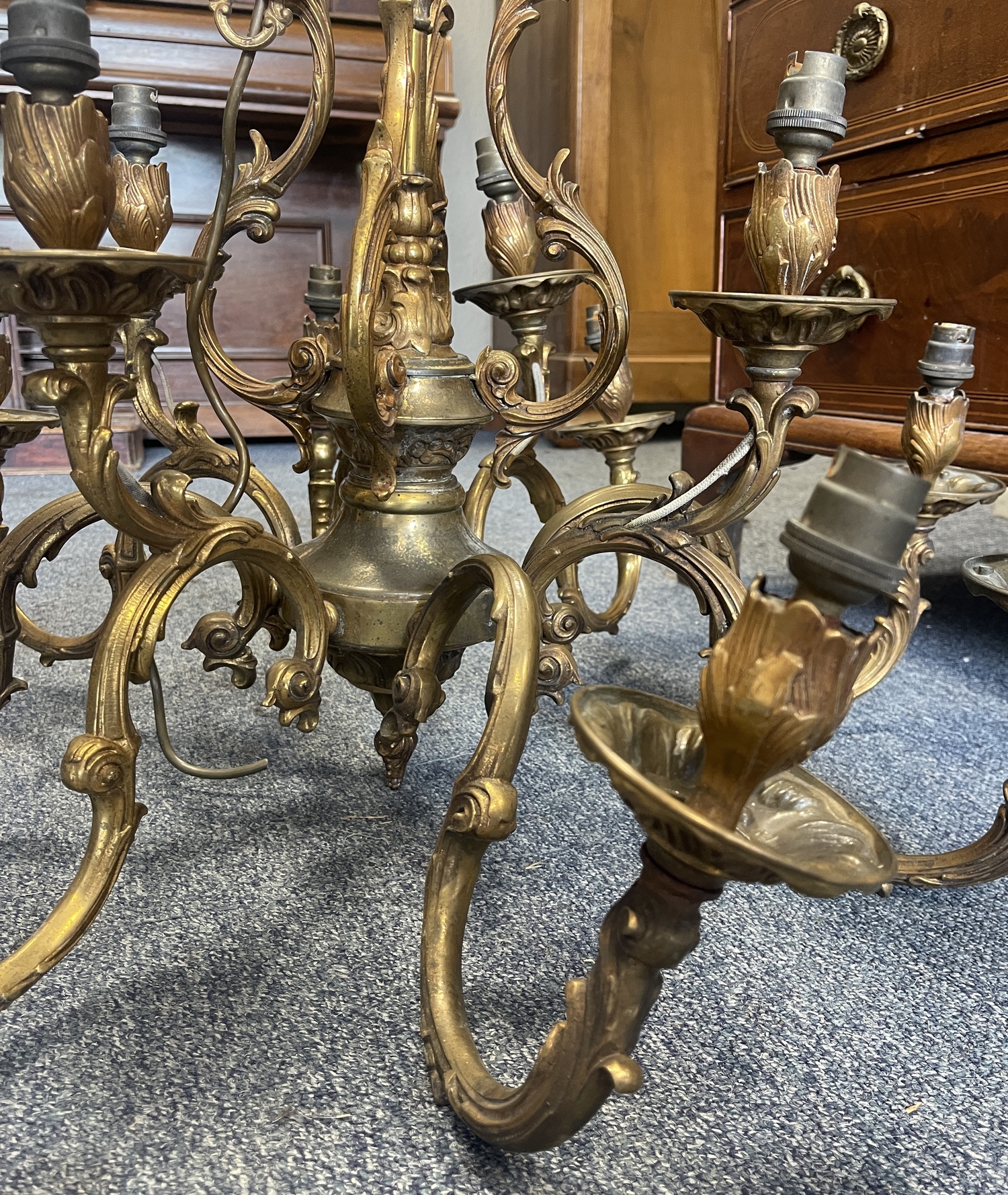
Primary live lot today
Gilded twelve branch chandelier adapted for electricity, Lot 538
Auction house: Whittons Auctions Ltd
View live lot listing
Estimate: £30–£50
Auction date in listing: 27 May 2026 at 10:30am BST
Catalogue dimensions: approximately 63cm high × 70cm wide
Photo evidence: five verified full-size catalogue images, main view 1500×1778 with alternate views up to 2060px on the long side
Why this lot is interesting
The estimate is where this gets lively. Twelve-branch ceiling pieces usually ask buyers to choose between theatrical scale and manageable money; this one seems to offer both. That can be a real opportunity if the chandelier still reads as a convincing decorative object rather than a stripped-out shell with replacement wiring and a forgiving camera angle. Buyers who like country-house atmosphere, restaurant fit-out glamour, or hall-and-stair landing drama will see the appeal instantly.
The words adapted for electricity are doing most of the real work. They tell you this is no purist candle-lit survivor, but they also tell you exactly where the judgement sits. A converted chandelier can be far more useful than an untouched one, provided the adaptation respects the form. If the branches line up cleanly, the candle sleeves do not look clumsy, the ceiling fixings are sensible, and the finish still has enough depth to carry the gilt effect across a room, this is a lot of decorative impact for little money. If the wiring is crude or the balance is off, the low estimate becomes an installation bill in disguise.
Who buys this and why
- Period-house decorators: they want a ceiling piece with enough scale to animate a hallway, dining room, or stairwell without moving into specialist-dealer pricing.
- Hospitality and events buyers: they are often more comfortable with adaptation work and see value in instant visual theatre, provided the frame is stable and presentable.
- Dealers and decorative-trade buyers: they are looking for a chandelier that can be cleaned, checked, rehung, and resold on silhouette and room effect rather than on strict authorship.
Where the risk sits in the photos
- Check branch symmetry from every available angle: one drooping arm can turn grandeur into salvage very quickly.
- Study the candle fittings and sleeves: mismatched or awkward electrical components are often the first sign that the conversion was expedient rather than careful.
- Look closely at the chain, canopy, and hanging point: a chandelier can be decorative yet still awkward to install if key suspension parts are incomplete or later.
- Watch the gilt finish for tired bright spots and dark losses: these pieces live on surface, so patchy wear matters more than buyers sometimes admit.
- Ask whether any drops, collars, or ornamental elements are missing: even when the chandelier is not cut-glass heavy, absent trim can flatten the whole effect.
Comparator lots
These comparators stay in the live chandelier lane and help frame the decision properly: do you want low-estimate decorative bulk, a more complete wall-and-ceiling set, a more serious period mechanism, or a cleaner formal gilt-and-glass look?
- An early 20th Century cut glass chandelier together with a pair of matching wall sconces, Lot 76 — Auction house: Whittons Auctions Ltd. Estimated at £40–£60. This is the nearby ensemble comparator: less branch count, more complete room scheme, and a useful test of whether you value matching secondary lighting over sheer ceiling drama. view lot
- A late Victorian brass rise and fall electric chandelier with three elongated egg-shaped weights, Lot 93 — Auction house: Kinghams Auctioneers. Estimated at £300–£500. This is the functional-period comparator: a much stronger mechanism story and a much higher estimate, useful for judging how much of today’s price advantage comes from decorative looseness rather than hidden value. view lot
- An Empire style cut glass and gilt-metal five-arm chandelier, Lot 303 — Auction house: Duke's. Estimated at £100–£200. This is the formal-style comparator: fewer arms, more disciplined gilt-and-glass composition, and a helpful measure of what a more polished decorative route costs when the estimate rises above bargain territory. view lot
UK media & culture context
British buyers still read chandeliers through two overlapping ideas of taste. One is country-house atmosphere: layered warm light, decorative ceilings, and the feeling that a room should glow rather than glare. The other is the modern argument about whether a chandelier is a flourish or a folly. That tension helps explain why lots like this stay commercially alive. They can look faintly ridiculous in the wrong room and exactly right in the right one. The scrolled, theatrical ornament also sits comfortably inside the broader European Baroque and Rococo design language that British interiors culture keeps recycling whenever a room needs movement, gilt, and a little bravado.
- Country Life: Country house lighting — useful on why old houses tend to favour layered, atmospheric lighting rather than blunt overhead glare.
- House & Garden: Why chandeliers are such a divisive lighting feature — a current British interiors view on why chandeliers still split opinion and why setting matters so much.
- V&A: The Rococo style – an introduction — concise context for the curled, ornamental vocabulary that still makes gilt multi-arm lighting read as room-making theatre rather than neutral hardware.
Bottom line
This is a cheap chandelier only if the awkward jobs have already been handled properly. If the branches hang true, the conversion looks disciplined, and the finish still carries across a room, the estimate is undeniably tempting. If the wiring, suspension, or missing ornament leave you pricing repairs before you have even found a ceiling hook, let someone else buy the drama.
Editorial analysis for educational purposes only. Final bidding decisions, fees, tax, shipping, collection, condition confirmation, electrical safety, installation, and contract terms are handled by the auction house.