
Daily Deep Dive · 28 May 2026 · Jewellery
Lot Spotlight: an Art Deco dress set whose elegance only counts if you can live with the missing button
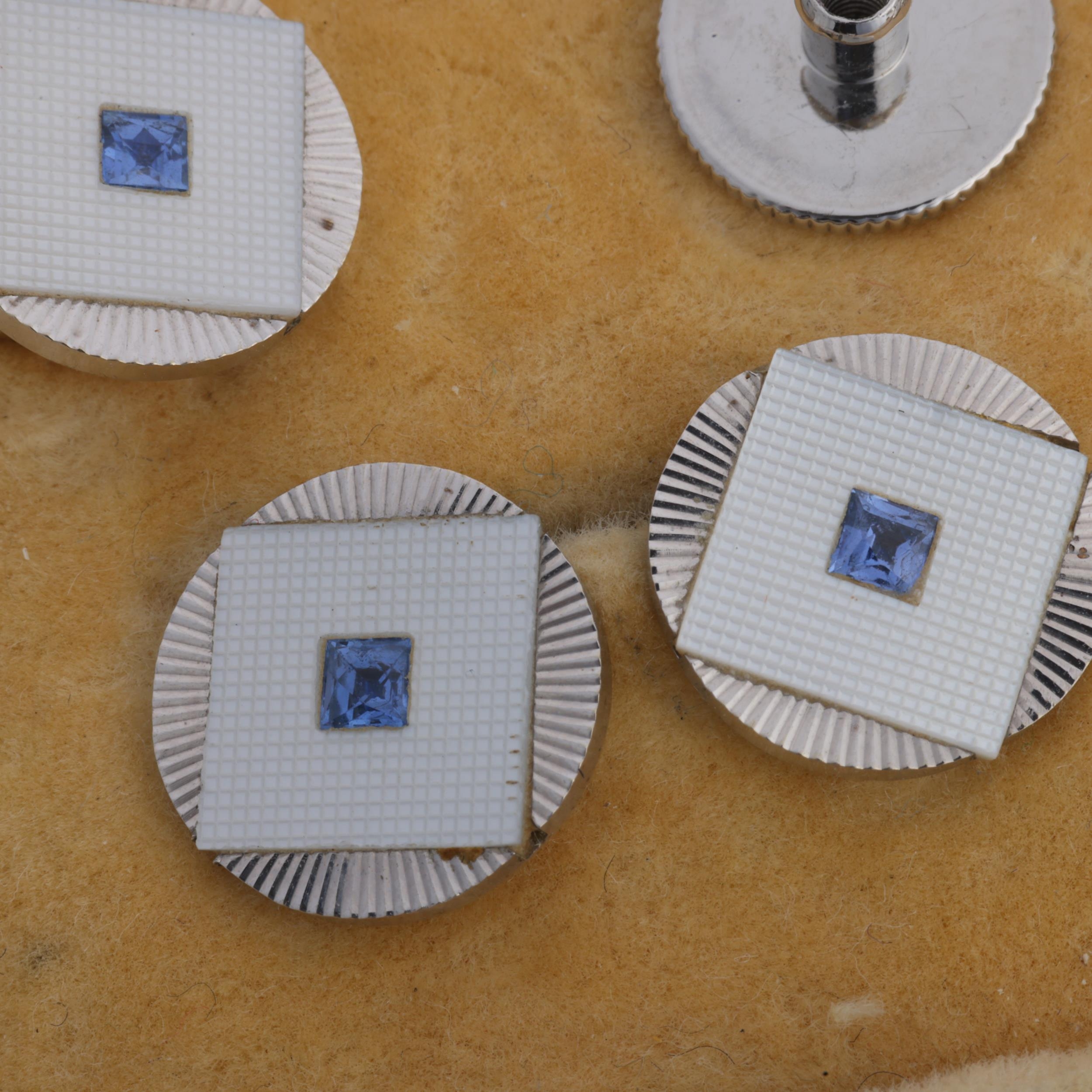
Formal jewellery is a strict little world. Burstow & Hewett has a live Art Deco 9ct white-gold, mother-of-pearl, and sapphire gentleman’s dress set, Lot 1178, estimated at £300–£500 and housed in a fitted Skinner & Co of London case. The catalogue gives three verified full-size images, with the main view at 2048×2048 and the alternate views at 2500×2500, which is enough to look past the pleasing geometry and ask the only question that really matters here: are you buying a handsome surviving set with one manageable absence, or a part-complete formal accessory that will keep reminding you what is missing every time the box opens. Burstow & Hewett’s condition note says the cased set appears to be lacking one button. That does not kill the lot. It does define it.
Primary live lot today
Art Deco 9ct white gold mother-of-pearl and sapphire gentleman’s dress set, Lot 1178
Auction house: Burstow & Hewett
View live lot listing
Estimate: £300–£500
Auction date displayed in listing: 19 June 2026 at 10am BST
Catalogue detail: pair of cufflinks, three buttons, and two dress studs, 13.7g total, in fitted Skinner & Co of London case
Photo coverage: three verified full-size catalogue images, from 2048×2048 to 2500×2500
Why this lot is interesting
Dress sets are not bought for daily utility. They are bought because a small piece of formal dressing still feels civilised, specific, and faintly theatrical. This one gets the basics right. The white-gold settings keep the tone cool, the mother-of-pearl gives the face softness without turning sugary, and the calibre-cut sapphires provide just enough dark blue discipline to stop the whole thing drifting into wedding-gift blandness.
The London case matters too. Skinner & Co is not just decorative silk-lining nostalgia; it places the lot inside a recognisable British jewellery lane where presentation, formal use, and quiet social polish were part of the object’s purpose. That is why the missing button matters so much. In ordinary jewellery a single absent component can feel trivial. In a dress set, symmetry is half the point. Buyers need to decide whether the surviving ensemble is still complete enough for the way they would actually wear, display, or resell it.
Who buys this and why
- Black-tie traditionalists: they want a proper set rather than piecemeal cufflinks and studs, and they care about the coherence of the whole presentation.
- Dealers in antique jewellery and dress accessories: they are looking for period formality with enough style signal to sell on taste, not just on gold content.
- Buyers furnishing a wardrobe or a dressing-room story: they may value the box, the London association, and the complete visual effect as much as strict wearability.
What to inspect before black-tie fantasy kicks in
- Count the set against your intended use: the catalogue notes one missing button. Decide first whether that leaves you with a workable evening-shirt configuration or an incomplete ensemble that will always feel compromised.
- Read the mother-of-pearl surfaces for edge chips and dullness: nacre looks luxurious only when the faces stay crisp and lively under light.
- Check the sapphire setting line: calibre-cut stones need evenness. One replacement, one dead stone, or one visibly tired corner can flatten the Deco precision very quickly.
- Look at the backs, stems, and fittings with the same seriousness as the fronts: formal jewellery fails in use at the hinge, post, or fastening long before it fails aesthetically.
- Do not ignore the case: the fitted Skinner & Co box adds charm, but make sure it is still helping the set rather than merely disguising wear, looseness, or absent pieces.
Comparator lots
These comparators stay in the same gentleman’s jewellery lane and help clarify whether you want complete formal-set theatre, simpler cufflink value, or period gold accessories with less perfectionism built into the buy.
- A Persian gold mother-of-pearl cufflink, Lot 1193 — Auction house: Burstow & Hewett. Estimated at £150–£250. This is the decorative single-pair comparator: less formal completeness, more emphasis on unusual mother-of-pearl panels and painted detail. view lot
- A pair of antique 15ct gold mother-of-pearl ‘button’ cufflinks, Lot 1137 — Auction house: Burstow & Hewett. Estimated at £300–£500. This is the cleaner traditional comparator: similar materials, less ensemble complexity, and a good test of whether today’s lot earns its money through completeness and design rather than metal alone. view lot
- A pair of Art Deco 9ct gold cufflinks by Henry Griffith & Sons Ltd, Lot 1169 — Auction house: Burstow & Hewett. Estimated at £100–£150. This is the sharp-value comparator: still period, still formal, but without the pressure of matching buttons, studs, and case completeness. view lot
UK media & culture context
British taste still has a soft spot for this exact sort of object: discreetly expensive, formally coded, and a little more ceremonial than modern life strictly requires. The V&A’s Art Deco fashion overview is a useful reminder that 1920s and 1930s design prized crisp geometry, elegant contrast, and materials that could signal luxury without looking overloaded. British GQ’s long-running black-tie and cufflink guidance lands in a similar place from the menswear end: mother-of-pearl remains one of the safest and most traditional choices because it reads as refined without shouting. The fitted Skinner & Co case adds a specifically London note to all of this. Bentley & Skinner’s heritage history traces Skinner & Co back to the 1880s and to supplying jewellery to the Royal Family, which helps explain why the box itself carries more than packaging value. This lot sits neatly where British formal dress, London jewellery trade polish, and Art Deco restraint overlap.
- V&A: Art Deco fashion — concise museum context on how Deco geometry and elegant contrast shaped jewellery and dress in the 1920s and 1930s.
- British GQ: The best men’s cufflinks — useful on why cufflinks remain one of the key finishing details in black-tie dressing, with mother-of-pearl still treated as classic territory.
- Bentley & Skinner: Heritage — background on Skinner & Co’s London history and why the fitted case contributes more than decorative nostalgia.
Bottom line
This is not a scrap-value jewellery lot pretending to be something grander. It is a genuinely attractive formal set with one practical flaw that buyers must price honestly. If the missing button does not stop you using or selling the ensemble the way you intend, the estimate looks fair and the visual reward is real. If completeness is the whole reason you are here, this lot is elegant but not quite strict enough.
Editorial analysis for educational purposes only. Final bidding decisions, fees, tax, shipping, collection, condition confirmation, and contract terms are handled by the auction house.