
Daily Deep Dive · 29 May 2026 · Wine & Spirits
Lot Spotlight: a boxed 1955 Armagnac that makes sense only if the sentiment still has a sound bottle underneath it
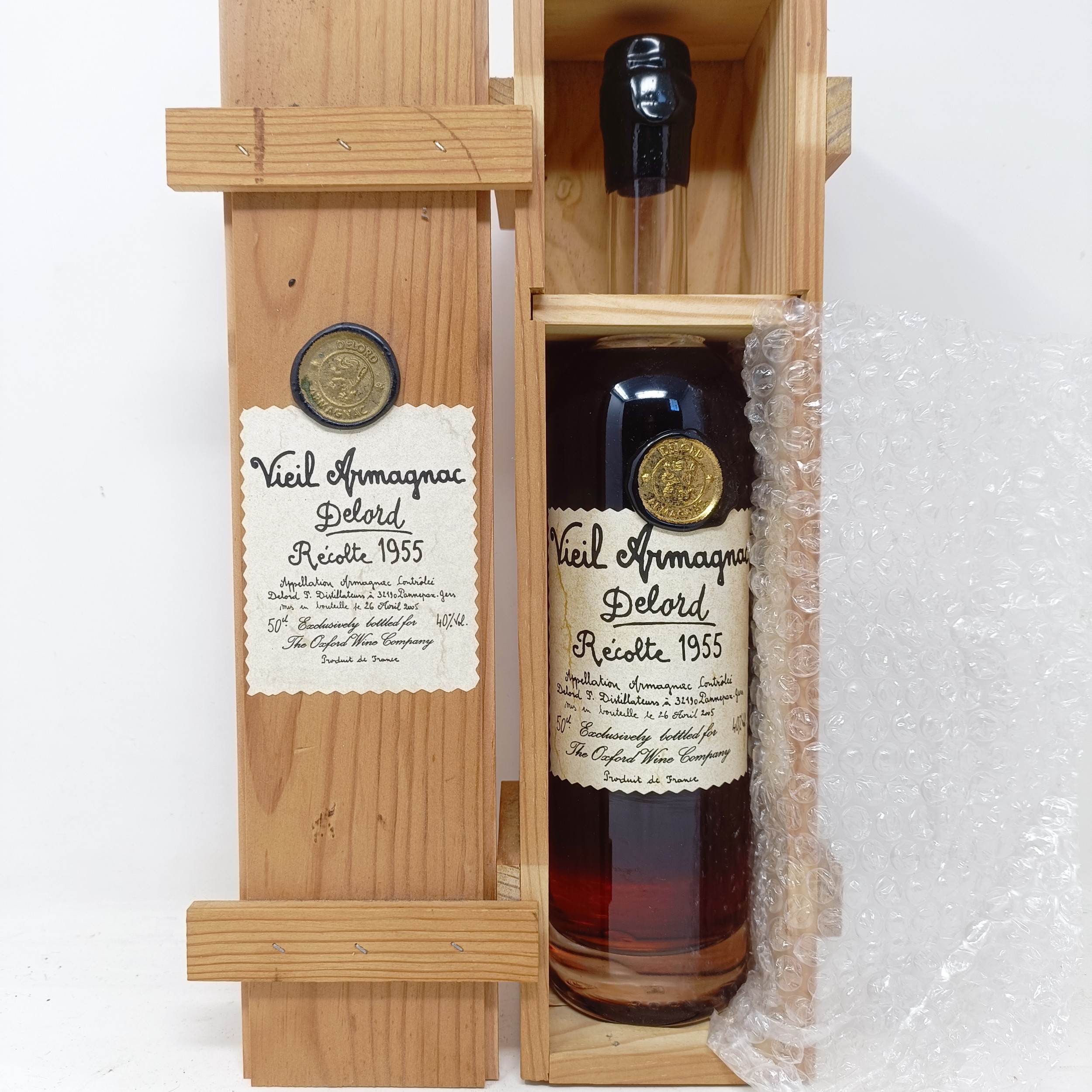
Birth-year bottles can make sensible buyers go soft in the knees. Charterhouse Auctioneers has a live 50cl bottle of Vieil Armagnac from Delord, vintage 1955, boxed and noted as bottled on 26 April 2005, Lot 926, with two verified full-size catalogue images at 2500×2500. That is enough to turn this from a pure romance purchase into a proper judgement call. The appeal is easy to understand: a named house, a strong vintage date, a presentable box, and exactly the sort of object people buy for milestone birthdays, anniversaries, or a drinks cabinet that wants one serious old bottle. The catch is equally simple. With old Armagnac, age is the headline and bottle condition is the truth. If the fill, closure, label, and box all still read calmly, the estimate is live. If they do not, the date on the label starts doing too much work.
Primary live lot today
A 50 cl bottle of Vieil Armagnac, Delord, 1955, boxed, bottled 26th April 2005, Lot 926
Auction house: Charterhouse Auctioneers
View live lot listing
Estimate: £150 - £250
Auction date displayed in listing: 29 May 2026 at 10am BST
Catalogue detail: boxed bottle, 50cl, vintage 1955, bottled 26 April 2005
Photo coverage: 2 verified full-size catalogue images, both 2500×2500
Why this lot is interesting
This is the old-bottle lane where buyers are often choosing between three different motives without admitting it: they want a serious digestif, a milestone-year gift, or an object that gives a room instant authority. Delord is a credible house for that kind of buy. The family has been producing Armagnac since the 19th century, and the lot title gives the sort of practical detail bidders actually need: not just the vintage year, but the bottling date as well.
That bottling date is the sentence to keep in your head. A 1955 vintage with a 2005 bottling date tells you this is not a random dusty relic trying to bluff its way through on age alone. It suggests a bottle that spent decades as spirit before entering glass, which is exactly why the condition questions matter so much. Vintage Armagnac buyers pay for time, but they also pay for confidence that the bottle has spent the years quietly rather than theatrically.
Who buys this and why
- Birth-year and anniversary buyers: they want the emotional pull of a 1955 date, but they still need the bottle to look dignified enough to gift without apology.
- Spirits drinkers moving beyond mainstream Cognac and whisky: they are buying old Armagnac for individuality, maturity, and the slower, less polished charm the category often keeps.
- Dealers and drinks-cabinet curators: they care about box presentation, label legibility, and whether the lot has enough visual authority to display or resell cleanly.
Where the risk sits
- Start with the fill level: old brandy is not bought on label date alone. If the level looks uncomfortably low for the bottle shape, the romance should cool fast.
- Read the closure and capsule as hard as the front label: seepage, staining, or signs of disturbance matter more here than a pretty box.
- Use the bottling date intelligently: 26 April 2005 is useful information, but only if the bottle condition still looks compatible with long quiet storage since then.
- Treat the box as supporting evidence, not the asset: a tidy presentation case helps the gift lane and the display lane, but it should not distract from glass, seal, and label honesty.
- Check for storage noise in the small details: label tide marks, capsule corrosion, sticky glass, or a dull shoulder line can tell you more than the vintage ever will.
Comparator lots
This is a mixed Charterhouse drinks section rather than a specialist Armagnac sale, so the useful comparators are buying-lane comparators: one lot for presentation theatre, one for multiple-bottle drinking value, and one for recognisable claret-name comfort.
- A magnum of Moet & Chandon, Brut NV, boxed, Lot 925 — Auction house: Charterhouse Auctioneers. Estimate £50 - £80. This is the presentation-first comparator: less age drama, more instant celebration value, and a good test of whether you want milestone-year seriousness or easy-format showmanship. view lot
- A bottle of Pomerol, Chateau Bourgneuf, 2004, and three other bottles of Claret (4), Lot 924 — Auction house: Charterhouse Auctioneers. Estimate £60 - £100. This is the drink-now quantity comparator: four bottles, less symbolic weight, and a cleaner value proposition for buyers who want a small claret group rather than one old digestif. view lot
- A bottle of Chateau Chasse Spleen, Moulis en Medoc, 2010 and two others (3), Lot 937 — Auction house: Charterhouse Auctioneers. Estimate £80 - £100. This is the name-recognition comparator for buyers tempted by a famous label but not by the ageing risk and gifting psychology of a 1955 Armagnac. view lot
UK media & culture context
Britain has a clear buying lane for bottles like this: milestone-year gifting, old-school digestif drinking, and the crossover crowd who like whisky but want something less standardised and more personal. Decanter’s recent Armagnac overview is useful because it makes the case for the category as a diverse spirit rather than Cognac’s scruffier cousin. The Whisky Exchange then brings it back to the practical British retail reality: vintage Armagnacs are often bought because the vintage year and bottling date together make them unusually strong birthday and anniversary bottles. Delord’s own house material adds the producer-level frame. The family keeps its oldest vintages in glass away from the light in its so-called Paradise, which is exactly the sort of long-ageing culture buyers hope a bottle like this is carrying into the room.
- Decanter: Exploring Armagnac — strong category context on why Armagnac appeals to buyers looking for diversity, vintage depth, and a more artisanal identity than mainstream Cognac.
- The Whisky Exchange: Vintage Armagnac — especially useful on why vintage Armagnacs work as birthday and anniversary bottles, and why the bottling date matters.
- Maison Delord: Delord Armagnacs — helpful producer context on Delord’s vintage programme and its long-term handling of older Armagnacs.
Bottom line
This is a good lot for a buyer who wants one bottle to do more than one job. It can be a drink, a gift, and a piece of atmosphere at the same time. That versatility is exactly why discipline matters. If the fill looks healthy, the closure looks settled, and the box is supporting a sound bottle rather than disguising a tired one, the estimate feels fair. If the date is doing all the persuasion on its own, leave the nostalgia to someone else.
Editorial analysis for educational purposes only. Final bidding decisions, fees, tax, shipping, collection, condition confirmation, and contract terms are handled by the auction house.