
Daily Deep Dive · 1 June 2026 · Furniture
Lot Spotlight: a Sebastian Cox sideboard with enough authorship to escape the generic oak lane
Some contemporary sideboards ask buyers to pay for a mood rather than a piece of furniture. This one is better than that. Churchill Auctions Ltd has a live Sebastian Cox bespoke wooden sideboard with two sliding doors, Lot 28A, measuring 180cm by 40cm by 50cm and backed by seven verified full-size catalogue images from a 2500px image family, including a 2500×1216 hero shot. That matters because the buying case here is not merely “nice oak, nice proportions”. It is whether a named contemporary British maker, a low horizontal form, and a proper bespoke brief still read clearly enough in the photographs to make this feel like authored furniture rather than a clean plank-front cabinet trading on good taste alone.
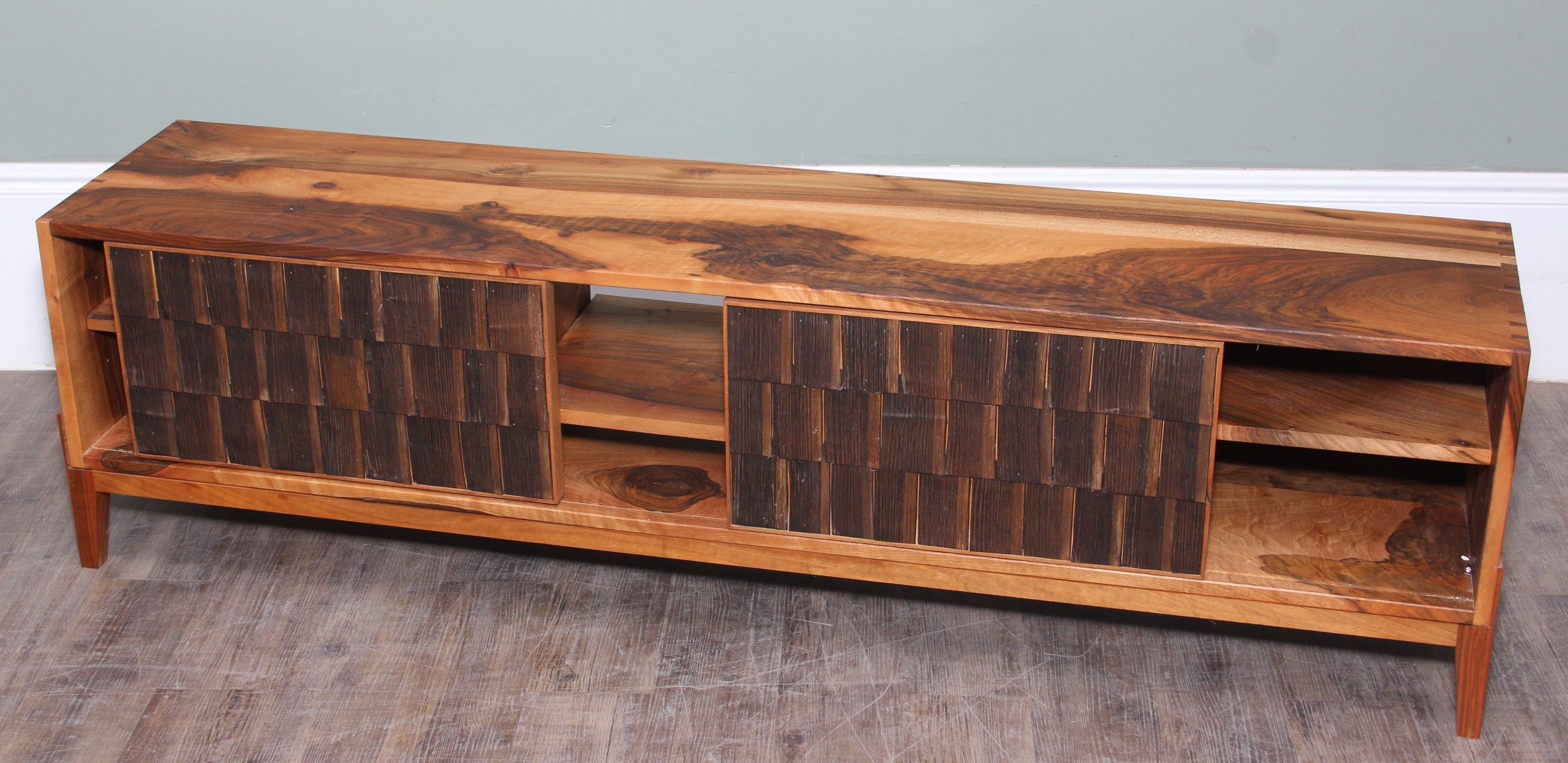
Primary live lot today
Sebastian Cox, a bespoke made designer wooden sideboard with two sliding doors, 180cm x 40cm x 50cm, Lot 28A
Auction house: Churchill Auctions Ltd
View live lot listing
Estimate: No estimate shown
Auction date displayed in listing: 1 June 2026 from 9:59am BST
Catalogue detail: bespoke made designer wooden sideboard with two sliding doors
Photo coverage: 7 verified full-size catalogue images from a 2500px image family
Why this lot is interesting
This is a useful test of whether contemporary British furniture can hold its value when it is stripped of showroom framing and dropped into a mixed-room sale. Sebastian Cox is not a vague lifestyle name. He is a recognisable designer-maker whose work sits squarely in the British hardwood, craft, and regenerative-design conversation. When a piece like this appears without gallery language or custom-commission context doing the persuasion for it, buyers get the chance to judge the object more honestly.
The form helps. Sliding doors keep the elevation calm, the proportions are long and low enough to feel architectural, and the piece has the kind of restraint that should age better than trend-led statement storage. That does not make it automatically valuable. It simply means the real question is a good one: do the timber, the detailing, and the stance still look disciplined enough that the designer attribution is supported by the furniture itself?
Who buys this and why
- Interior-led private buyers: they want one substantial piece that can settle a wall without turning the room into a mid-century cliché.
- Design-aware dealers and specifiers: they are buying the Sebastian Cox name, but only if the execution still feels clean enough to justify resale or project use.
- Collectors of contemporary British craft: they care about maker identity, native timber language, and the fact that bespoke storage by a current studio name is not common in everyday mixed sales.
Condition pressure points
- Read the sliding doors as hard as the front grain: even gaps, calm overlaps, and a believable run matter more here than surface charm.
- Use the long top as a truth-teller: low sideboards show every bruise, ripple, cup mark, and patch of faded finish because the eye travels straight across them.
- Check whether the timber match looks intentional: if the doors and surrounding frame drift too far apart in tone or figure, the bespoke confidence drops fast.
- Watch the base and overall stance: pieces this linear need to sit level. Any visual twist, dropped corner, or awkward leg line will feel louder in a minimalist design than it would in older case furniture.
- Remember that bespoke furniture is not generic furniture: replacement parts, adjustments, and refinishing decisions are more consequential when the design depends on restraint rather than ornament.
Comparator lots
The sensible comparators here are room-function comparators from the same live Churchill sale: one named contemporary maker, one honest utility modernist, and one generic oak benchmark to keep the Sebastian Cox premium honest.
- A modern light oak three drawer two door sideboard made by Neil Thompson, Lot 14 — Auction house: Churchill Auctions Ltd. Estimate No estimate shown. This is the closest comparator in the named British-maker lane: still contemporary, still oak, but far more conventional in elevation. It helps you judge how much you are paying for authored restraint rather than for storage alone. view lot
- A retro Remploy sideboard with two door cupboard and four drawers, dated 1968 to reverse, Lot 15 — Auction house: Churchill Auctions Ltd. Estimate No estimate shown. This is the utility-modern comparator: less studio authorship, more period credibility, and a useful way to test whether you want bespoke contemporary quietness or proven mid-century practicality. view lot
- A modern light oak sideboard with two drawers and two cupboards, Lot 16 — Auction house: Churchill Auctions Ltd. Estimate No estimate shown. This is the baseline comparator for buyers tempted to overpay for the aura of design. If an ordinary oak sideboard would satisfy the room just as well, the Sebastian Cox name is not enough on its own. view lot
UK media & culture context
This lot sits in a very British design lane: contemporary furniture trying to be quieter, more local, and more materially honest than the showroom norm. Sebastian Cox’s own studio frames its work as heirloom furniture made from a nature-first perspective, with a zero-waste, carbon-counting workshop in London and woodland management in Kent. House & Garden’s 2024 profile is useful because it places Cox within the current regenerative-design conversation rather than just the craft-fair one, noting both the British hardwood focus and his Royal Designer for Industry recognition. The practical buyer takeaway is straightforward. This is not a buy for someone who merely wants a pale oak cabinet. It is a buy for someone who values the specifically British mix of studio furniture, native timber advocacy, and understatement that Cox’s work represents.
- Sebastian Cox: About — useful on the studio’s nature-first positioning, London workshop, and Kent woodland context.
- House & Garden: How Sebastian Cox leads the way in regenerative furniture design — good current British media context on why the name carries weight beyond surface styling.
- Sebastian Cox: FAQs — especially useful on British wood choice, solid-wood construction, and how the studio expects its furniture to wear and be maintained.
Bottom line
This is one for buyers who want contemporary British design without the usual performance. If the sliding doors sit true, the top has stayed crisp, and the timber match still feels deliberate, the mixed-sale setting may be underselling a genuinely thoughtful piece. If the photographs are disguising knocks, movement, or a finish that has gone flat and tired, the Sebastian Cox attribution should not rescue it. Buy it as furniture first. Then enjoy the maker name.
Editorial analysis for educational purposes only. Final bidding decisions, fees, tax, shipping, collection, condition confirmation, and contract terms are handled by the auction house.