
Daily Deep Dive · 2 June 2026 · Ceramics
Lot Spotlight: a Verwood three-handled vase with more Dorset character than polish
Village pottery is at its best when the object still feels rooted in the place that made it. South Dorsetshire Auctions has an early decorated Verwood three-handled vase, Lot 38, standing 10 inches tall and backed by six verified full-size catalogue images from a 2048px image family, including a 1536×2048 hero view. That makes this a better buying exercise than the estimate first suggests. Verwood pottery was never about factory-perfect finish. It was about local clay, practical firing, and a rural Dorset identity that survives only when the neck, handles, glaze wear, and body shape still look honest rather than merely old.
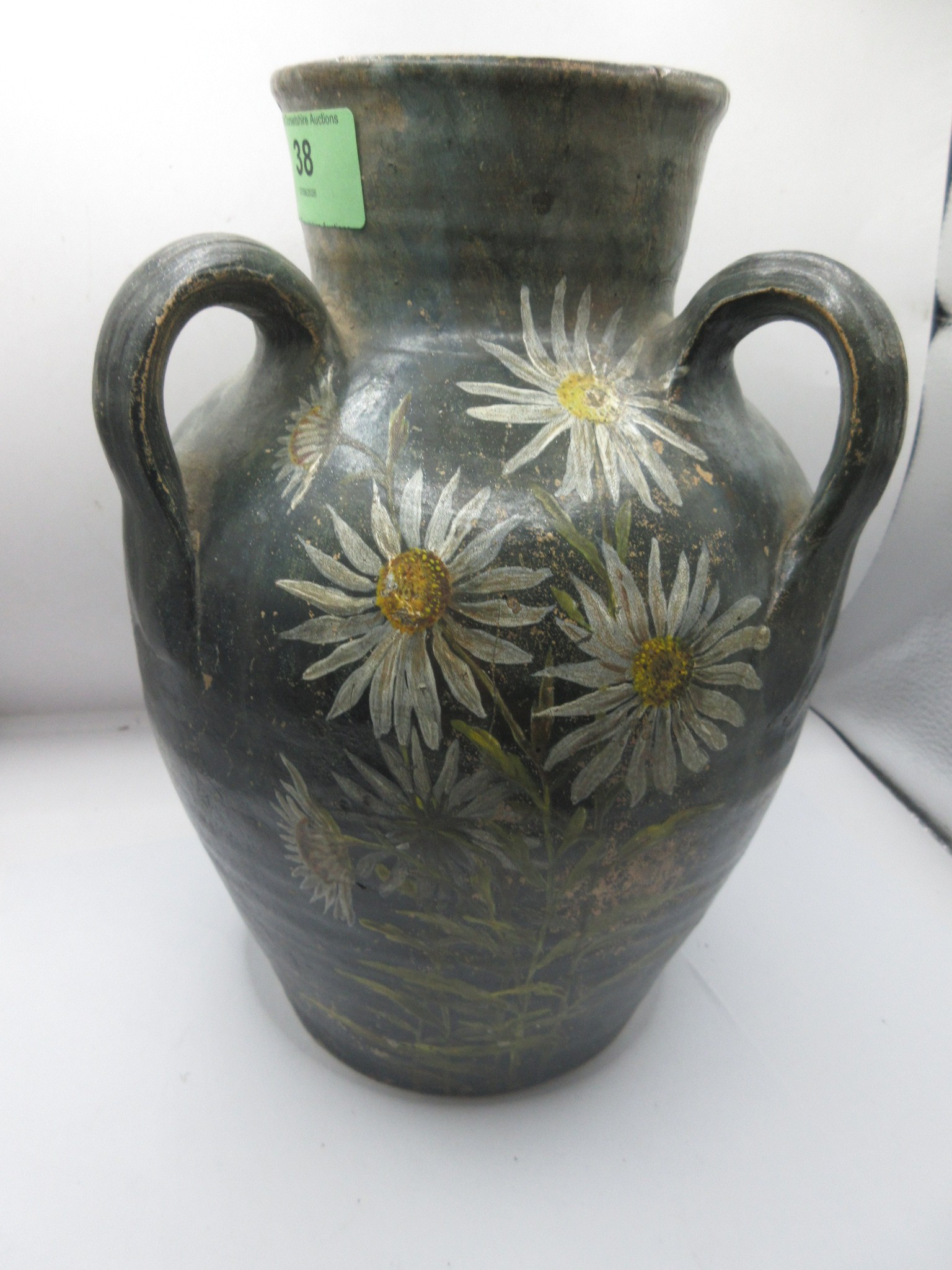
Primary live lot today
An early example of a decorated Verwood three handled vase 10 inches tall in good to very good condition, Lot 38
Auction house: South Dorsetshire Auctions
View live lot listing
Estimate: £100 - £150
Auction date displayed in listing: 7 June 2026 from 11:00am BST
Catalogue detail: early decorated Verwood three-handled vase, 10 inches tall
Photo coverage: 6 verified full-size catalogue images from a 2048px image family
Why this lot is interesting
This is not a buy for someone who only wants a pretty brown country pot. It is a buy for someone who likes the way rural English pottery carries local history in its shape. Three-handled Verwood pieces have enough oddity to catch the eye immediately, but they only become serious buys when the form still feels deliberate rather than eccentric for its own sake.
The estimate is where the lot gets live. At this level, you are no longer buying anonymous rustic pottery for decorative background. You are buying into the East Dorset lane specifically: village production, local clay, and the sort of surviving object that makes sense to collectors of regional ceramics, designers wanting something more grounded than glossy studio ware, and dealers who know that a good Verwood piece can read far better in a room than its modest materials suggest.
Who buys this and why
- Regional pottery collectors: they want a piece that clearly belongs to the Verwood tradition rather than a generic rustic vessel with a Dorset story attached afterwards.
- Interior buyers with a country-house eye: they are buying shape and atmosphere, but they need enough honesty in the handles and rim to avoid paying decorative money for a tired survivor.
- Dealers in English vernacular ceramics: they know unusual local forms such as multi-handled Verwood wares can sell well when the glaze, body, and wear still feel authentic instead of over-cleaned or confused.
Where the risk sits
- Start with the handle junctions: on a piece like this, cracks or old repairs around the joins matter more than surface charm because the handles are a big part of the value story.
- Read the top edge closely: Verwood buyers can forgive age faster than they forgive fresh-looking chips, disguised restoration, or a rim that has gone soft through over-cleaning.
- Check whether the decoration still works with the body: the best village pottery has a calm confidence. If the painted or glazed detail looks patchy, rushed, or visually detached from the form, the lot loses authority fast.
- Use the base and lower body as the truth-teller: wear should look earned. If the pot seems scrubbed, artificially bright, or inconsistent from foot to shoulder, proceed carefully.
- Judge the silhouette from side views, not only the front shot: this is a shape-led buy. If the neck pulls awkwardly or one handle reads weaker than the others, the room presence drops with it.
Comparator lots
The sensible comparators are other live Verwood lots from the same South Dorsetshire Auctions sale: one owl-form piece, one larger practical vessel, and one stronger-ticket costrel to test where this vase sits inside the local pottery lane.
- A Verwood Pottery vase Owl Costal with decoration which has some ware but a nice example anyway as per pictures. Height 8 inches, Lot 30 — Auction house: South Dorsetshire Auctions. Estimate £60 - £100. This gives you the playful owl-form comparator. It is useful because buyers tempted by local charm can see what happens when the form gets quirkier and the estimate stays lower. view lot
- A Verwood pottery jug of larger proportions being over 12 inches tall and in fair condition for age apart from some missing glaze to the top 4 inch glazed section as per pictures, Lot 43 — Auction house: South Dorsetshire Auctions. Estimate £60 - £100. This is the utility-form comparator. It helps you separate shape-driven appeal from straightforward regional pottery buying where condition compromises are disclosed more openly. view lot
- Probably the highlight of the Verwood pottery this decorated Owl Costrel glazed and over decorated with blue flowers on a white background, Lot 44 — Auction house: South Dorsetshire Auctions. Estimate £150 - £300. This is the premium comparator in the same village-pottery conversation. If that owl costrel is the headline piece, Lot 38 has to justify itself as the calmer, more flexible buy rather than the merely cheaper one. view lot
UK media & culture context
This lot matters because Verwood pottery is one of those strongly local English ceramic traditions that can be overshadowed by larger factory narratives. Dorset Council notes that Verwood once had a thriving pottery and brick industry built on abundant local clay and heathland fuel, which is exactly the context that makes these pots feel different from urban factory wares. The Verwood Heathland Heritage Centre is even more helpful for buyers: it preserves and restores a primitive country pottery workshop, reminding you that the appeal here lies in a specific rural making tradition rather than in metropolitan polish. Dorset Life’s history of Verwood adds the right corrective note too, describing an industry that remained largely unmechanised. That is why a piece like this should not be judged by factory neatness alone. Its value sits in whether the surviving form, decoration, and wear still communicate that Dorset village-pottery identity clearly enough to matter in a modern collection.
- Verwood Heathland Heritage Centre — the strongest lot-specific culture reference, with a preserved primitive country pottery workshop and direct local context for the Verwood tradition.
- Dorset Council: Stephens Castle — useful on how Verwood’s pottery and brick industry grew from local clay and heathland fuel.
- Dorset Life: A potted history of Verwood — good regional media context on the area’s long pottery tradition and its largely unmechanised character.
Bottom line
This is a thoughtful ceramics buy for someone who wants English regional character rather than showroom perfection. The estimate looks fair if the handles are clean at the joins, the top edge stays honest, and the six photographs continue to support the sense that this is a properly shaped Verwood survivor rather than a merely quaint one. If the appeal to you is mainly “old Dorset pot, nice colour, nice story”, I would stay cooler. The best reason to bid is that the vase still looks like village pottery with structure, not just atmosphere.
Editorial analysis for educational purposes only. Final bidding decisions, fees, tax, shipping, collection, condition confirmation, and contract terms are handled by the auction house.