
Daily Deep Dive · 8 Jun 2026 · Decorative Arts
Lot Spotlight: a WMF Art Nouveau tray where the line still beats the wear
A tray like this is bought as line before it is bought as plate. Eastbourne Auctions has a live WMF, German Art Nouveau silver plated tray decorated in relief with a child and snail, Lot 110, in its June 2026 Live Online Auction to include Antiques, Collectables and Jewellery on Tuesday, 23 June 2026, backed by five verified full-size catalogue images from a 2500px image family, including front, oblique, and reverse views. That is enough to ask the only useful low-estimate question at £80 - £120: does the child-and-snail composition still feel like one controlled Jugendstil idea, or have the scratches, rubbing, and plate fatigue become the first thing you see?
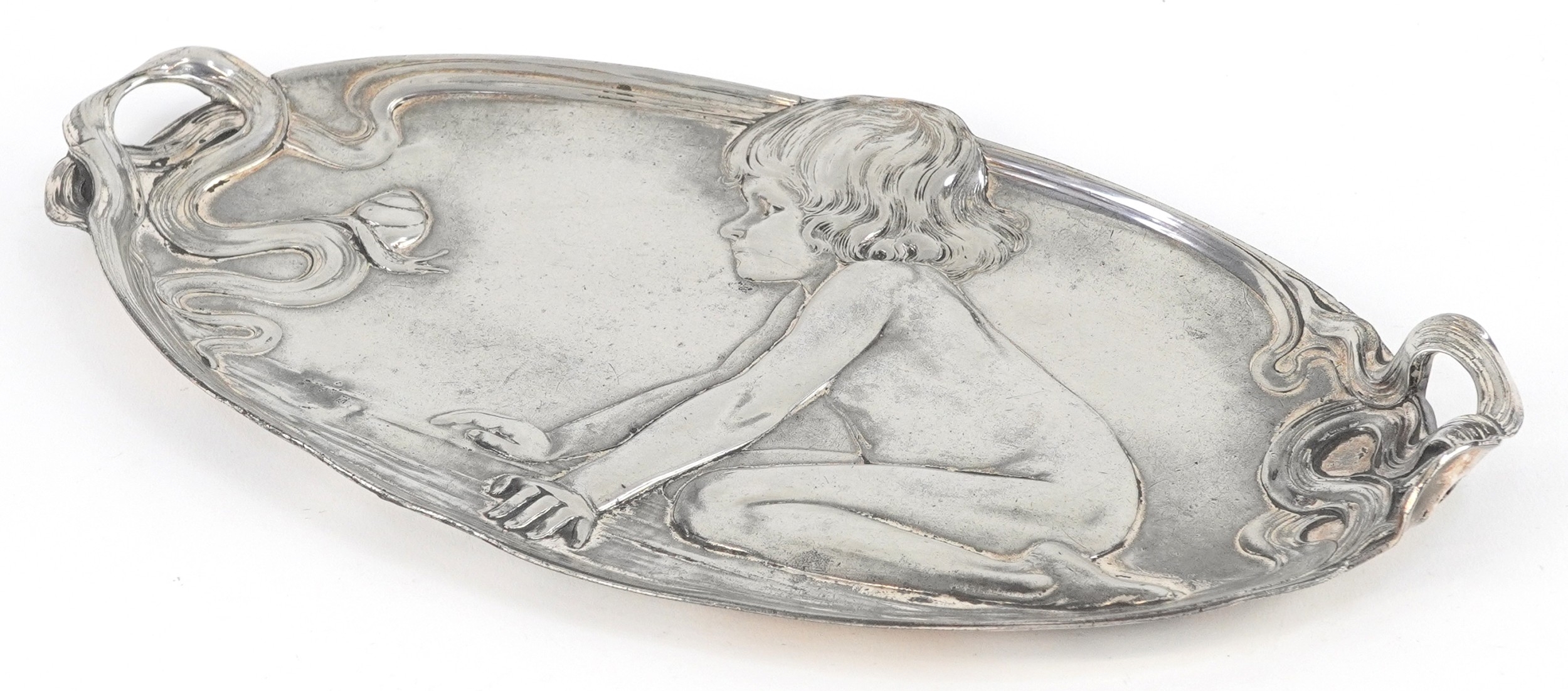
Primary live lot today
WMF, German Art Nouveau silver plated tray decorated in relief with a child and snail, 27cm wide, Lot 110
Auction house: Eastbourne Auctions
View live lot listing
Estimate: £80 - £120
Auction date displayed in listing: Tuesday, 23 June 2026
Photo coverage: 5 verified full-size catalogue images from a 2500px image family
What the photos already tell you: clear front and reverse views, visible high-point rubbing, and enough underside detail to ask sensible questions about mark clarity and fixing points
Why this lot is interesting
Good WMF decorative metalwork wins by contour and rhythm, not by silver colour alone. This tray has the ingredients buyers actually want at the smaller end of the market: looping handles that melt into the border, a plain field that lets the relief breathe, and a child-and-snail motif with enough oddness to feel remembered rather than merely pretty. It is not a museum piece, but it is also not trying to live on precious-metal prestige. The appeal is entirely in whether the design still lands in one fluent movement from handle to figure to snail.
That is why the reverse image matters almost as much as the glamour shot. Eastbourne Auctions gives you a rear view that shows honest scratching, edge wear, and a clearer sense of the tray's construction than most low-mid decorative lots get. The useful tension is simple: the wear is real, but so is the model. If the buyer is comfortable with surface life and cares more about period line than crisp plating, this is exactly the sort of modestly priced Art Nouveau object that can sharpen a console table or shelf without needing trophy money.
Who buys this and why
- Art Nouveau crossover collectors: they are buying the whiplash outline, the slightly theatrical figure work, and the recognisable period vocabulary, but they will only stay interested if the relief still reads clearly at first glance.
- Interior buyers furnishing one decorative surface: they do not need perfect plate; they need an object that can sit on a side table, shelf, or dresser and carry a room's mood on its own.
- Dealers and pickers working the sub-£200 metalwork lane: they are looking for something with a named maker, an image-led selling point, and enough remaining definition that resale is about design rather than apology.
What the photos are really telling you
- Start with the child's face, fingers, knees, and the snail shell: those are the high points where rubbing shows first. If the relief still separates cleanly there, the tray keeps its punch.
- Read the plain field for fatigue: the broad central ground shows the difference between normal light scratching and a surface that has gone dull, patchy, or distractingly scrubbed.
- Use the oblique front view to judge flatness and border discipline: twists and soft distortions often show up at the rim and handle junctions before they announce themselves elsewhere.
- Study the reverse for repairs and looseness: the underside image gives you fixing points, foot positions, and enough wear evidence to ask whether anything rattles, shifts, or has been reworked.
- Ask the auction house to confirm the WMF mark if you care about attribution strength: the reverse photo suggests model and maker information, but not with the crisp certainty a serious buyer should assume from a single catalogue image.
Comparator lots
The closest comparators in this sale are not other WMF trays but nearby decorative-metal objects where line, surface, and period taste matter more than material weight. They help triangulate whether you want figurative silver-plated Jugendstil, flatter Arts and Crafts copper work, or a more substantial room object.
- Arts & Crafts copper tray with repousse floral decoration, 32cm in diameter, Lot 109 — Auction house: Eastbourne Auctions. Estimate £30 - £50. The simpler, quieter alternative: less maker heat, more surface-led copper charm, and a good check on whether your taste is really Art Nouveau figure work or just aged metal with soft lines. view lot
- Pair of Arts & Crafts copper repousse plaques, 20cm x 15cm, Lot 111 — Auction house: Eastbourne Auctions. Estimate £30 - £50. Useful if your eye runs to wall-bound decorative metal rather than tabletop use, and if you prefer pattern and hand-worked surface over figurative relief. view lot
- Arts & Crafts copper coal bucket with swing handle, 46cm high, Lot 115 — Auction house: Eastbourne Auctions. Estimate £40 - £60. The more practical room piece in the group, and a reminder that larger decorative metalwork can still be cheaper than smaller named objects when design authorship is less pronounced. view lot
UK media & culture context
Britain has always been a receptive landing place for Art Nouveau once the style moves out of textbook masterpiece territory and into domestic decorative objects. The V&A's Art Nouveau material is useful because it frames the style in exactly the terms this tray needs: flowing line, organic motif, and the merger of ornament with structure rather than ornament pasted on afterward. Liberty's own heritage material sharpens the British angle further. When a period becomes so closely tied to a London retailer that Italy calls it "Liberty Style", you are looking at a taste language, not a niche footnote. This tray belongs to that language when the line still outruns the wear.
The trade view is also worth keeping in mind. Antiques Trade Gazette still writes about top-tier Art Nouveau in terms of quality, authorship, and formal control rather than treating the whole period as a uniform market wave. That matters here because this is not a grand French showpiece. It is a modest decorative object whose value lives or dies on whether the design remains legible and composed at a glance.
- V&A: Art Nouveau - an international style — strong museum context for the fluid line and integrated decoration that make or break a tray like this.
- V&A: Art Nouveau collection overview — useful for placing metalwork, glass, ceramics, and jewellery inside one shared visual language.
- Liberty: Our Heritage — helpful British context for why Art Nouveau still reads as an interiors language as much as a collecting category.
- Antiques Trade Gazette: Majorelle arrowhead table points to top-quality Art Nouveau — trade coverage that keeps the focus on quality and formal control, which is the right lens for smaller decorative-metal buys too.
Bottom line
I like this best for the buyer who wants a real period line on the table and can live with honest silver-plate wear. At the estimate, Eastbourne Auctions is offering a tray with enough maker interest, enough image coverage, and enough visual personality to justify a bid if the relief still reads cleanly in hand. If you need crisp plating or bulletproof attribution from the catalogue alone, this is not the one to stretch on.
Editorial analysis for educational purposes only. Final bidding decisions, fees, tax, shipping, collection, condition confirmation, and contract terms are handled by the auction house.