
Daily Deep Dive · 15 Jun 2026 · Furniture
Lot Spotlight: a Sutcliffe sideboard that only works if the cabinet still feels calmer than the fashion around it
Mid-century sideboards get forgiven far too much once the teak starts glowing. Hartleys Auctions Ltd has a live Sutcliffe of Todmorden teak sideboard, Lot 714, estimated at £200–£300 and described with a maker's label, cutlery drawer, tapering legs, and three verified full-size catalogue images from a 2500px family, with the main source at 2500×1584. That is enough to make this a proper furniture decision rather than a warm-toned lifestyle buy. Sutcliffe pieces sit in the part of the British market where proportion, handle feel, and cabinet discipline matter more than brand hype, so the useful question is not whether the sideboard looks pleasant in teak. It is whether the front-edge rubbing, handle scuffs, and general wear still leave the piece reading as composed cabinet work rather than as a decent survivor you will keep excusing from across the room.
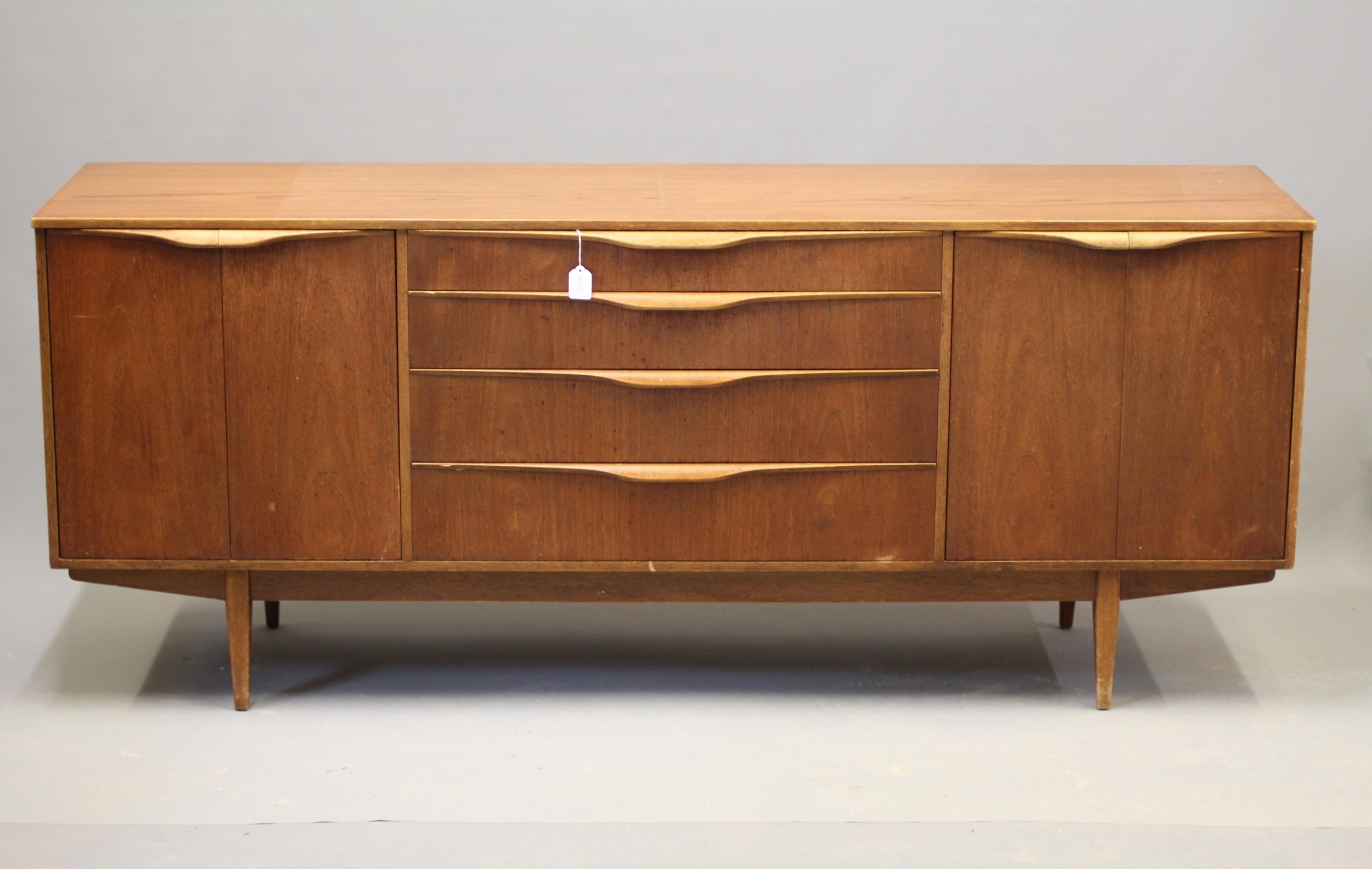
Primary live lot today
A teak sideboard by Sutcliffe of Todmorden, Lot 714
Auction house: Hartleys Auctions Ltd
View live lot listing
Estimate: £200–£300
Auction date displayed in listing: 17 June 2026 at 9:30am BST
Catalogue detail: mid-century teak sideboard with four graduated central drawers including a cutlery drawer, paired cupboards, wooden lip handles, tapering legs, and maker's label; 72" w x 18" d x 29 3/4" h
Condition note shown in listing: slight rubbing to the polish along the front edge of the top; all handles intact with scuffing and some fading; otherwise good
Photo coverage: three verified full-size catalogue images, with the main source at 2500×1584
Why this lot is interesting
The best British sideboards are not really sold by teak alone. They are sold by control. Sutcliffe of Todmorden is a useful name here because it points you toward exactly the right buying lane: practical mid-century cabinetmaking with enough confidence in proportion and detailing that the piece does not need theatrical carving or Scandinavian-name inflation to make its case. Hartleys' estimate reflects that lane well. This is not bargain-basement utility furniture, but it is also not a trophy object being asked to carry a fantasy premium.
What makes Lot 714 worth serious attention is that the catalogue tells you just enough to keep you honest. The maker's label is mentioned. The cutlery drawer is noted. The wear is not hidden. That gives the lot a better thesis than many anonymous mid-century sideboards now circulating on mood and memory alone. You are not being asked to imagine this into quality. You are being asked to decide whether the cabinet lines, drawer arrangement, and surviving finish still have enough authority that a bit of edge wear reads as ordinary life rather than as the start of a nagging restoration bill.
Who buys this and why
- Private buyers furnishing a dining room or long living wall: they want a British mid-century sideboard with usable storage, a maker name that means something, and proportions that settle a room without becoming a design lecture.
- Dealers and vintage-interior resellers: they will notice the label, the lip handles, and the fact that honest surface wear is easier to sell through than structural doubt.
- Collectors of post-war British furniture: they are buying the cabinet as part of a wider story about well-made provincial British makers who sat just below the loudest brand names but often delivered the calmer object.
Condition pressure points
- Take the front-edge rubbing seriously: the listing already tells you where the top has taken its knocks, so the job is to decide whether the wear reads as even use or as the beginning of a surface that will always look a bit tired in raking light.
- Study the wooden lip handles for consistency: scuffing and fading matter less for purity than for feel. If one bank of handles looks more tired than the others, the whole facade can lose its rhythm.
- Use the drawer-and-door layout to judge squareness: this kind of cabinet should read as one steady horizontal block. Any dropped door line, uneven reveal, or drawer front that sits off its neighbour will show up quickly once you stop admiring the colour.
- Ask Hartleys how legible the maker's label is if attribution matters to you: a named label helps the resale story, but only if it is still presentable enough to be more than a catalogue claim.
- Check the underside and legs in the additional images: tapering legs are part of the sideboard's charm, but they also tell you whether the piece still stands with confidence or has already had a hard practical life.
Comparator lots
These comparators stay in the same British mid-century sideboard lane and help frame what Hartleys is really offering: one cleaner named cabinet, one bigger market favourite, and one broader no-estimate mood buy.
- A G Plan teak long sideboard, Lot 720 — Auction house: Hartleys Auctions Ltd. Estimate: £250–£450. This is the same-sale brand-name comparator: longer, louder in market recognition, and carrying a shelf-missing warning that reminds you why maker prestige should never be read without the condition paragraph. view lot
- An Ercol Windsor Model 468 elm sideboard, Lot 719 — Auction house: Hartleys Auctions Ltd. Estimate: £150–£250. This is the form-and-function comparator: more recognisable to a broad retail buyer, more compact, and carrying a specific handle chip note that shows how a small defect can still define the price conversation. view lot
- G Plan teak sideboard, Lot 162 — Auction house: Nock Deighton. Estimate: No Estimate. This is the broader-market comparator: five full-size images and a larger 2500×1875 hero, but almost no descriptive help, which is exactly why Hartleys' named Sutcliffe lot feels more disciplined editorially and commercially. view lot
UK media & culture context
British buyers still read sideboards like this through a very specific domestic story: post-war practicality cleaned up by good joinery, then rediscovered decades later as shorthand for tasteful living. The Gordon Russell Design Museum's material on the 1950 Helix Sideboard is useful because it puts the wider British furniture mood in focus: craftsmanship married to newer production methods, with design seriousness aimed at normal homes rather than rarefied collectors. Antique Collecting's guide to British mid-century sideboards is also helpful on the market lane, noting how British examples have narrowed the value gap with Danish pieces as buyers have become more confident about home-grown cabinetmakers. House & Garden's recent sourcing guide makes the same point from the interiors side of the market: British teak, especially G Plan-adjacent material, still anchors how decorators and vintage buyers imagine an easy mid-century room. That matters for today's lot because Sutcliffe sits just beside the loudest names. The appeal is not trend-proof fame. It is whether the cabinet still has enough quiet authority to belong in that British post-war story without needing the best-known badge in the room.
- Gordon Russell Design Museum: The Helix Sideboard — useful British design context for how post-war sideboards balanced craft, machine production, and everyday domestic ambition.
- Antique Collecting: British Mid-Century Sideboards — a practical UK collecting guide to the value lane British sideboards now occupy against their Danish counterparts.
- House & Garden: Where to buy mid-century furniture — current interior-market context showing how British mid-century teak still functions as a mainstream decorating reference rather than a niche specialist taste.
Bottom line
This is the sort of sideboard that makes sense when bought as furniture first and fashion second. If the additional images and any condition follow-up confirm that the top-edge rubbing is contained and the cabinet still sits square, Hartleys' £200–£300 estimate looks reasonable for a named British mid-century piece with usable scale and a maker's label. If you are chasing a pristine showpiece or a famous badge to do the whole job for you, there are louder comparators. If you want a calmer cabinet with a better-than-average catalogue story, Lot 714 is the grown-up buy.
Editorial analysis for educational purposes only. Final bidding decisions, fees, tax, shipping, collection, condition confirmation, and contract terms are handled by the auction house.