
Daily Deep Dive · 22 Jun 2026 · Furniture
Lot Spotlight: a Schreiber sideboard that only earns the low estimate if the cabinet still holds its line
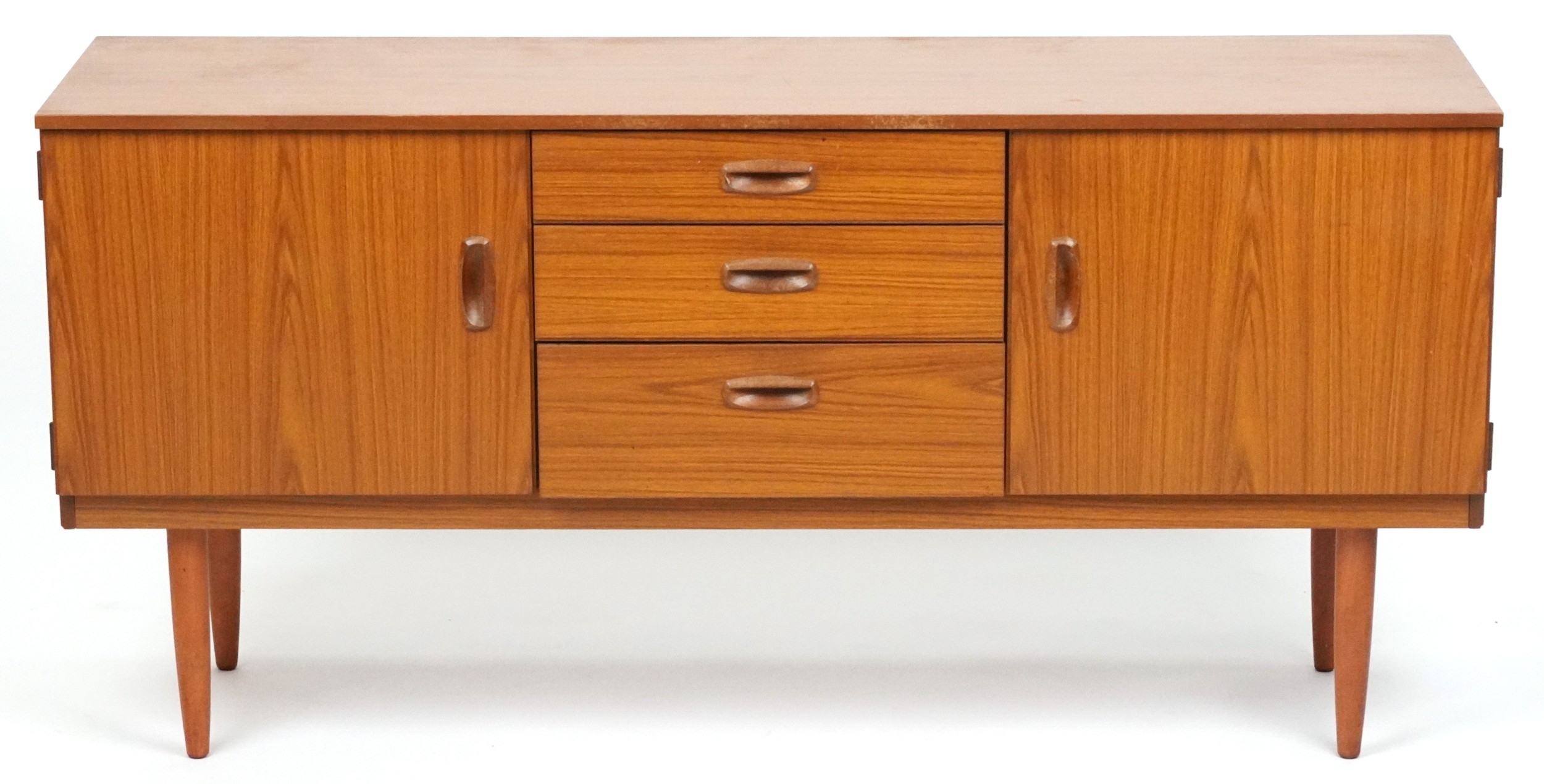
Cheap Schreiber is where British mid-century stops being glamorous and starts being useful. Eastbourne Auctions has a live Schreiber teak sideboard, Lot 2017, estimated at £30–£50 and backed by five verified full-size catalogue images from a 2500px family, with the lead view at 2500×1270. That is enough to make this more than a mood buy. Schreiber sat in the broad, practical end of the post-war British furniture trade, so the maker name does not rescue a tired cabinet on its own. The real question is whether the long front still reads as one tidy horizontal idea, or whether the estimate is only flattering because the doors, drawer reveals, and top surface will look fussier the moment it lands in a room with daylight.
Primary live lot today
Schreiber mid-century teak sideboard, Lot 2017
Auction house: Eastbourne Auctions
View live lot listing
Estimate: £30–£50
Auction date displayed in listing: 23 June 2026 at 9:30am BST
Catalogue detail: Schreiber mid-century teak sideboard with three central drawers flanked by two cupboard doors, raised on tapering legs, 73cm h x 153cm w x 43.5cm d
Photo coverage: five verified full-size catalogue images from a 2500px family, with the lead source at 2500×1270
Why this lot is interesting
This is not a sideboard that sells on badge prestige. It sells on whether the cabinet still looks composed. That is exactly why the estimate is live. At £30–£50, buyers can talk themselves into almost any mid-century teak piece if the photograph has enough warmth. Schreiber only becomes a good buy when the practical things are calm: drawer fronts lining up cleanly, door gaps sitting evenly, leg stance reading steady, and the top not looking like it has spent twenty years acting as a plant stand and drinks shelf.
There is also a useful market tension here. Schreiber sits below the noisiest British names in collector chat, which keeps prices sane, but the better pieces still do the room-setting job buyers actually want. A 153cm width is generous without becoming a delivery nightmare, three central drawers make the layout legible, and tapering legs keep the cabinet from feeling blunt. If the sideboard is still square and the teak has not gone patchy, this is the kind of British storage piece that can look sharper at home than the estimate suggests.
Who buys this and why
- Private buyers furnishing a dining room or living wall: they want real mid-century scale and useful storage without paying G Plan money for a piece that still needs the same practical checks.
- Dealers working the honest-retail lane: they will see that Schreiber is easy to place if the front elevation feels tidy and the cabinet does not need expensive cosmetic rescue before it hits the shop floor.
- Collectors of post-war British interiors: they are buying the broader domestic story rather than a trophy maker, so clean lines and believable condition matter more than bragging rights.
Where the risk sits
- Read the drawer reveals as a group: three central drawers should look measured and even. Any stepped front, dropped runner, or uneven reveal will spoil the whole cabinet faster than a rubbed corner.
- Watch the door lines at both outer edges: a long sideboard can look square in one photograph and still telegraph movement once you study the verticals closely.
- Inspect the top for heat rings, sun fade, and patchy sheen: low-estimate teak often survives structurally but carries the sort of surface history that keeps nagging at you every morning.
- Use the leg shots to judge stability: tapering legs are part of the appeal, but they also show very quickly if the cabinet has ever sat awkwardly or taken a knock in transit.
- Ask Eastbourne Auctions about the interior and back panels: shelves, hinges, and panel integrity matter because cheap furniture stops being cheap the moment you have to start rebuilding the boring parts.
Comparator lots
These live comparators stay in the same British mid-century storage lane and help frame where Eastbourne's Schreiber sits: one same-sale anonymous cabinet, one stronger-status G Plan piece, and one higher-recognition Ercol example.
- Mid-century teak side cabinet, Lot 2016 — Auction house: Eastbourne Auctions. Estimate: £40–£60. This is the same-sale control sample: similar buying mood, similar scale of decision, and the useful reminder that anonymity alone does not make a cabinet cheaper once you still need the same alignment and surface checks. view lot
- Late century G Plan sideboard width 139cm, Lot 574 — Auction house: John Goodwin. Estimate: £50–£100. This is the market-recognition comparator: still broad British teak, but with a maker name buyers know faster, which helps show how cheaply the Schreiber is pitched relative to the room function on offer. view lot
- Ercol Windsor elm sideboard, Lot 1077 — Auction house: Cotswold Auction Company. Estimate: £100–£200. This is the brand-and-material comparator: more recognisable, warmer in elm, and priced in the lane many private buyers jump to first, which is why Schreiber only makes sense if you are genuinely buying the cabinet rather than the badge. view lot
UK media & culture context
British mid-century sideboards still live in two worlds at once: the practical post-war furniture story and the current interiors shorthand for an easy, civilised room. Antique Collecting's guide to British mid-century sideboards remains useful because it explains how buyers have become more confident about home-grown makers rather than treating every teak cabinet as a consolation prize for not buying Danish. The V&A's writing on Heal's and the post-war furniture trade is a reminder that British makers were solving real domestic problems under tight material and production constraints, which helps explain why proportion, storage logic, and honest finish matter so much in this lane. For a current pulse, House & Garden is still pointing readers toward vintage mid-century sideboards through editor-chosen shops and styling references in 2026, which tells you these cabinets are not niche collector trophies. They are still active decorating tools. That makes today's Schreiber interesting precisely because it sits in the part of the market where design use-value can outrun name prestige if the cabinet stays disciplined.
- Antique Collecting: British Mid-Century Sideboards — helpful on the buying lane British sideboards now occupy, especially once condition and maker hierarchy come into focus.
- V&A: If in doubt, innovate - Heal's at the V&A — useful post-war British furniture context for why utility, materials, and production discipline still shape how these cabinets should be judged.
- House & Garden: The best Etsy shops, chosen by interior designers and editors — a current UK interiors pulse showing that vintage mid-century teak still reads as a live decorating category rather than a closed specialist niche.
Bottom line
This is a sensible buy only if the cabinet stays calm under scrutiny. If the drawer fronts line up, the doors sit cleanly, and the top has aged better than the estimate implies, Eastbourne's Schreiber is the sort of low-risk British mid-century storage lot that can punch above its price. If the photography is flattering a restless front or a tired surface, leave it and spend more on the G Plan or Ercol lane instead.
Editorial analysis for educational purposes only. Final bidding decisions, fees, tax, shipping, collection, condition confirmation, and contract terms are handled by the auction house.