
Daily Deep Dive · 08 Jul 2026 · Lighting
Lot Spotlight: a Tiffany-style lamp that only earns its glow if the leadwork stays calm
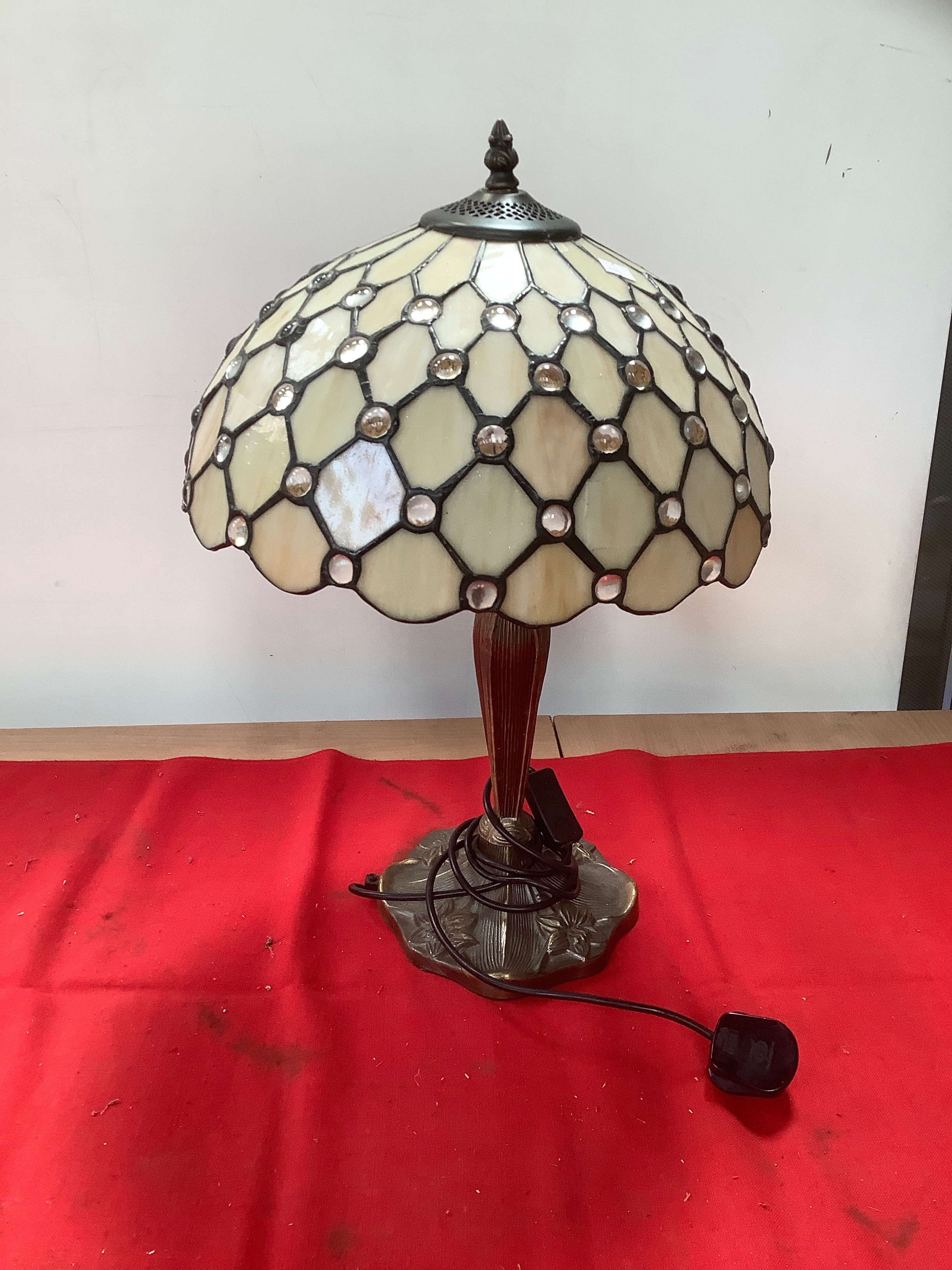
Stained-glass table lamps are easy to buy with your eyes half shut. JH Auctions LTD has a live Vintage Tiffany-style table lamp, Lot 371, with a cream coloured shade, clear bead jewels, a patterned bronze base, and five verified full-size catalogue images, with the lead source at 2448×3264 and close-ups reaching 2500×3333. That is enough to move this out of the vague “nice lamp” category and into a more useful question: does the shade still read as one disciplined piece of decorative lighting, or is the Tiffany-style label doing too much work for solder lines, replacement wiring, and a base-shade pairing that may look softer in the listing than it will on your own side table.
Primary live lot today
Vintage Tiffany-style table lamp, Lot 371
Auction house: JH Auctions LTD
View live lot listing
Estimate: No estimate published
Auction date displayed in listing: 8 July 2026 at 10am BST
Catalogue detail: Vintage Tiffany-style table lamp with cream coloured stained glass shade with clear bead jewels and a patterned bronze base
Photo coverage: five verified full-size catalogue images, including close-ups of the shade detail
Why this lot is interesting
This is not a museum-Tiffany conversation. It is a decorator's lamp buy, and that makes honesty more important than mythology. The appeal is obvious: warm cream glass instead of loud colour, a bead-studded shade that nods to dragonfly-era cabochon language without becoming kitsch, and a dark base that keeps the lamp on the right side of pub-window nostalgia. In the right room, a lamp like this can do exactly what buyers want vintage lighting to do now: cast mood, add texture, and break up a run of plain contemporary surfaces with something that feels more handled than manufactured.
The reason it is worth real scrutiny is that lamps in this lane often collapse under close inspection. Leaded shades can survive structurally but lose visual confidence if the solder lines go ragged, the cap sits off, or the glass reads chalky rather than luminous. Bases get swapped. Modern wiring gets fitted carelessly. Cream stained glass is especially unforgiving because it does not have jewel-tone drama to distract from mediocre construction. Here, the close-up images are useful because they show enough of the panel layout and bead setting to make this a proper condition decision rather than a pure ambience purchase.
Who buys this and why
- Interior buyers furnishing bedrooms, studies, and snug living rooms: they want a lamp that warms a room without shouting in stained-glass primary colours.
- Dealers and shopkeepers trading in decorative lighting: they are buying resale ease, because cream-and-bronze lamps travel better stylistically than the louder floral imitations.
- Hospitality and set-dressing buyers: they want instant atmosphere from one object, but only if the wiring and shade condition mean the lamp can be used without turning into a repair project.
Where the risk sits
- Read the leadwork, not just the glass colour: uneven solder lines, crude re-joins, or loose bead jewels are what turn a charming lamp into a fussy one.
- Ask for a lit photo before bidding hard: cream glass can glow warmly or go flat and beige depending on panel quality, bulb choice, and whether the shade still sits true.
- Check the cap, finial, and shade alignment: the full lamp only works if the dome reads as centred and balanced rather than slightly collapsed or improvised.
- Inspect the wiring and switch: the catalogue images show a modern black flex and inline switch, so the useful question is whether the rewiring was tidy and recent or merely functional.
- Look at the base-shade marriage: patterned bronze bases are often mixed and matched with later shades, which does not kill the lot, but it does change whether you are buying one coherent decorative object or a decent marriage of convenience.
Comparator lots
These comparators stay in the stained-glass lighting lane but vary the pitch: one clearer priced live lot, one more decorative floral version with an admitted issue, and one cleaner geometric alternative.
- Tiffany Style Stained Glass Tiffany Lamp, Lot 844 — Auction house: Gerrards Auctioneers and Valuers. Estimate: £30–£40. This is the live price anchor: a straightforward Tiffany-style lamp with a published estimate, useful for measuring how much of today's appeal is tied to the cream palette and the slightly calmer shade geometry rather than to the generic category label. view lot
- Tiffany Style Table Lamp with stained glass shade decorated with pink lily flowers and dragonfly motif, Lot 729 — Auction house: Sullivans Auctions. Estimate: No estimate published. This is the louder decorative comparator, and the listing helpfully admits a replacement bolt in the top. It is useful because it shows what happens when the buying lane shifts from quiet room-use to overt motif-led charm. view lot
- Tiffany Style Table Lamp with hexagonal stained glass shade, 56cm, Lot 731 — Auction house: Sullivans Auctions. Estimate: No estimate published. This is the cleaner geometric comparator. It helps frame today's lamp as a middle path between highly floral imitation Tiffany and plain geometric stained-glass lighting. view lot
UK media & culture context
British buyers are not only meeting these lamps through antiques fairs now; they are meeting them through interiors culture again. The V&A's Art Nouveau glass overview is a useful reminder that turn-of-the-century glass design worked by turning line, surface, and light into one decorative system rather than treating glass as a neutral shell. That matters here because even a later Tiffany-style lamp succeeds or fails on those same basics: rhythm of line, warmth of material, and how the thing behaves once lit. For the current decorating pulse, House & Garden has been explicit that stained glass is back in the conversation in 2026, and it has also tracked the return of Tiffany lamps as statement pieces in layered interiors. That does not make every imitation valuable. It does explain why a competent, room-ready example has a real buying lane right now.
- V&A: Objects of beauty: Art Nouveau glass and jewellery — strong museum context for why glass, line, and translucency still matter in this decorative lane.
- House & Garden: Is stained glass making a comeback in the home? — current UK interiors signal that stained glass has moved back into active decorating taste.
- House & Garden: Tiffany lamps are in again — useful shorthand for the broader revival of Tiffany-style lighting as a mood object rather than a strict collector category.
Bottom line
This is a sensible buy if you want atmosphere more than status and the lamp still holds together as one calm, usable object under stronger scrutiny. Bid if the solder lines stay neat, the cream glass lights warmly, and the base-wiring story looks tidy rather than improvised. Leave it alone if the glow turns muddy, the cap sits off, or the whole lamp only starts to make sense once the words “Tiffany-style” do the selling for it.
Editorial analysis for educational purposes only. Final bidding decisions, fees, tax, shipping, collection, condition confirmation, and contract terms are handled by the auction house.