
Daily Deep Dive · 14 Jul 2026 · Furniture
Lot Spotlight: a G Plan Astro nest that has to keep its lines calm once the teak charm wears off
Cheap mid-century tables tend to get bought as mood boards with legs. House & Son Auctioneers & Valuers has a live G Plan Astro teak nest of three coffee tables with inset tile tops, Lot 86, carrying three verified full-size catalogue images, each at 2500x3333. That is enough to make this more than a warm-toned impulse buy. Astro is one of those British ranges that still sells on instant recognition, but nesting tables only earn their keep when the tiles stay sharp, the frames stay square, and the stack still glides together without looking like three survivors from slightly different lives.
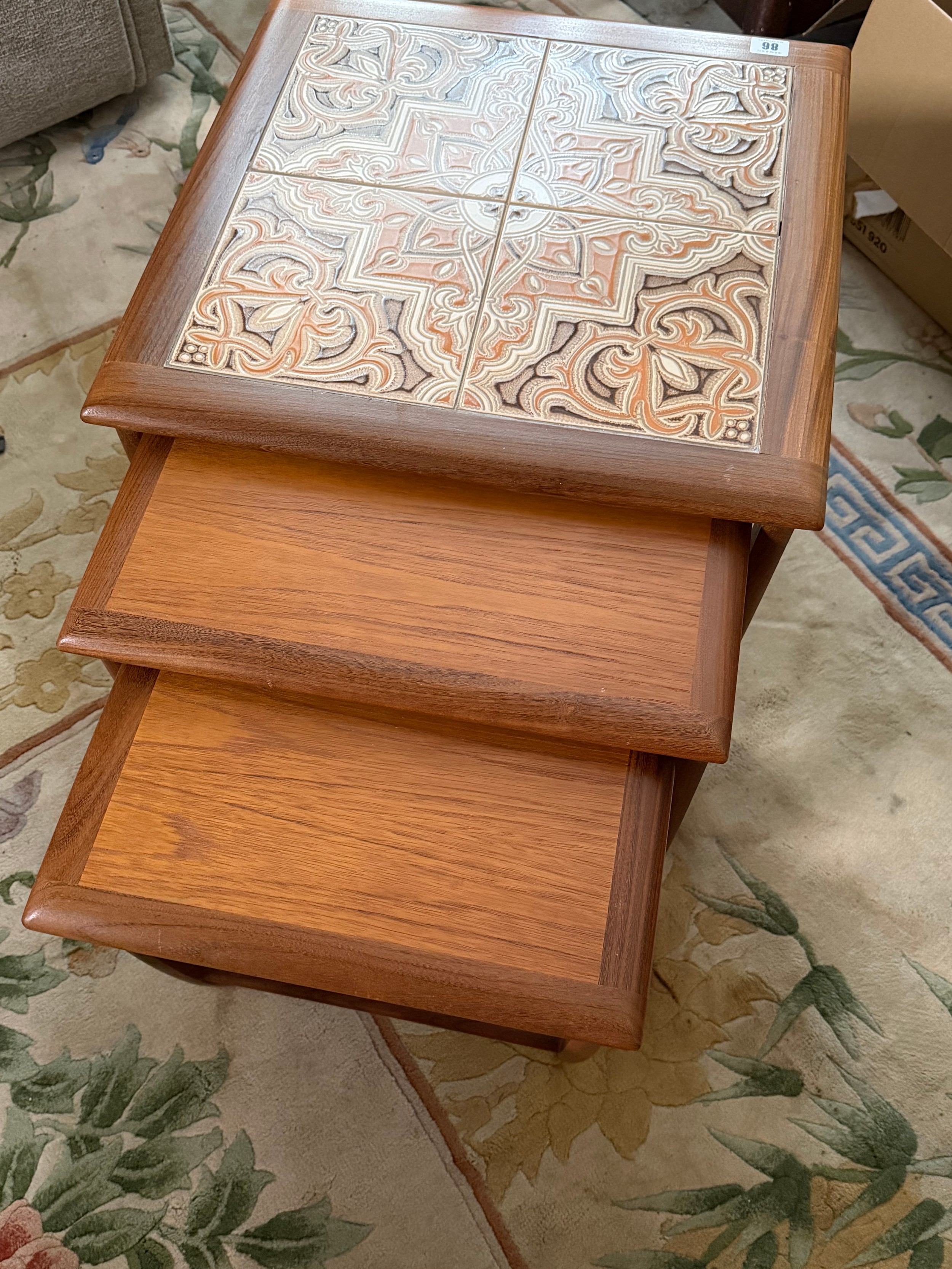
Primary live lot today
G Plan Astro teak nest of three coffee tables with inset tile tops, Lot 86
Auction house: House & Son Auctioneers & Valuers
View live lot listing
Estimate: No estimate published
Auction date displayed in listing: 14 July 2026 at 9:30am BST
Catalogue detail: a nest of three mid-century G Plan Astro teak coffee tables with inset tile tops
Photo coverage: three verified full-size catalogue images, all 2500x3333
Why this lot is interesting
G Plan earns an easier pass than anonymous teak, and that is exactly why lots like this need slowing down. The Astro name gives buyers a comforting British mid-century story straight away: practical scale, clean edges, teak warmth, and the sort of modular domestic furniture that still slides into modern rooms without needing a decorator's manifesto. Nesting tables also solve a real problem. They can live quietly as one coffee-table cluster, then split out when a room starts doing actual work.
The useful tension here is between recognisable design and ordinary wear. Tile-top nests only stay convincing when the ceramic inserts, timber surrounds, and leg geometry all pull in the same direction. One cracked tile, one sunken frame, or one table that no longer tucks neatly can turn an easy British mid-century win into a set of almosts. House & Son's image set is strong enough to ask the right question before bidding: are you buying one composed little system, or three nice-enough tables that happen to stack for the camera.
Who buys this and why
- Private buyers furnishing smaller sitting rooms and flats: they want flexible tables that earn their footprint and still look intentionally mid-century rather than merely old teak.
- Dealers trading in accessible British design: they are buying recognisable maker value and straightforward resale, but only if the tile tops and frames stay disciplined.
- Interior stylists and hospitality buyers: they want modular surface space with a softer vintage note than chrome-and-glass occasional tables usually deliver.
What the tiles must prove
- Look at every tile edge hard: tiny corner chips, hairlines, or replacement tiles matter because the tiled top is the first thing making the set read as Astro rather than generic teak.
- Check that the timber lips sit evenly around the inserts: lifting, shrinkage, or uneven gaps are often the first sign that a nest has lived through heat, damp, or poor storage.
- Read the legs for twist and stance: these tables only feel clever when they tuck together cleanly, so any splay, wobble, or rack is more damaging than on a single fixed coffee table.
- Inspect top-surface colour consistency: teak can forgive light wear, but patchy bleaching or one noticeably different table can make a nest look assembled rather than original.
- Ask House & Son Auctioneers & Valuers whether the tables still slide and stack smoothly: that practical behavior is part of the design, not a minor extra.
Comparator lots
These comparators stay in the nested occasional-table lane, but they test three different value stories: exact-model precedent, another named British maker, and a cheaper Danish generic. That is the quickest way to see what today's Astro nest is really asking you to pay for.
- A G-Plan Astro teak nest of tables — Auction house: Arthur Johnson & Sons. Estimate: £80-£100. Hammer: £80. This is the sharpest price compass because it is the same broad model family sold just days ago, which helps separate sentimental G Plan optimism from what buyers have actually been willing to do in a live room this month. view lot
- Nest of 3 Mid Century Teak Tables by Sutcliffe Furniture — Auction house: Usher Auctions. Estimate: €70-€140. This is the named British comparator still live in the market, useful because it offers the same practical room function without the G Plan Astro badge doing as much of the selling. view lot
- Danish teak nest of tables — Auction house: Elliotts UK Auctioneers. Estimate: £25-£30. This is the low-entry functional comparator. It shows how cheaply buyers can buy the nesting-table idea once the named British-design story falls away. view lot
UK media & culture context
There is a reason G Plan still keeps turning up in British rooms that are otherwise trying to look contemporary. Wycombe Museum's history of the brand makes the key point cleanly: G Plan was post-war Britain's great mass-market furniture success because it sold coordinated modern living piece by piece rather than as a grand one-off purchase. House & Garden's recent interiors coverage shows the wider taste cycle has not gone away either. Mid-century furniture is still a live decorating language in Britain, and a July 2026 feature on the current swing toward Italian modernism only makes the point more sharply by naming G Plan stacking tables as part of the background furniture grammar many homes already know. Homes & Antiques is useful here too because its buying guide still places British names like G Plan in the affordable, highly collectable middle ground. That is exactly the market lane this lot sits in: not rarefied design history, but intelligent branded utility with enough cultural memory to stay liquid.
- Wycombe Museum: G-Plan Furniture, A Potted History — strong British design context for why G Plan still carries weight beyond plain teak.
- House & Garden: Is Italian modernism the new mid-century modern? — current UK interiors context that explicitly treats G Plan and teak stacking tables as part of the still-active mid-century language in homes now.
- Homes & Antiques: Mid-century modern furniture designers to know — useful collector-facing context for how British makers like G Plan sit in the affordable but still collectable part of the market.
Bottom line
This is a good buy if you want honest British mid-century utility and the set still behaves like one neat system rather than three pleasant singles. Bid when the tile inserts stay crisp, the teak tones stay close, and the stacking geometry still feels effortless. Leave it alone if one table starts looking tired before the others, because small nested furniture has nowhere to hide once the proportions stop cooperating.
Editorial analysis for educational purposes only. Final bidding decisions, fees, tax, shipping, collection, condition confirmation, and contract terms are handled by the auction house.