
Daily Deep Dive · 04 Aug 2026 · Ceramics
Lot Spotlight: a Troika wheel vase that has to keep its graphic edge
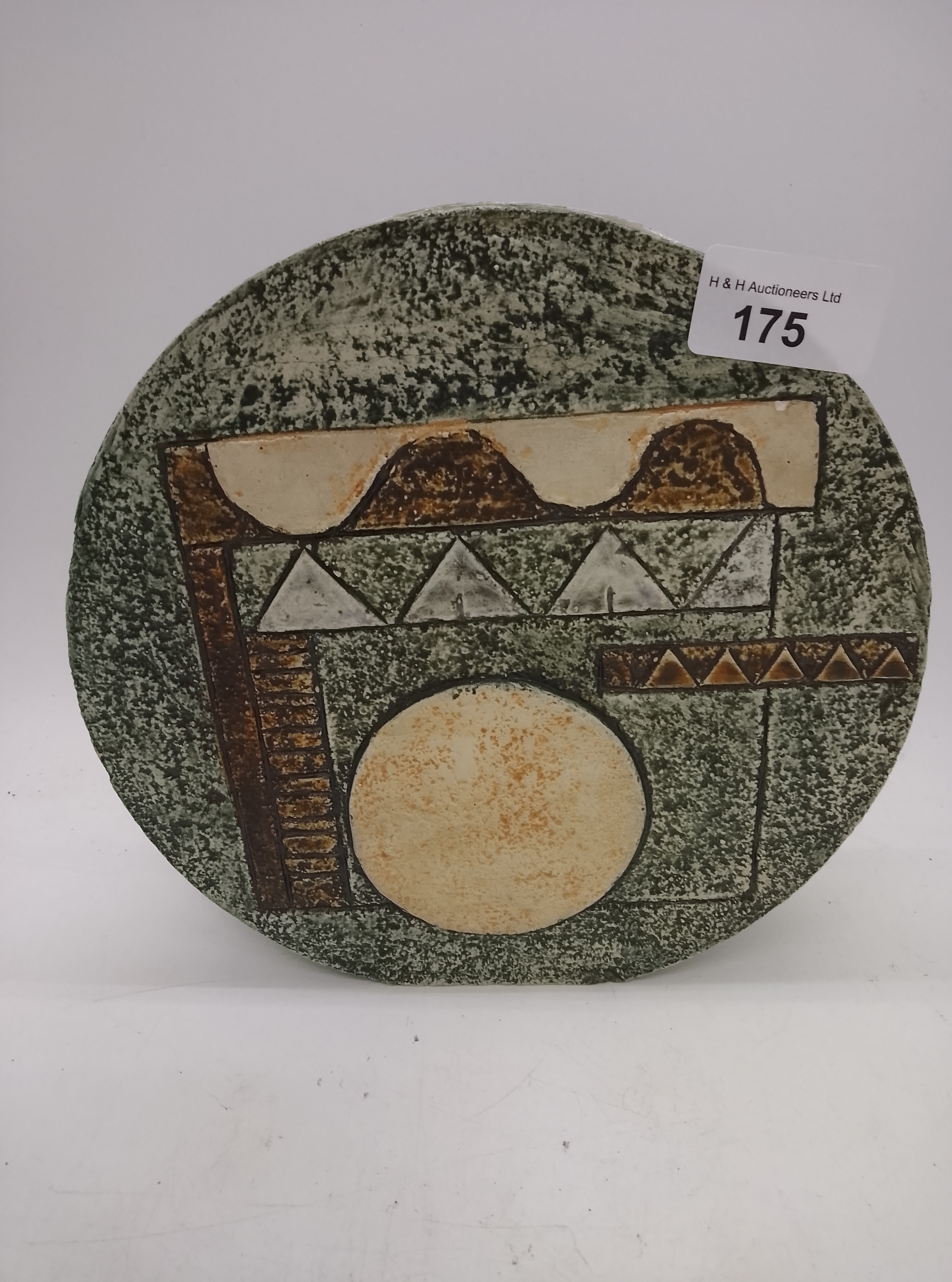
Troika buyers are not shopping for quiet pottery. H & H Auctioneers Ltd has a live 20cm-circumference Troika pottery wheel vase, Lot 175, decorated by Alison Brigden and inscribed TROIKA CORNWALL to the base, backed by six verified full-size catalogue images from a 2500x3367 family. That makes this a better test of discipline than nostalgia. Troika still sells because it can look like British studio pottery and small-scale sculpture at the same time, but a wheel vase like this only earns its estimate when the incised geometry, chalky white reserve, and textured green ground still land as one crisp Cornish object rather than as a famous name spread over a softened surface.
Primary live lot today
Troika pottery wheel vase, Lot 175
Auction house: H & H Auctioneers Ltd
View live lot listing
Estimate: £350-£400
Auction date displayed in listing: Tue 4th Aug 2026 10:30am BST
Catalogue detail: a 20cm-circumference Troika pottery wheel vase with moulded geometric design on a textured green ground, decorated by Alison Brigden and inscribed TROIKA CORNWALL to the base
Photo coverage: six verified full-size catalogue images, all 2500x3367
Why this lot is interesting
Troika sits in the sweet spot where British studio ceramics start behaving like design objects. This wheel vase does not rely on floral charm or glaze prettiness. It works through geometry, restraint, and the slightly brutalist certainty of its round form. The green speckled ground gives it that familiar late-Troika mineral surface, while the cut lines, stepped bars, and pale reserve shapes keep the composition reading as deliberate rather than merely decorative. Alison Brigden matters here too. Decorator-led Troika buying is mature enough now that the initials are part of the decision, not a minor footnote.
The useful tension is that Troika can stay desirable even when the object itself starts softening. H & H's six-image set is good because it shows front, reverse, and underside information rather than flattering one face and moving on. That means you can actually test the rim profile, the way the dark line work still holds the composition together, and whether the base story looks honest. At this estimate, you are paying for sharp graphic control as much as for the name. If the edges go fuzzy or the marks go vague, the premium thins out quickly.
Who buys this and why
- British studio-ceramics collectors: they are buying decorator, period language, and the specific Troika balance between moulded form and hand-finished surface.
- Interior buyers who treat pots as sculpture: they want one compact object with enough graphic authority to hold a shelf, console, or chimney breast on its own.
- Dealers trading across post-war design and ceramics: they are buying liquidity, but only if the base mark, condition, and decorator attribution stay clear enough to support retail confidence.
What the six photos need to prove
- Read the outer rim carefully: wheel vases catch knocks on their circumference, and small nibbles matter because the shape is so clean and exposed.
- Inspect the pale circular reserve and cream top band for disturbance: scratches, touch-ins, or over-cleaning show up quickly against lighter areas.
- Follow the black incised lines and triangular moulding point by point: blurred edges or inconsistent darkness can be a wear problem, not just an aesthetic one.
- Use the reverse and underside views properly: foot-rim wear should look consistent with age, and if the decorator mark is not fully legible in the listing, ask H & H Auctioneers Ltd for a tighter base close-up before bidding hard.
- Compare the green ground across front and back: colour drift, patchy gloss, or one oddly flat area can hint at restoration or aggressive cleaning.
- Check that the wheel form still sits square: stress lines running from the edge toward the centre are more damaging here than on a conventional upright vase because the whole point is graphic stability.
Comparator lots
These comparators stay in the Troika lane but test three different value stories: a larger statement cylinder, a smaller Alison Brigden cube, and a taller rectangular form where height rather than compact punch does the work.
- Troika large Cylindrical Vase, Lot 177 — Auction house: Potteries Auctions Ltd. Estimate: £150-£300. This is the scale comparator. It gives you a bigger Troika silhouette with a lower estimate ceiling, which helps show how much today's bid is about decorator attribution and the wheel-vase format rather than the badge alone. view lot
- Alison Brigden for Troika Pottery Cube Vase, Lot 402 — Auction house: Jones & Llewelyn Auctioneers. Estimate: £100-£110. This is the sharpest decorator comparison because it keeps Alison Brigden in play while moving down to a smaller cube format, useful for separating decorator demand from sheer object presence. view lot
- Troika Pottery, Cornwall, tall rectangular vase, Lot 1251 — Auction house: Gorringe's. Estimate: £150-£250. This is the form comparator. The taller blue-ground piece asks buyers to pay for vertical presence and signed-base reassurance rather than the compact graphic hit that makes the wheel vase attractive. view lot
UK media & culture context
Troika only makes full sense in Britain once you remember how much cultural force Cornwall still carries in ceramics. The Leach Pottery's own history page still frames St Ives as the birthplace of British studio pottery, and Tate St Ives has kept ceramics in the active modern-art conversation through exhibitions such as That Continuous Thing: Artists and the Ceramics Studio, 1920 – Today. The taste side matters too. House & Garden's guide to collecting British studio ceramics is a good reminder that these objects now live as much in design-led interiors as in specialist cabinets. The Digital Museum of Cornish Ceramics makes the attribution point more bluntly by mapping Troika decorators and marks in detail, which is exactly why condition and a legible base story need to do real work before you follow the crowd.
- Leach Pottery: History — useful British context for why Cornwall still carries authority in studio pottery.
- Tate St Ives: That Continuous Thing: Artists and the Ceramics Studio, 1920 – Today — places ceramics squarely inside the wider modern British art conversation.
- House & Garden: Guide to collecting British studio ceramics — strong interiors-facing context for why sculptural studio pots still have a live buying lane.
- Digital Museum of Cornish Ceramics: Troika Pottery — useful reference for decorators, marks, and the Cornish context that drives attribution confidence.
Bottom line
This is a strong buy if you want real Troika presence and the six photos keep confirming sharp edges, honest wear, and a clean base story. Bid when the geometric moulding still feels crisp, the green surface stays even, and the Brigden attribution is clear enough to support the premium. Leave it alone if the appeal is mostly name and mood, because softened rims and murky marks turn graphic pottery into expensive background texture very quickly.
Editorial analysis for educational purposes only. Final bidding decisions, fees, tax, shipping, collection, condition confirmation, and contract terms are handled by the auction house.