
Daily Deep Dive · 05 Aug 2026 · Lighting
Lot Spotlight: a battered pair of Herbert Terry Anglepoise lamps that still earns a hard look
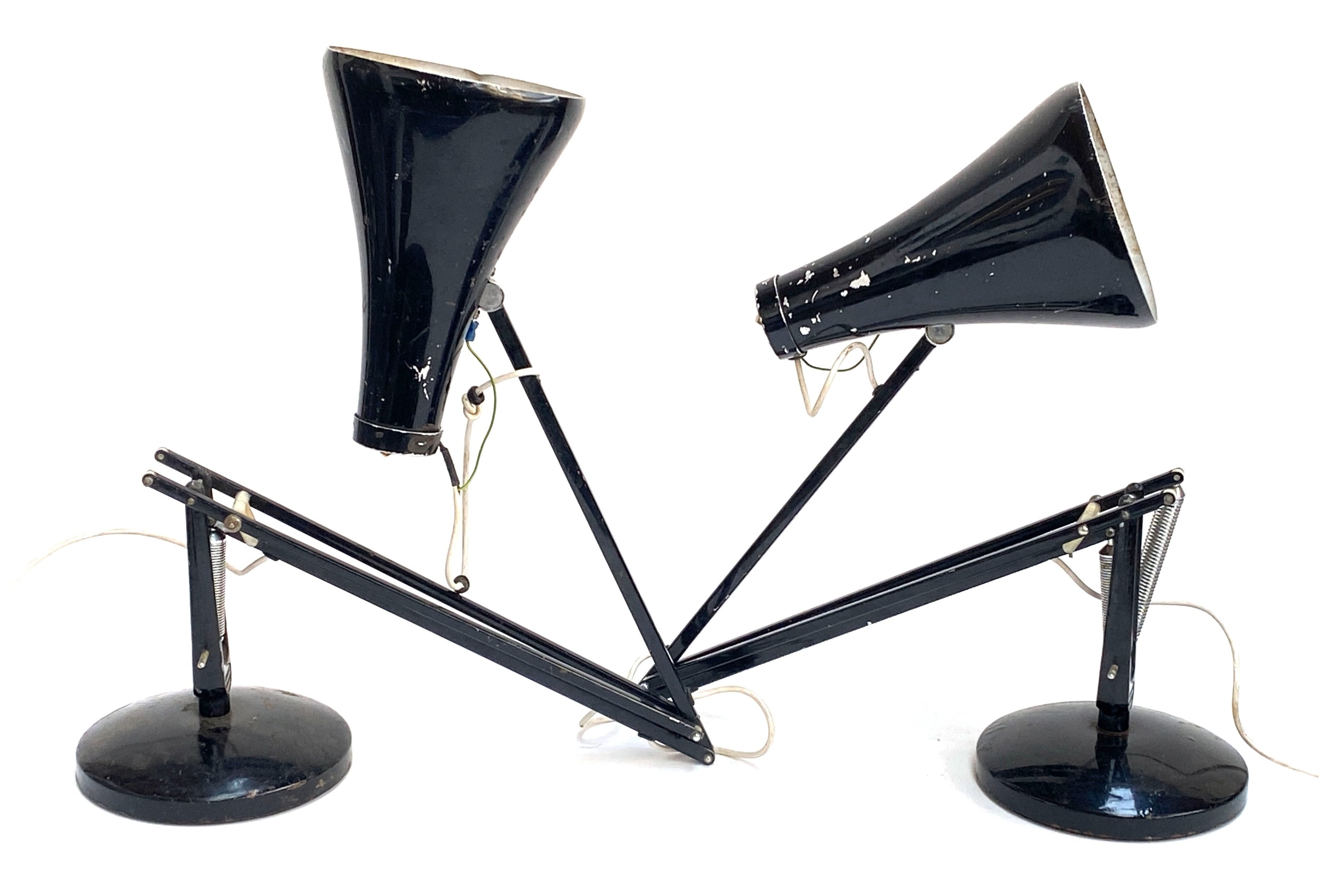
British task lamps get sentimental treatment far too quickly. Busby Auctioneers & Valuers has a live pair of vintage Herbert Terry black Anglepoise lamps, Lot 443, catalogued bluntly as af, in need of repair, backed by three verified full-size catalogue images from a 2500px family. That honesty is what makes them useful. Herbert Terry lamps still trade on design-icon status, but this is not a plug-and-play interiors buy. It is a repair-led decision about springs, joints, shade damage, and whether two worn workshop survivors still have enough original line left to justify the bench time.
Primary live lot today
Two vintage Herbert Terry black Anglepoise lamps, Lot 443
Auction house: Busby Auctioneers & Valuers
View live lot listing
Estimate: £15-£25
Auction date displayed in listing: Thu 6th Aug 2026 10am BST
Catalogue detail: two vintage Herbert Terry black Anglepoise lamps, offered as AF and in need of repair
Photo coverage: three verified full-size catalogue images, with the lead view at 2500×1699 and alternate views at 1875×2500
Why this lot is interesting
Anglepoise buying usually splits into two camps: people who want an icon on the desk tomorrow, and people who want old British engineering even when it arrives with friction, chips, and missing certainty. This lot belongs firmly in the second camp. The paired format matters because it gives you symmetry, spare parts logic, and a better chance of making one strong restoration decision rather than overpaying for a single tired lamp dressed up as a design trophy. The black paint, round bases, and familiar spring geometry are still doing the cultural heavy lifting, but the house has made it clear that the work has not been done for you.
The estimate is what keeps this live. At £15-£25, nobody is pretending these are immaculate collector pieces. The useful question is whether the bones still justify the trouble. The first image already shows chipped shade edges, surface wear, and wiring that wants proper attention. That does not kill the lot. It defines the lane. If the springs remain reasonably matched, the pivots look unforced, and the shades are tired rather than butchered, you may still be buying two honest Herbert Terry lamps at repair money rather than one over-polished fake-industrial prop at retail mood-board money.
Who buys this and why
- Repair-minded lighting collectors: they want authentic Herbert Terry arms, springs, and shades at a price that leaves room for rewiring and parts work.
- Set decorators and interior stylists: they are buying the silhouette and British workshop credibility, but only if the repairs can be done without sanding the character out of them.
- Dealers who understand the parts game: they know one tired pair can still make commercial sense if the joints, bases, and spring hardware stay original enough to rebuild cleanly.
Where the risk sits
- Read the shades first: the front image already shows edge wear and paint loss, so you need to decide whether you are looking at honest chipping or metal distortion that will keep catching the eye after restoration.
- Compare the spring sets lamp by lamp: mismatched replacement springs are common on old task lamps and can leave one arm behaving properly while the other slumps or fights back.
- Inspect the elbow and base joints for stress: stripped fixings, bent arms, or drilled-out pivots turn a simple rewire into a fabrication job.
- Treat the wiring as non-negotiable work: visible exposed flex and improvised routing mean you should budget for professional rewiring rather than hoping for a safe plug-in tidy-up.
- Check both bases for flatness and edge damage: these round weighted bases matter more than they look, because instability ruins the whole point of a balanced-arm lamp.
- Ask Busby Auctioneers & Valuers for one close shot of each maker-mark area if you want to bid beyond parts money: the lot title says Herbert Terry, but crisp attribution photos make the repair decision easier.
Comparator lots
These comparators stay in the Herbert Terry and Anglepoise lane but test three different buying moods: an incomplete workshop survivor, a single spares-and-repairs example, and a style-led lookalike where the silhouette matters more than the maker.
- Vintage Herbert Terry Angle Poise lamp from a workshop, Lot 221 — Auction house: Peebles Auction House. Estimate: £25. This is the stripped-back workshop comparator. The missing base changes the economics completely, which helps show why today's paired and based Busby lot still has a real advantage even in rough condition. view lot
- Herbert Terry anglepoise lamp, Lot 366 — Auction house: Elliotts UK Auctioneers. Estimate: £25. This is the single-lamp repair comparator. It helps separate what you are paying for in today's lot: not pristine condition, but the possibility of restoring or recombining two lamps rather than one. view lot
- Bronze & black Anglepoise style lamp, Lot 481 — Auction house: JH Auctions LTD. Estimate: no estimate published. This is the lookalike comparator. It is useful because it reminds you how much of the market pays for the spring-balanced silhouette alone, while today's Busby pair gives you actual Herbert Terry attribution and restoration upside if the hardware is right. view lot
UK media & culture context
Anglepoise matters because it sits in the narrow British-design category where workshop utility became domestic shorthand for intelligence. The V&A's own collection entry for a 1938 Anglepoise 1227 treats it as the first fully flexible task light and ties the design directly to George Carwardine and Herbert Terry & Sons in Redditch. The Bath Magazine's recent profile on Carwardine makes the local story even clearer, tracing the invention back to his spring-and-lever experiments in Bath and the move from suspension engineering into task lighting. That cultural backdrop helps today's lot because buyers are not just looking at two old lamps. They are testing whether a pair of worn survivors still carries enough of that British engineering story to justify restoration rather than replacement.
- V&A Collections: Anglepoise Lamp 1227 — useful museum-grade context for the Herbert Terry and George Carwardine story, including the 1938 1227 in the V&A collection.
- The Bath Magazine: George Carwardine, The Lord of the Lamp — strong local British design history on Carwardine's Bath workshop and the mechanics behind the spring-balanced lamp.
- BBC News: Design Museum is creating new ways to display collection — a reminder that British design institutions are still actively reframing how canonical everyday objects are presented and understood.
Bottom line
This is worth chasing only if you actually want two Herbert Terry lamps with enough original presence to restore, rewire, and live with honestly. Bid when the appeal is in the springs, the arms, and the maker history rather than in the fantasy that the repair list will vanish. Leave it alone if you want instant desk glamour. These lamps are interesting because the work is still visible, and the right buyer will price that work in rather than pretending it is romance.
Editorial analysis for educational purposes only. Final bidding decisions, fees, tax, shipping, collection, condition confirmation, electrical safety, and contract terms are handled by the auction house.