
Daily Deep Dive · 06 Aug 2026 · Jewellery
Lot Spotlight: a shell cameo of Selene that only works if the carving still has bite
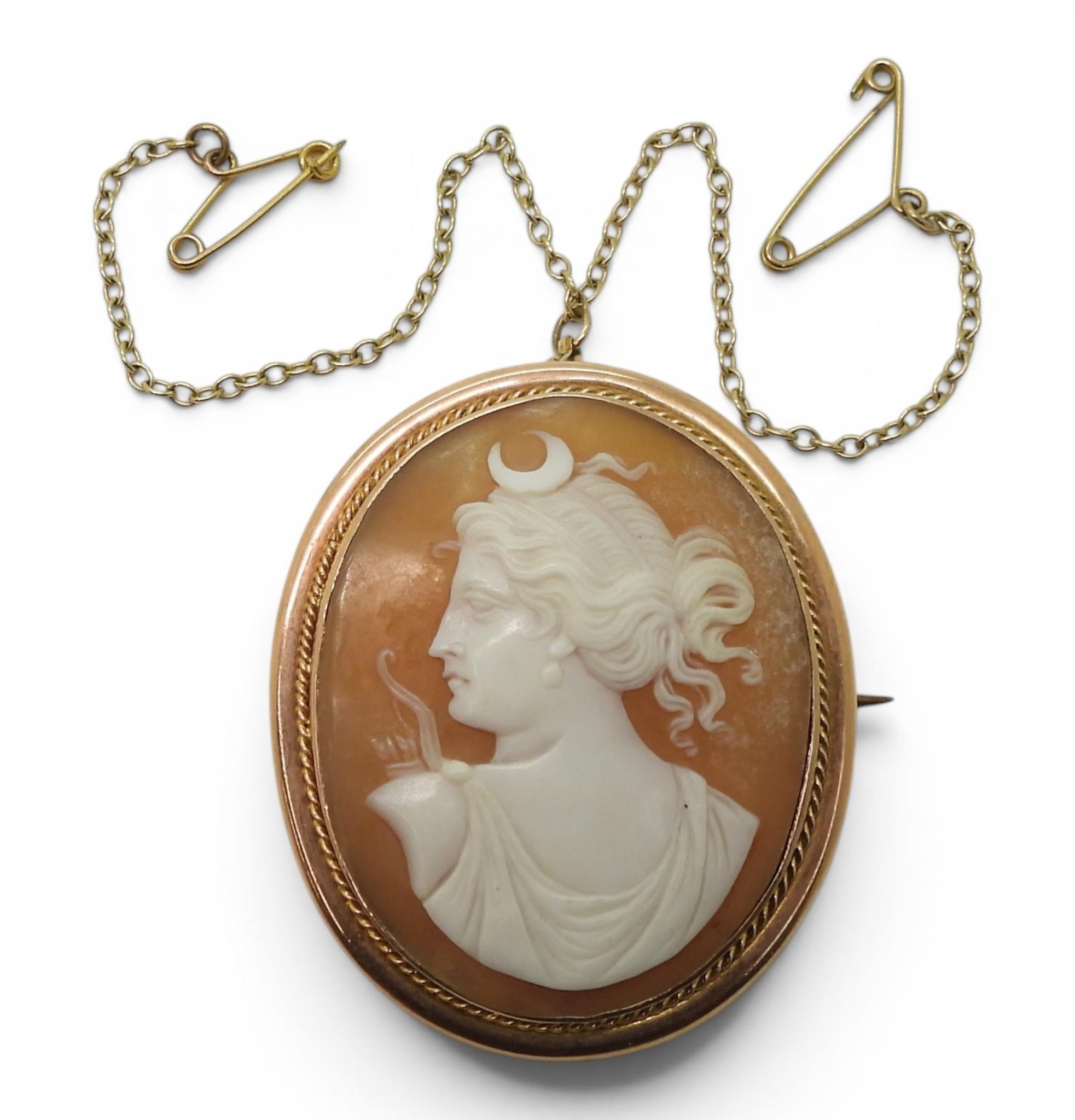
Not every cameo earns its mythology. The Great Western Auctions Ltd has a live shell cameo brooch of the Goddess Selene, Lot 779, in day two of its August jewellery sale, backed by four verified full-size catalogue images from a 1965x2048 family. That is enough to make this a real judgement call rather than a decorative shrug. Selene is a strong subject because a moon goddess should look serene without turning blank, and shell cameos only stay convincing when the face, drapery, and layered relief still read as intentional carving rather than as soft period sweetness carried by the gold mount.
Primary live lot today
Shell cameo of the Goddess Selene, Lot 779
Auction house: The Great Western Auctions Ltd
View live lot listing
Estimate: £100-£200
Auction timing shown in the sale details: day two, Thu 6th Aug 2026 10am BST, jewellery lots 700-899
Catalogue detail: a shell cameo of the Goddess Selene in a 9ct gold brooch mount, 4.2cm x 3.5cm, 11.3g
Photo coverage: four verified full-size catalogue images, with the lead view at 1965x2048
Why this lot is interesting
Shell cameos get underrated because they are so easy to file under "nice antique jewellery" and move on. This one deserves a slower read. Selene is not just another classical female bust. The subject asks for calm expression, clean profile, and enough compositional control to stop the piece becoming generic neoclassical wallpaper. The estimate is modest for a named mythological subject in gold, which makes the quality of the carving do most of the heavy lifting.
The useful tension is that cameos can look refined long after the crispness has started to drain away. Four images help because you can compare the profile line, the lift of the hair, and the contrast between the pale carved layer and the darker shell ground without relying on one flattering angle. If the nose, chin, and neckline still read decisively and the relief has not gone chalky or rubbed flat, this is the kind of small jewel that can punch above its estimate. If the appeal is mostly "old gold brooch with a classical lady on it", the ceiling gets lower very quickly.
Who buys this and why
- Collectors of Victorian and later classical jewellery: they are buying subject matter as much as material, and Selene gives them a cleaner story than an anonymous female bust.
- Wearers who like antique brooches with actual presence: they want a piece that reads from across a jacket or knit without needing gem sparkle to do all the work.
- Dealers working the middle antique-jewellery bracket: they are looking for a cameo that still feels sharp enough to retail on carving quality, not just on metal content and sentiment.
Where the carving can fall flat
- Read the profile edge first: the forehead, nose, lips, and chin should separate cleanly from the background, because softened outlines are the fastest way for a cameo to lose authority.
- Check the highest pale areas for abrasion: the brow, cheek, and shoulder take the wear, and a powdery surface can mean the shell has lost the crisp polish that makes the subject feel alive.
- Inspect the dark ground around the face and hair: chips or stress around the carved layer matter because shell does not forgive impact the way a plain gold brooch can.
- Use the reverse photos properly: pin, hinge, and catch condition matter, especially on a piece bought to wear rather than just to store.
- Look at the frame-to-cameo fit: gaps, fresh-looking glue, or an awkwardly tensioned mount can hint at a reset or later intervention.
- Ask The Great Western Auctions Ltd for one close macro of the cheek and hairline if you want to bid beyond decorative money: that is where the difference sits between a cameo that still has sculptural conviction and one that just photographs politely.
Comparator lots
These comparators stay in the shell-cameo brooch lane but test three different value stories: a later London-import example, a larger mythological scene with a higher ceiling, and a heavier nineteenth-century brooch where scale and gold weight push harder than delicacy.
- Shell cameo brooch with London import marks for 1975, Lot 788 — Auction house: The Great Western Auctions Ltd. Estimate: £100-£200. This is the nearest control comparison because the estimate matches today's Selene brooch but the description shifts from mythological identity to a more generic finely carved maiden, which helps show how much subject matter is doing for the lead lot. view lot
- Large oval carved shell cameo brooch, Triumph of Apollo led by Aurora, Lot 420 — Auction house: Bulstrodes Auctions. Estimate: £300-£500. This is the story-heavy comparator. The larger mythological scene and 18ct frame ask buyers to pay for scale, complexity, and theatre rather than for the quieter profile discipline that makes Selene attractive. view lot
- 19th century gold shell cameo brooch, Lot 200 — Auction house: Etrusca Auctions. Estimate: £600-£1,200. This is the weight-and-scale comparator. At 28.6g and 5.1cm x 4.5cm, it shows where the market moves once size, metal, and stronger period heft become part of the bid rather than just the carving alone. view lot
UK culture context
Cameos still make sense in Britain because they sit in a useful overlap between Grand Tour taste, sentimental jewellery, and museum-level design history. The V&A's Ariel brooch notes that shell and hardstone cameos were long tied to Roman carving traditions and were brought back by Grand Tour travellers, which is a good reminder that a classical subject like Selene belongs to a real collecting lineage rather than to generic vintage prettiness. The museum's Queen Victoria cameo brooch goes a step further by tying cameo fashion to exhibition culture and public taste in nineteenth-century Britain. A second V&A sentimental brooch filled with cupids, doves, and the altar of love shows how readily cameo jewellery moved from myth into emotion. That wider British context helps today's lot because you are not only buying a small gold brooch. You are buying whether the carving still carries enough specificity to hold its place in that longer classical and sentimental tradition.
- V&A: Ariel brooch — useful context for the Grand Tour and the long British appetite for classical cameo subjects.
- V&A: Queen Victoria brooch — shows how cameo carving fed directly into nineteenth-century public taste and exhibition culture.
- V&A: sentimental cameo brooch — a sharp reminder that cameos sold not only on carving but also on recognisable feeling and symbolism.
Bottom line
This is a sensible buy if you want a wearable antique cameo and the four photos keep confirming a crisp profile, honest shell, and a mount that looks secure rather than merely present. Bid for the carving first and the gold second. If the face has gone soft, the relief looks rubbed, or the frame feels like it is doing all the persuasive work, let somebody else pay for the myth.
Editorial analysis for educational purposes only. Final bidding decisions, fees, tax, shipping, collection, condition confirmation, and contract terms are handled by the auction house.