
Daily Deep Dive · 07 Aug 2026 · Decorative Arts
Lot Spotlight: a pair of cloisonné vases that has to stay disciplined under all that blue
Bright cloisonné can seduce buyers into stopping at colour. Ringwood Auctions has a live pair of Chinese cloisonné enamel vases, Lot 167, described as flowers and birds on a blue ground and backed by three verified full-size catalogue images, with the hero source at 2500x2467 and a detail image at 2500x3333. That is enough to make this a usable decorative-arts decision. These vases only work if the brass collars, repeated border bands, and floral panels still feel controlled rather than merely busy, because cloisonné loses authority fast when the metal edges soften, the enamel goes chalky, or the pair starts looking matched in spirit rather than in fact.
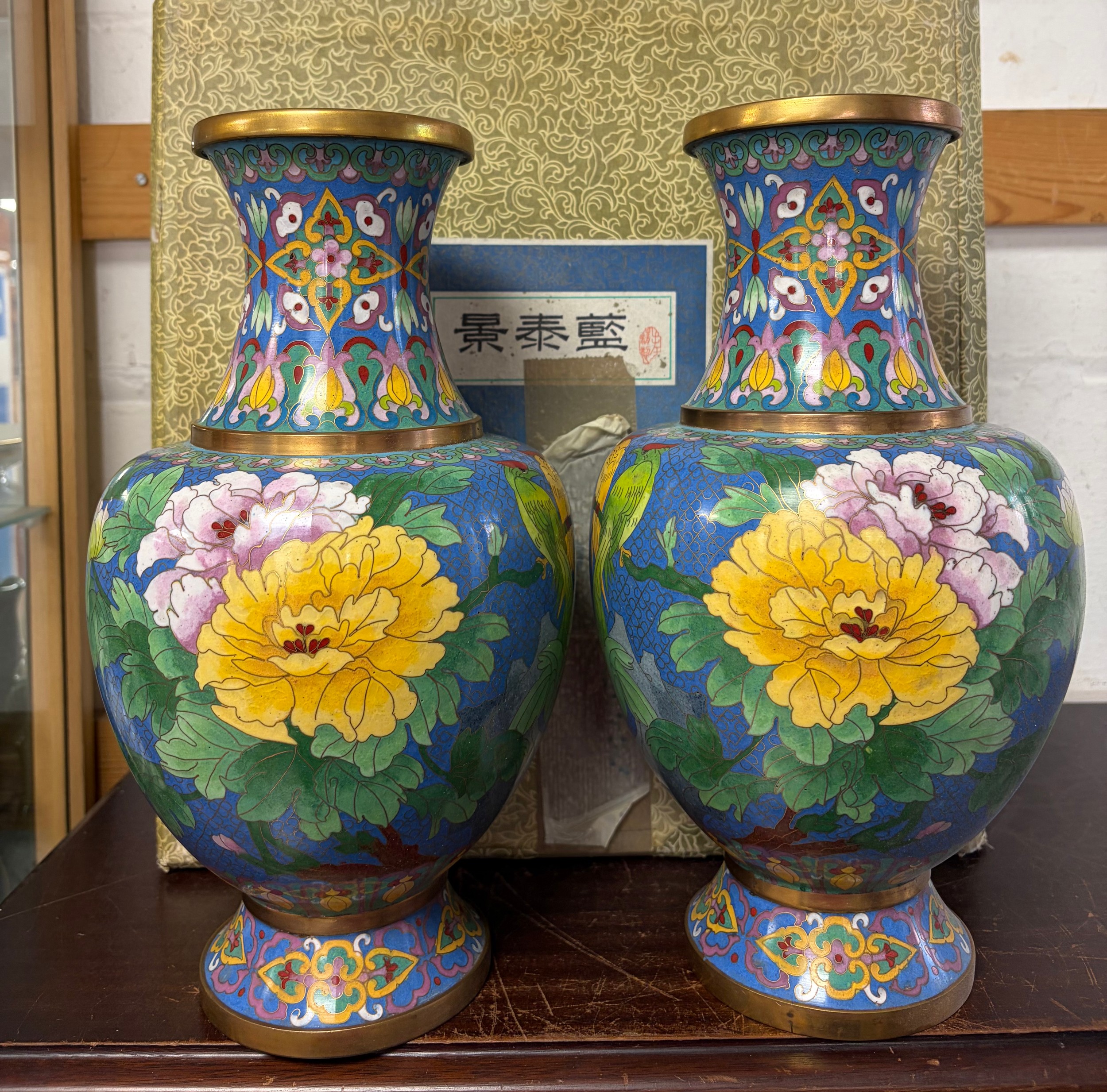
Primary live lot today
Pair of Chinese cloisonné enamel vases, Lot 167
Auction house: Ringwood Auctions
View live lot listing
Estimate: £50-£80
Auction timing shown in the sale details: Sat 8th Aug 2026 10am BST, Lots 1 to 622
Catalogue detail: a pair of Chinese cloisonné enamel vases, each enamelled with flowers and birds on a blue ground
Photo coverage: three verified full-size catalogue images, with the strongest detail view at 2500x3333
Why this lot is interesting
This is exactly the part of the cloisonné market where decorative buying and collector discipline overlap. The estimate is friendly, the pattern is immediate, and the pair format gives the lot far more room presence than two unrelated cabinet pieces ever could. The yellow peonies, birds, and blue cellular ground are doing what cloisonné should do: pulling colour, line, and metal into one surface rather than leaving you with painted flowers on a copper body.
The useful tension is that cloisonné can stay lively in auction-room light even after the harder-to-price damage has begun. Three images are enough to judge more than charm. You can read whether the necks and shoulders still balance one another, whether the brass mounts are cleanly seated, and whether the enamel fields stay glossy and well-contained inside the wires. At this estimate, you do not need museum-level rarity. You do need the pair to remain coherent. If one vase is carrying better colour, cleaner rims, or sharper borders than the other, the bid stops being about a pair and starts becoming a compromise.
Who buys this and why
- Interior buyers who want one emphatic shelf or sideboard statement: they are buying scale, colour, and symmetry, but only if the pair still reads as intentional rather than as bright filler.
- Entry-level Asian art buyers: they want real cloisonné technique at sensible money, and they will care more about surface control and honest condition than about chasing a grand attribution story.
- Dealers working the decorative middle market: they know this sort of pair can retail well if the enamel stays crisp, the brass trims sit cleanly, and the two bodies genuinely belong together.
Where the risk actually sits
- Start with the rims and foot mounts: dents, lifting edges, or uneven seating matter because cloisonné depends on its metal architecture staying neat.
- Follow the wire lines through the floral panels: if the cloisons look broken, flooded, or inconsistent, the whole surface loses discipline very quickly.
- Read the blue ground for chalking or pitting: vibrant colour is not enough if the enamel has gone dry, cloudy, or visibly tired under the light.
- Compare both vases motif by motif: look for one stronger shoulder, one cleaner bird, or one brighter flower, because mismatched condition is what quietly breaks a decorative pair.
- Use the tall detail image for impact wear: scratches around the shoulder and neck are more serious than they look, since they interrupt the pattern where the eye naturally lands first.
- Ask Ringwood Auctions for base and height confirmation before bidding past decorative money: the listing does not publish the measurements, and the underside will tell you more about age, wear, and pair consistency than the frontal glamour shot alone.
Comparator lots
These comparators stay in the affordable cloisonné lane but test three different buying stories: a larger Japanese near pair, a mid/late twentieth-century Chinese vase pair, and a single Japanese dish where motif quality matters more than pair symmetry.
- Antique Japanese cloisonné enamel plate dish near pair, Lot 334 — Auction house: Peebles Auction House. Estimate: £80-£150. This is the scale-and-pairing comparator. Two 31cm dishes ask you to pay more for broad decorative impact and Japanese rather than Chinese framing, which helps show how much value in today's Ringwood lot sits in pair symmetry at a lower level. view lot
- Pair of Chinese cloisonné vases, mid/late 20th century, Lot 204 — Auction house: Bentley's Fine Art Auctioneers. Estimate: £40-£60. This is the closest form comparator because it stays with Chinese cloisonné vases and a low estimate, but it shifts the question toward later decorative buying rather than toward the stronger blue-ground presence Ringwood is offering. view lot
- Antique Japanese cloisonné enamel plate dish with butterflies, Lot 335 — Auction house: Peebles Auction House. Estimate: £40-£80. This is the motif comparator. It strips the buying problem down to one decorated surface and shows how much today's Ringwood bid depends on whether two bodies, two necks, and two flower fields still behave like one decorative decision. view lot
UK culture context
British buyers have been trained to take cloisonné seriously for a long time, not just as bright export decoration but as a technical art form. The V&A's pair of Ota Jinnoei cloisonné vases is useful because it makes the metalwork point plainly: silver rims, base plates, and controlled motif spacing are part of the achievement, not trim added after the fact. The museum's Namikawa Yasuyuki butterfly vase pushes that further by showing how dense wire placement, black enamel, and butterfly motifs became markers of higher Meiji-period control rather than merely prettier colour. Jacksons Antique's overview of Japanese cloisonné is less institutional but still helpful on the route from Owari production into the Meiji golden age, which is the background that keeps everyday cloisonné buying anchored in real craft history instead of pure export-room nostalgia. That matters here because the Ringwood pair only earns its keep if the brass mounts, repeated bands, and enamel cells still look orderly enough to honour the technique rather than merely imitate the palette.
- V&A: Vase by Ota Jinnoei — sharp museum context for how rims, base plates, and disciplined cloisonné wirework contribute to quality.
- V&A: Vase by Namikawa Yasuyuki — useful butterfly-motif comparison showing how refined Meiji cloisonné handles dense wires and dark enamel grounds.
- Jacksons Antique: The Art of Japanese Cloisonné — practical UK-market background on technique, revival, and why cloisonné still attracts more than purely decorative buying.
Bottom line
This is a sensible decorative-arts buy if you want a colourful pair at approachable money and the three images keep confirming stable enamel, tidy brass mounts, and genuinely matched condition. Bid when the pleasure is in the pairness as much as the pattern. If one vase looks brighter, cleaner, or sharper than the other, or if the rims and shoulders start telling different stories, let the symmetry fantasy belong to somebody else.
Editorial analysis for educational purposes only. Final bidding decisions, fees, tax, shipping, collection, condition confirmation, and contract terms are handled by the auction house.