
Daily Deep Dive · 10 Aug 2026 · Furniture
Lot Spotlight: a Chesterfield suite that only works if the chairs are adding value, not theatre
Big upholstered suites are easy to overpay for because volume can masquerade as value. H & H Auctioneers Ltd has a live Chesterfield lot made up of a three-seater sofa and two chairs, Lot 172, estimated at £150-£200 and backed by five verified full-size catalogue images, each at 2500x3367. That is enough to ask the only useful question before the red buttoning does all the talking: do these three pieces still behave like one credible suite, or are you really looking at one decent sofa being flattered by two chairs that may not deserve the same confidence.
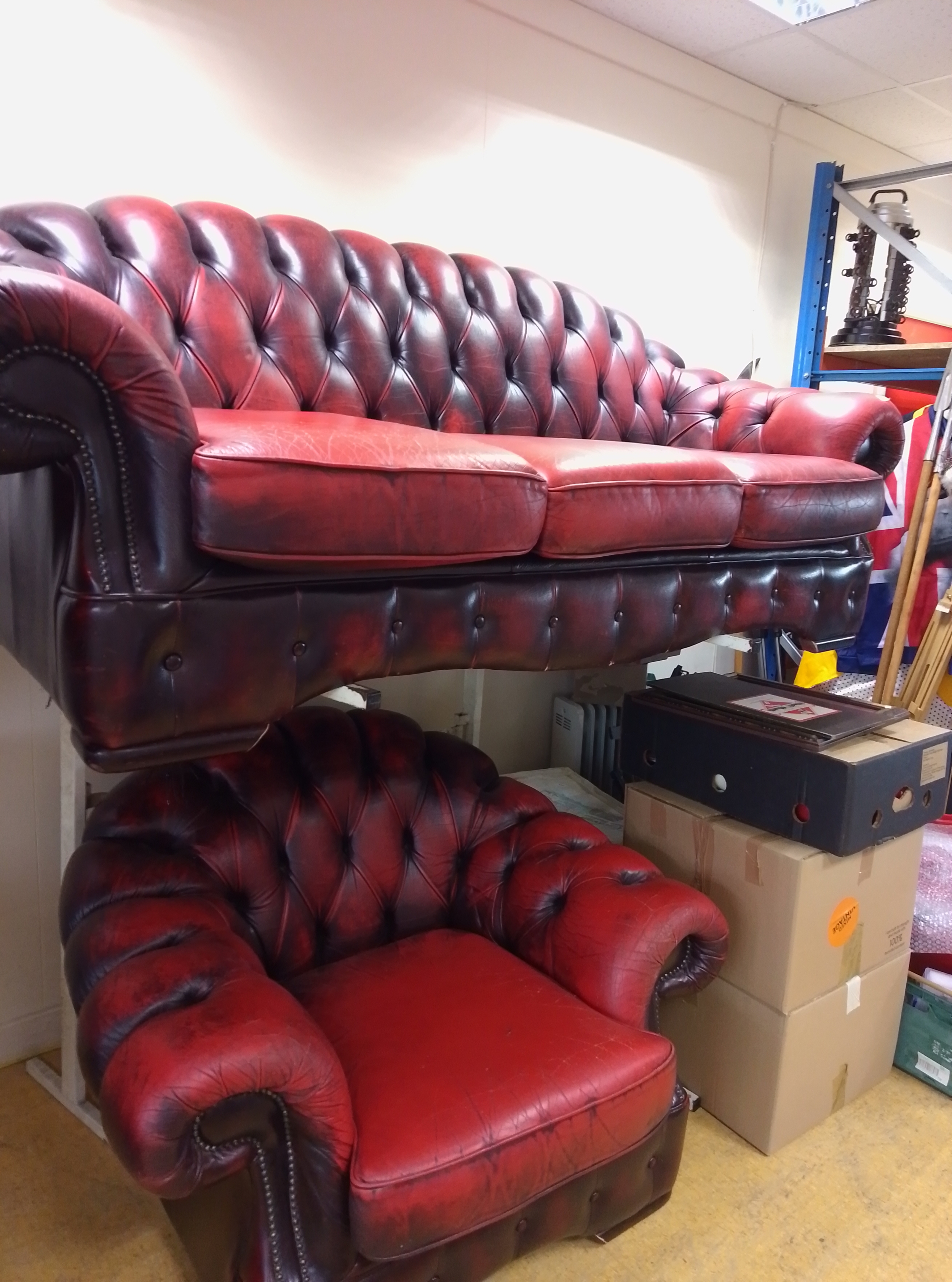
Primary live lot today
Chesterfield 3 seater sofa and two chairs, Lot 172
Auction house: H & H Auctioneers Ltd
View live lot listing
Estimate: £150-£200
Auction timing shown in the sale details: Tue 11th August 2026 from 10:30am BST, Lots 1 to 325
Catalogue detail: Chesterfield 3 seater sofa and two chairs
Photo coverage: five verified full-size catalogue images, all 2500x3367
What the listing does not publish: dimensions, upholstery material, and restoration history
Why this lot is interesting
The estimate is where this becomes live. At single-sofa money, you are being offered a whole room statement with enough image coverage to test the basics instead of bidding blind on atmosphere. Chesterfields still sell because deep buttoning and rolled arms can make even hard-used upholstery look clubbable and reassuring from across a room. That is helpful for sellers. Buyers need to slow it down.
The key tension is between quantity and coherence. Three-piece suites often survive by leaning on sheer presence, but the chairs are only valuable if they keep pace with the sofa in colour, stuffing, seat condition, and overall shape. This H & H group is interesting precisely because the image set lets you compare all of that. You can see whether the cresting still has enough authority, whether the seats have gone soft and hammock-like, and whether the two chairs still read as part of the same family rather than as later companions drafted in to make the lot sound grander than it is.
Who buys this and why
- Hospitality and club-room buyers: they want immediate atmosphere and enough visual bulk to anchor a bar, snug, or reception area without commissioning new upholstery.
- Dealers and restorers: they are buying leather line, frame shape, and resale narrative, but only if the chairs are not materially weaker than the sofa.
- Private buyers furnishing a large sitting room: they want a ready-made grouping at sensible money, provided the suite will not turn into a repair bill disguised as a bargain.
Where the risk sits
- Start with the seat fronts: the images already show creasing and use, so you need to judge whether that is honest wear or the beginning of real cushion collapse.
- Read the arm rolls and top line as a set: sagging scrolls or one softer back crest will make the chairs feel borrowed even if the colour broadly matches.
- Follow the buttoning and stud lines: a Chesterfield relies on symmetry, and once the tufting starts wandering or flattening, the whole lot loses authority fast.
- Compare sofa and chairs for colour drift: if one chair is brighter, drier, or more heavily restored than the others, the suite premium starts to evaporate.
- Ask H & H Auctioneers Ltd for dimensions, underside views, and any note on past reupholstery before bidding beyond decorative money: the listing does not publish those basics, and they matter more than the romance of the red finish.
Comparator lots
These comparators keep to the same Chesterfield buying lane but test three different questions: what a single sofa is worth in the same H & H sale, what a more polished standalone sofa is asking elsewhere, and what another full suite looks like once the estimate rises.
- 3 seater chesterfield button back sofa, Lot 171 — Auction house: H & H Auctioneers Ltd. Estimate: £100-£150. This is the cleanest in-sale comparator because it shows what the market is being asked to pay when the chairs disappear and only the sofa has to carry the pitch. view lot
- Black leather Chesterfield sofa, Lot 259 — Auction house: Lots Road Auctions. Estimate: £300-£500. This is the smarter standalone-sofa comparator because the catalogue publishes dimensions and wear, helping show how much more polished a single Chesterfield has to look before the estimate moves well past today's H & H suite. view lot
- Three piece green leather Chesterfield suite, Lot 401 — Auction house: Thomas Watson. Estimate: £200-£400. This is the suite-level comparator. It shows what the market can ask once the grouping itself becomes the story, which helps keep today's lower H & H estimate anchored in condition uncertainty rather than in simple generosity. view lot
UK media & culture context
British taste has kept the Chesterfield alive by continually moving it between club-room seriousness and decorative shorthand. House & Garden's history of the sofa makes the long arc plain: the Chesterfield emerges in the late eighteenth century, keeps selling through the Victorian period, and never quite leaves the room because buttoning, rolled arms, and upright posture still read as shorthand for old British comfort. That same magazine's essay on the decline of the old matching three-piece suite is even more useful for this lot, because it names the exact trap: a Chesterfield can be handsome on its own but heavy-handed once the armchairs start repeating the gesture without adding enough grace. The V&A's note on an eighteenth-century upholstered armchair helps explain why this still matters. Upholstery is the whole effect here. If the stuffing, cresting, and rolled arms stop feeling confident, there is not much else in a suite like this to save the bid.
- House & Garden: The evolution of the sofa — useful British context on why Chesterfields remain a live furnishing type rather than a period curiosity.
- House & Garden: Why mismatched furniture is the new three-piece suite — directly relevant to whether today's chairs are helping the lot or simply repeating the sofa's bulk.
- V&A: Armchair — a sharp museum note on upholstery as spectacle and comfort, which is exactly the lens this suite needs.
Bottom line
This is worth a look if you want a full Chesterfield room statement at modest money and you are prepared to interrogate the chairs as hard as the sofa. Bid when the suite still reads as one disciplined group with credible seat structure and matching confidence. If the armchairs feel softer, flatter, or more tired than the main seat, treat the lot as a sofa with decorative extras and keep the number accordingly low.
Editorial analysis for educational purposes only. Final bidding decisions, fees, tax, shipping, collection, condition confirmation, and contract terms are handled by the auction house.