
Daily Deep Dive · 12 Aug 2026 · Lighting
Lot Spotlight: a ruby Murano lamp that has to survive the mount, the applied glass, and the attribution
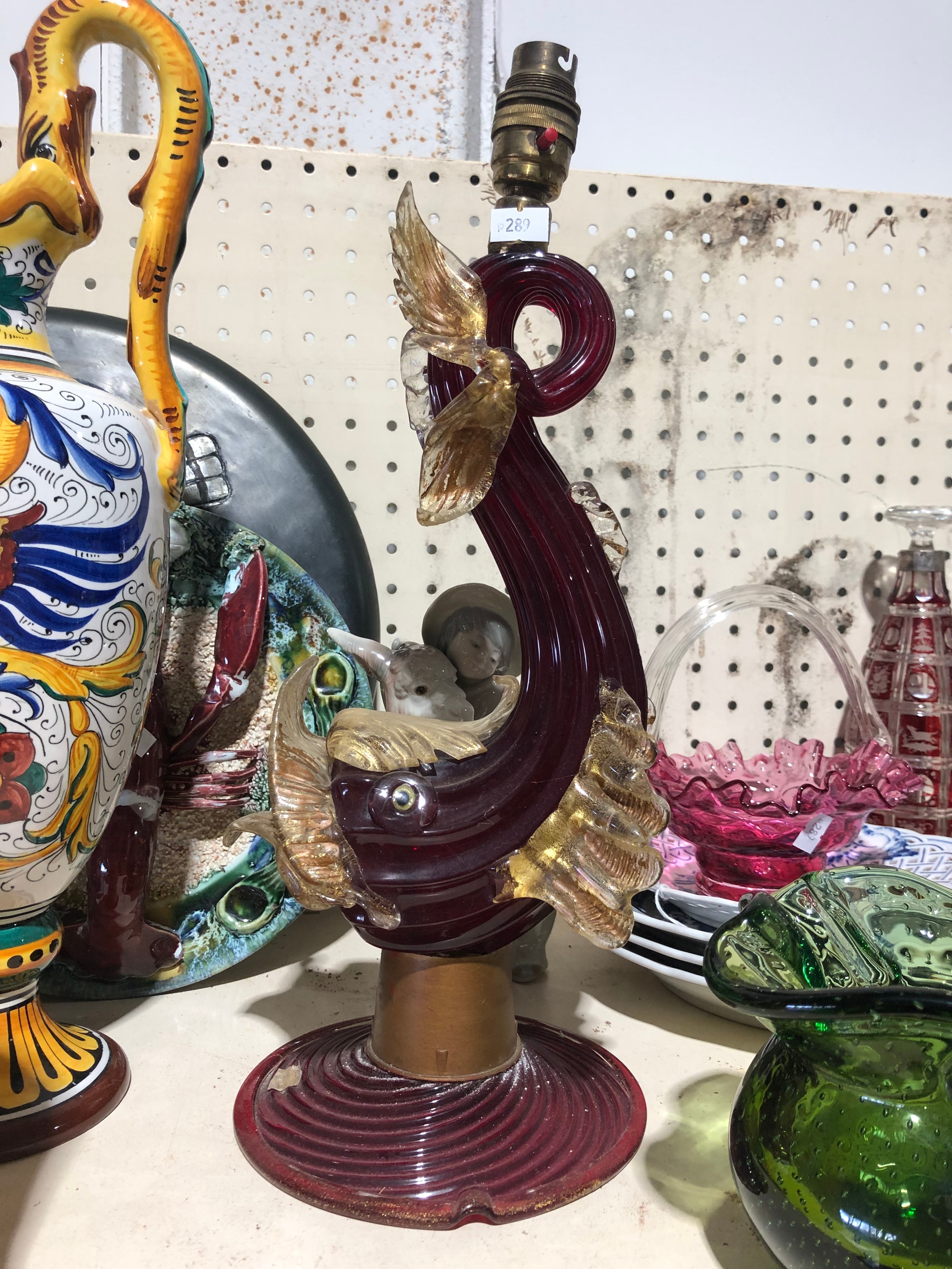
Italian glass lighting goes soft very quickly once buyers let colour do all the persuading. Devon Online Auctions has a live Murano Seguso ruby glass table lamp, Lot 424, catalogued with seven verified full-size images up to 2500x3333 and shown to auction end on 12th Aug 26 from 10am BST. The lot is interesting because the lamp has exactly the sort of theatrical ruby body and applied amber ornament that can lift a room in one move, but it also comes with the usual pressure points in plain view: an older brass fitting, fragile applied glass, surface wear around the base, and a maker attribution that is being asserted far more clearly than it is being proved.
Primary live lot today
Murano Seguso ruby glass dophin table lamp, Lot 424
Auction house: Devon Online Auctions
View live lot listing
Estimate: No estimate published
Auction timing shown in the sale details: Ends Wed 12th Aug 2026 from 10am BST
Catalogue title: Murano Seguso ruby glass dophin table lamp
Photo coverage: seven verified full-size catalogue images, with the lead image downloaded locally at 2500x3333
Why this lot is interesting
The appeal is immediate. This is not restrained Venetian glass. It is a bold ruby sculptural lamp with amber-toned applied ornament, the sort of object that sits somewhere between mid-century hotel-bar drama and the overconfident glamour British buyers still associate with imported Italian interiors. That matters because a lamp like this does not need to be subtle to be useful. It needs to feel intentional, intact enough, and convincing enough to justify the space it takes up.
The listing gives you enough to make a disciplined call. You can see the base wear, the metal fitting, the profile of the curled body, and the applied details that do most of the visual heavy lifting. What you cannot see clearly is the evidence for the Seguso attribution beyond the title itself. That does not kill the lot, but it changes the ceiling. Buy it as a strong piece of Murano-style decorative lighting first. Let the maker name improve the story only if the auction house can support it.
Who buys this and why
- Interior-led buyers: they want one theatrical accent lamp that can hold its own against dark wood, brass, and other decorative clutter without vanishing into the background.
- Vintage lighting dealers: they see a sellable silhouette, but only if the applied glass survives close inspection and the fitting does not turn the job into a rewiring-and-reassurance exercise.
- Murano and Venetian glass collectors: they may like the ruby body and applied flourish, but they should be stricter than the catalogue title about attribution evidence and later electrical intervention.
What to inspect in the photos
- Start with the applied amber glass: the fish, fins, and curled details are the first places where small chips, old nibbles, or glued repairs can hide in the sparkle.
- Read the brass fitting unsentimentally: the holder looks older and serviceable rather than elegant, so ask whether it has been tested, rewired, or altered before you price the lamp as ready to use.
- Check the ruby body for bruising and rubbing: the base edge and the high points will tell you whether this has lived as a decorative object or had a rougher domestic life.
- Look for a signature, label, or ground pontil evidence: if the Seguso attribution matters to your bid ceiling, ask for the base and any maker marks in sharper detail.
- Keep composition in mind: this is a large visual personality piece, so any missing applied element or awkward restoration will read immediately once the lamp is isolated from the shelf clutter in the catalogue photos.
Comparator lots
These stay in the Italian and Murano-flavoured lighting lane while changing the buying proposition from ruby sculptural flamboyance to white-glass decorativeness, Art Deco restraint, and larger floor-standing presence.
- Italian table lamp, white Murano glass with a swirling pattern and silver flecks, Lot 447 — Auction house: Deal Auction House. No estimate published. A softer Murano comparator where the buying case leans on surface pattern and decorative calm rather than on sculptural theatre. view lot
- Italian Art Deco table lamp with an ebonised base and a white glass shade, Lot 464 — Auction house: Deal Auction House. No estimate published. This is the tidier line-and-shade alternative if you want Italian character without the same exposure to applied-glass fragility. view lot
- A Foscarini Murano standard lamp with four surround shades, Lot 447 — Auction house: Rye Auction Galleries. Estimate published on listing. This is the scale-up comparator: less jewel-like as an object, but more useful if your room wants one dramatic floor lamp rather than one concentrated tabletop hit of colour. view lot
UK culture context
British buyers have a long habit of reading Murano glass as imported spectacle, and there is a reason for that. The V&A notes that its glass collection is one of the largest and most comprehensive in the world, particularly rich in vessel and art glass from the Italian Renaissance as well as later British and European production. That matters here because Venetian glass has always sold on drama as much as workmanship. In a UK interiors context, this lamp lands closer to theatrical set dressing than to quiet connoisseurship: more country-house bar cart, more dealer-fair flourish, more of the ruby-and-gold bravado that turns up whenever British rooms want a dash of continental excess. It is the kind of thing that makes immediate visual sense if you have ever walked past the V&A glass cases, read a Venice-set glassmaking novel, or spent time around the more exuberant end of the antiques trade where one flamboyant lamp can rescue a whole stand from beige respectability.
- V&A: Glass collection — useful institutional context on why Italian and Venetian glass still carries weight with British collectors and decorators.
- V&A: Murano glass search — a quick way to place Murano within the broader museum language British audiences already recognise.
Bottom line
This is worth chasing if you want a visually assertive Italian glass lamp and you are happy to buy on decorative strength first, attribution second. The full-size image set is good enough to justify a live bid, but only if the auction house can satisfy you on chips to the applied glass, the state of the fitting, and whatever evidence sits behind the Seguso name. If those answers stay vague, keep the bid in the realm of strong Murano-style lighting rather than paying a signed-maker premium for a story the photos do not yet finish.
Editorial analysis for educational purposes only. Final bidding decisions, fees, tax, shipping, collection, condition confirmation, and contract terms are handled by the auction house.