
Daily Deep Dive · 13 Aug 2026 · Jewellery
Lot Spotlight: a purple star sapphire brooch where the star, the diamonds, and the Wartski box all have to agree
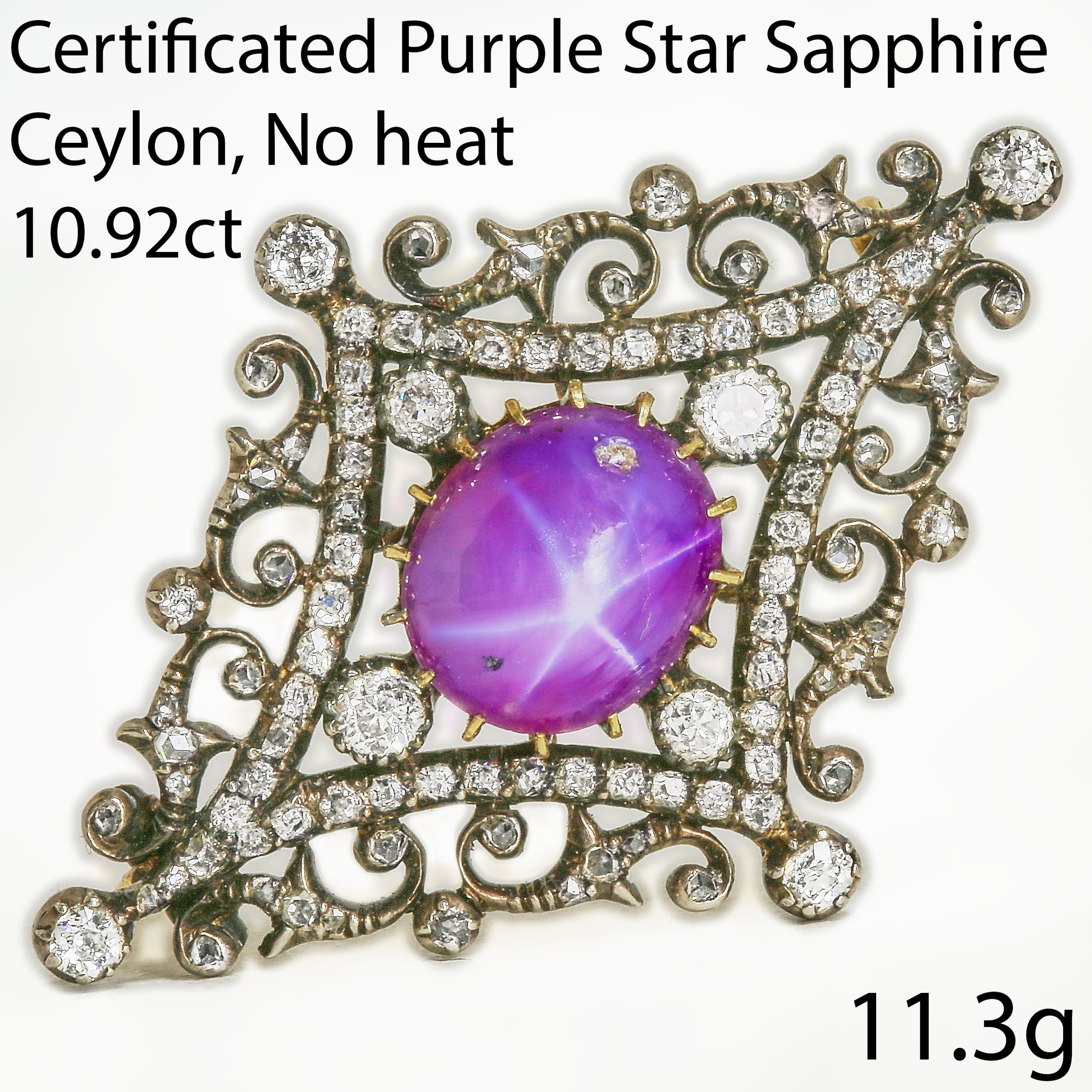
Jewellery buyers can get carried away the moment a rare stone, a Victorian mounting, and a famous fitted box appear in the same sentence. Etrusca Auctions has a live Victorian certificated purple star sapphire and diamond brooch, Lot 8, estimated at £5,000-£10,000 and shown to auction on 13th Aug 26 at 4pm BST. The catalogue gives this lot two full-size 2500x2500 images and a specific description: a no-heat Ceylon purple star sapphire of approximately 10.92 carats, old-cut diamonds in silver on gold, scrolling foliate work, and the original Wartski box. That is enough to make this a real buying decision rather than a romantic story, but only if the asterism, the stone surface, the reverse, and the presentation all support one another under scrutiny.
Primary live lot today
Victorian certificated purple star sapphire and diamond brooch, Lot 8
Auction house: Etrusca Auctions
View live lot listing
Estimate: £5,000-£10,000
Auction timing shown in the sale details: 13th Aug 26 at 4pm BST
Catalogue title: A magnificent Victorian certificated purple star sapphire and diamond brooch
Catalogue description: A magnificent Victorian brooch centering a certificated no-heat Ceylon purple star sapphire of approximately 10.92 carats, displaying a strong asterism. The cabochon is set within an ornate openwork frame of old-cut diamonds in silver on gold, featuring scrolling foliate motifs. Width: 4.5 cm. Presented in its original fitted Wartski box. A rare and exceptional jewel combining historical provenance with gemological rarity. Accompanied by a gemological certificate.
Photo coverage: two verified full-size catalogue images, both at 2500x2500, with the lead image downloaded locally
Why this lot is interesting
The stone does the first half of the work and the setting does the second. A purple star sapphire is already a specialist object because buyers are not just paying for colour or size, they are paying for the quality of the star effect and whether the cabochon reads as alive rather than sleepy. Once you add a Victorian diamond frame and a named fitted box, the lot stops being a simple gem buy and becomes a test of whether all the surrounding signals are earning their keep.
The useful attraction here is that the catalogue does not rely on one dramatic claim alone. No-heat Ceylon origin, a strong asterism, old-cut diamonds, silver on gold construction, foliate Victorian design, and a Wartski box all point toward a richer object than the average brooch listing. The danger is obvious too: if the star is weaker in person than in still photography, if the reverse shows hard repair, or if the box is doing too much of the emotional selling, the estimate starts to feel ambitious very quickly.
Who buys this and why
- Jewellery collectors: they want a rare coloured-stone brooch that has presence beyond carat count and can hold its own as a period jewel.
- Gem-led buyers: they are here for the unusual no-heat purple star sapphire first, but they should care just as much about how convincingly the mounting supports the stone.
- Dealers in period jewellery: they will notice the Wartski box immediately, but the resale story only works if the brooch itself still looks authoritative once the packaging is taken away.
What to inspect in the photos
- Test the star effect: asterism is the emotional centre of the lot, so look for a crisp, confident star rather than a vague glow that only appears under ideal lighting.
- Read the cabochon surface carefully: scratches, abrasions, or repolishing can flatten the life of a star sapphire very quickly, especially on a stone meant to perform visually.
- Check the diamond frame for consistency: old-cut diamonds can absorb minor variation, but the setting still wants to feel coherent, lively, and period rather than patched together.
- Ask for the reverse and clasp unsentimentally: solder lines, later pin work, or heavier-than-expected repair would matter more here than on a plainer brooch because the estimate is doing serious work.
- Keep the box in perspective: Wartski adds atmosphere and market confidence, but it should support the brooch rather than rescue it.
Comparator lots
These comparators stay in the sapphire-and-brooch lane while changing the proposition from certified rarity and prestige presentation to more everyday Victorian, Edwardian, and bow-form jewellery buying.
- A Victorian gold sapphire and diamond brooch, Lot 57 — Auction house: Whitton & Laing. Estimate: £170-£210. This is the useful floor-level comparator: recognisably Victorian, sapphire-and-diamond, but without the same gemological rarity, scale, or packaging theatre. view lot
- Edwardian sapphire and diamond brooch, Lot 6 — Auction house: Etrusca Auctions. Estimate: £800-£1,600. Same sale, same broad family of materials, but a much more conventional gemstone proposition that helps show how much of Lot 8's estimate sits in rarity, size, and presentation. view lot
- 9ct gold diamond and sapphire brooch in the form of a bow, Lot 51 — Auction house: Thomson Roddick Callan. Estimate: £80-£120. A lower-stakes comparator that shows how quickly sapphire brooches revert to ornament rather than event when the stone story and period authority soften. view lot
UK culture context
Victorian jewellery still lands well with British buyers when it manages to look historical and theatrical at the same time. The V&A notes that nineteenth-century jewellery often looked to the past and that later Victorian design could become increasingly elaborate, which is exactly the territory this brooch wants to occupy: not quiet refinement, but ornate confidence with a gem at the centre of the drama. The Wartski connection sharpens that UK reading even further. Wartski is one of those St James's Street names that instantly signals old-world jewellery seriousness in London, so the fitted box adds a layer of cultural authority that British buyers will feel even before they start parsing the gem certificate.
- V&A: A history of jewellery — useful museum context for why ornate nineteenth-century jewellery still reads strongly in Britain.
- Wartski — the London jeweller name that gives the fitted box extra cultural and market resonance.
Bottom line
This is worth serious attention because the lot offers more than one reason to care: a rare-looking no-heat purple star sapphire, a Victorian diamond setting with presence, and a fitted Wartski box that deepens the story without having to carry it alone. The estimate is defendable if the asterism is genuinely strong, the certificate and reverse line up cleanly, and the setting still feels crisp rather than compromised. If those pieces do not agree, this stops being magnificent very quickly and becomes an expensive lesson in how easily jewellery buyers can overpay for atmosphere.
Editorial analysis for educational purposes only. Final bidding decisions, fees, tax, shipping, collection, condition confirmation, and contract terms are handled by the auction house.