
Daily Deep Dive · 14 Aug 2026 · Wine & Spirits
Lot Spotlight: an early a'bunadh where the batch strip, the fill line, and the box all need to agree
Older a'bunadh gets romanticised very quickly once buyers see “batch No. 8” on a paper strip. Leighton Hall Auctions has a live boxed Aberlour a'bunadh, Lot 656, estimated at £50-£80 and backed by five verified full-size catalogue images from a 2500x1667 and 1667x2500 family. That makes this a proper bottle decision rather than a label-led flutter. The attraction is obvious: early batch number, cask-strength 60.2% Alc/Vol, original carton, and a photo set good enough to show the front, back, fill, and packaging. The discipline comes in just as quickly. The capsule is not pristine, the carton has lived a real life, and the lot only makes sense if you price it as an honest older sherried malt rather than as a myth about how magical every early a'bunadh must be.
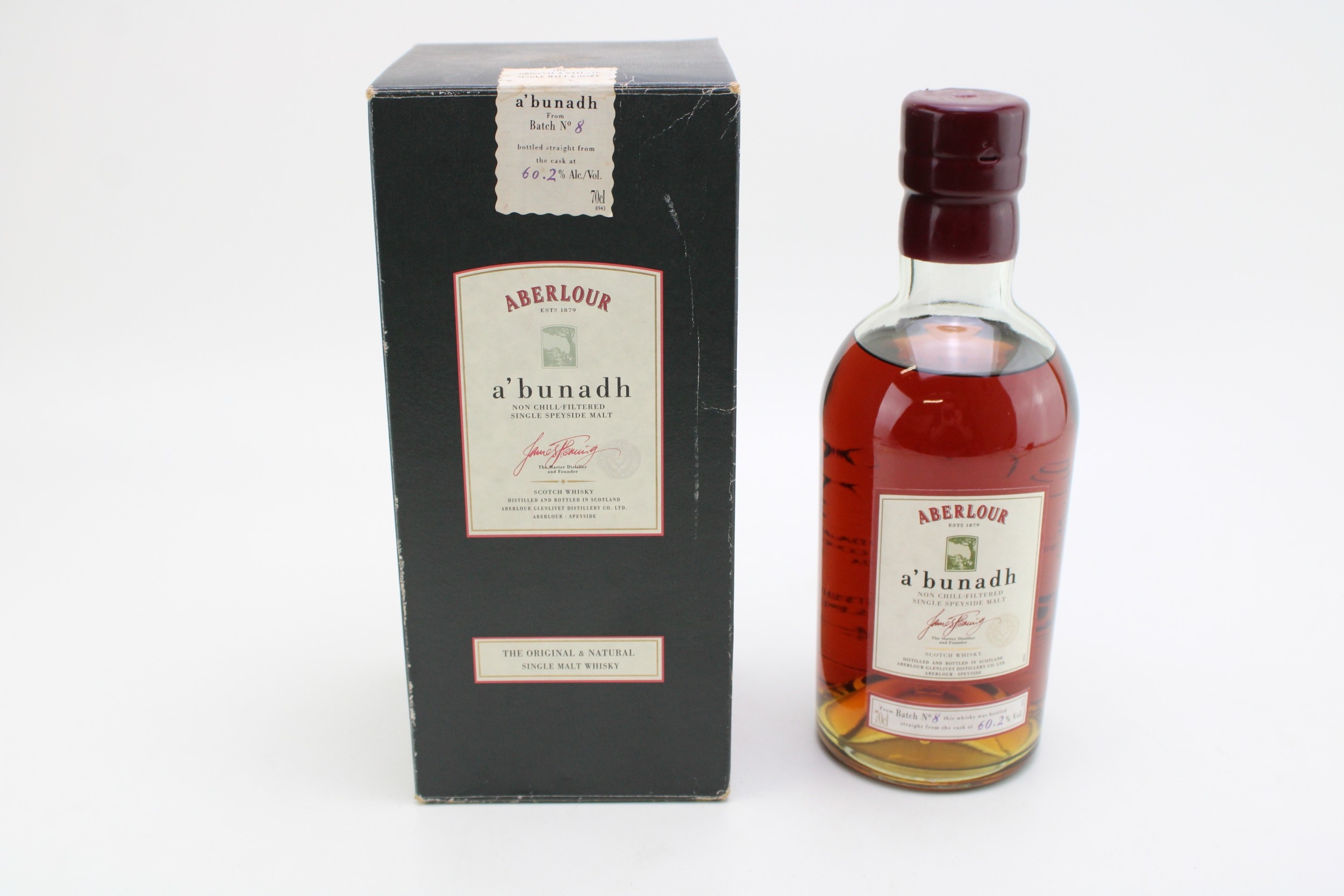
Primary live lot today
Boxed Aberlour a'bunadh Scotch Whisky, from batch No. 8, bottled straight from the cask at 60.2% Alc/Vol, 70cl, Lot 656
Auction house: Leighton Hall Auctions
View live lot listing
Estimate: £50-£80
Auction timing shown in the sale details: the two-day online sale starts from 9:30am on Friday 14 and Saturday 15 Aug 2026, with Lot 656 sitting in the day-two Antiques & Collectors run
Catalogue title: Boxed Aberlour a'bunadh Scotch Whisky, from batch No. 8, bottled straight from the cask at 60.2% Alc/Vol, 70cl
Photo coverage: five verified full-size catalogue images, with the lead hero downloaded locally at 2500x1667
Why this lot is interesting
a'bunadh has the kind of reputation that encourages lazy buying. It is a bottle line British whisky drinkers already associate with sherry weight, cask strength, and batch talk, so an early-number example can start sounding important before anyone has checked whether the actual bottle looks calm. What makes this listing worth attention is that the photography slows that reflex down. You can read the batch strip on the carton, see the front label cleanly, assess the capsule damage, and judge the level without having to squint through a single distant glamour shot.
The most useful image is arguably the reverse. The back-label shot turns this from a generic old Aberlour into a period export-market bottle, right down to the Italian-language reverse and the Ramazzotti distribution line. That does not make it more valuable by itself, but it does make the lot more specific. This is not just “some old Speyside bottle in a box.” It is a documented early a'bunadh presentation piece with enough visual evidence to invite a serious bid, provided you stay interested in condition and not just in lore.
Who buys this and why
- Drinkers who like older sherried cask-strength Scotch: they are buying the chance to taste an earlier expression of a line that still has a strong following, but they need the bottle to look stable enough to justify opening.
- Batch-minded Aberlour buyers: they care that this is batch No. 8 rather than a current release, and they will treat the packaging and fill as part of the evidence, not as decorative extras.
- Whisky-label and presentation collectors: they may never open it, because the original carton, paper batch strip, and export-market back label are doing a lot of the appeal here.
Where the risk sits in the photos
- Start with the fill line: the bottle looks high and healthy in the shoulder, which is exactly what you want to see before an old sherried malt starts selling itself.
- Read the capsule without sentiment: there is visible tearing and wear around the top, so ask whether it is just surface damage or the sign of a more disturbed closure history.
- Use the carton as evidence, not ornament: the box is original and attractive, but the corner knocks, scuffs, and surface scratches also tell you how this bottle has been handled over time.
- Study the back label and import details: the reverse image is unusually helpful because it shows period export presentation rather than leaving the bottle to trade on a front label alone.
- Keep batch romance in proportion: an early batch number is useful, but the lot still needs to stand up as a physically convincing bottle before you pay for the story.
Comparator lots
These comparators stay firmly in the Aberlour and a'bunadh lane, which is the right way to judge this lot. They help separate early-batch nostalgia from ordinary boxed-bottle buying.
- Two Bottles Of Aberlour Speyside Single Malt Scotch Whisky A'Bunadh Original Cask Strength, Lot 162 — Auction house: Cottees Auctions. Estimate: £80-£150. This is the quantity-first comparator: two boxed bottles, less early-batch romance, but a cleaner way to think about what buyers will pay for a'bunadh on drinking strength alone. view lot
- Aberlour A'Bunadh Speyside Single Malt Whisky with Aberlour Aged 12 Years Double Cask Matured, Lot 201 — Auction house: Cottees Auctions. Estimate: £50-£100. This is the mixed-pair comparator: same brand family, broader drinker appeal, and a useful reminder that not every Aberlour lot is really about batch mythology. view lot
- Aberlour A'Bunadh Batch 23 Single Speyside Malt Scotch Whisky, Lot 223 — Auction house: Cottees Auctions. Estimate: £150-£250. This is the best price anchor for today's bottle because it stays in the same early-batch conversation while showing how much more decisively the market can move once the batch number itself becomes the headline. view lot
UK culture context
Aberlour sits in one of the most culturally fluent parts of the Scotch story: Speyside, where British drinkers expect distillery tourism, polished heritage, and a very particular kind of bottle romance. The Scotch Whisky Association frames Scotch as a product with more than 500 years of heritage and points buyers toward a distillery map with more than 150 sites across Scotland, which is useful context here because a'bunadh is not bought like anonymous old spirits. It is bought as part of that wider Scotch pilgrimage culture. Moray Speyside makes the local point more concretely: Aberlour is presented as a River Spey town with whisky and shortbread both bound into its identity. That is exactly why this lot needs discipline. A British buyer can fall in love with Speyside atmosphere long before the practical evidence has finished speaking. No credible batch-specific retail or auction pulse turned up cleanly enough to trust today, so the safest market read remains the comparator set rather than a forced trend line.
- Scotch Whisky Association: Story of Scotch — good UK trade context on the heritage language that still shapes how buyers think about bottles like this.
- Scotch Whisky Association: Distillery map — a quick reminder of how central place and pilgrimage remain to the Scotch buying story.
- Moray Speyside: Visit Aberlour — local context for why Aberlour still lands in Britain as more than just a label on glass.
Bottom line
This is a yes at sensible money if you want an older a'bunadh that still looks physically composed and you are prepared to buy the bottle in front of you rather than a story about early batches in general. The estimate is modest, which helps. So does the five-image set. What matters now is staying strict on the capsule, staying honest about the worn carton, and treating the high fill and export-market details as evidence of interest rather than as permission to get carried away. Pay for a convincing old bottle with character. Do not pay for folklore.
Editorial analysis for educational purposes only. Final bidding decisions, fees, tax, shipping, collection, condition confirmation, and contract terms are handled by the auction house.