
Daily Deep Dive · 17 Aug 2026 · Lighting
Lot Spotlight: a Moorcroft lamp where the flowers are easy and the hard part is everything around them
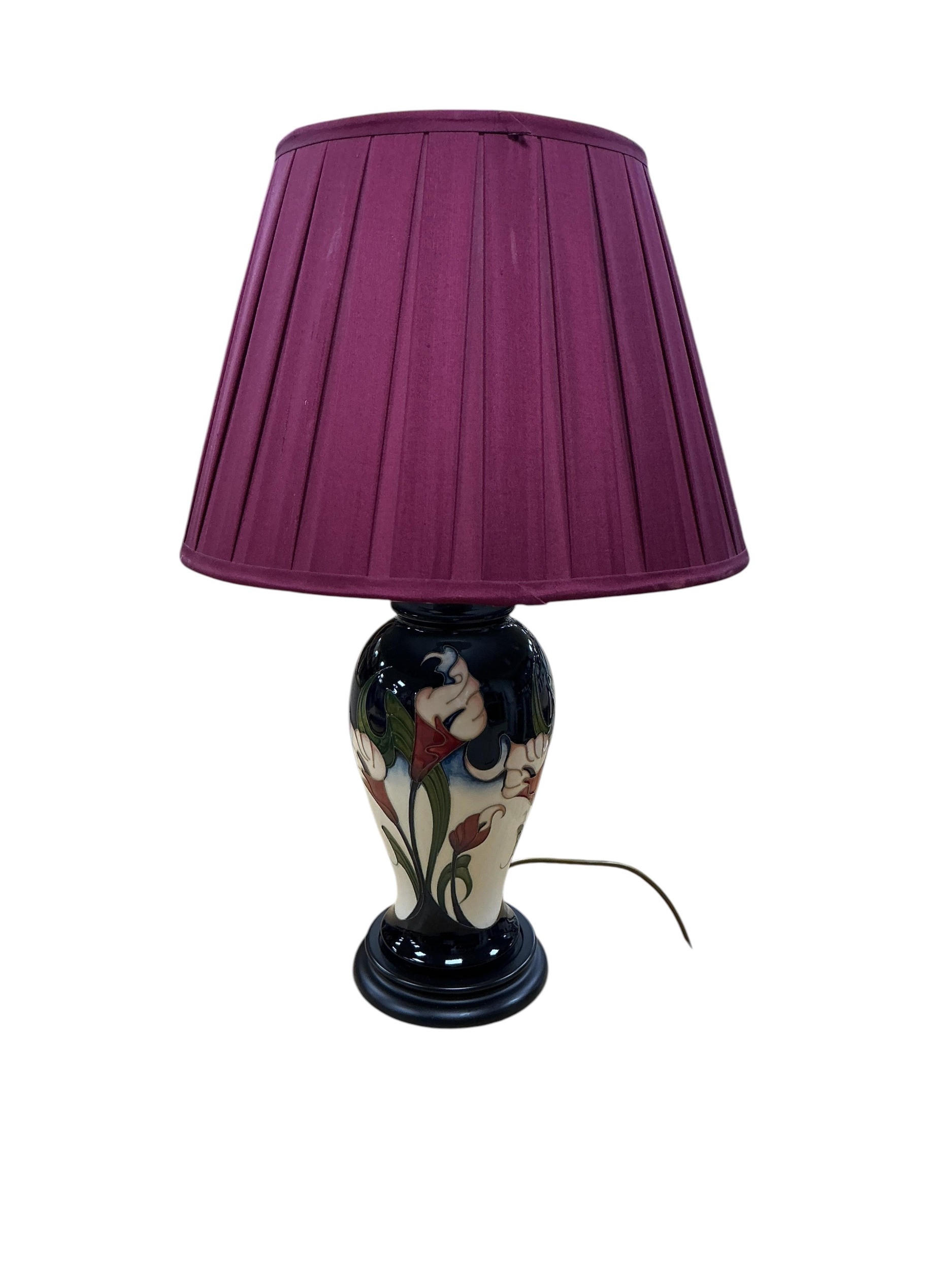
This Gorringe's lamp is the sort of object that can make buyers generous too quickly. Lot 219 is a Moorcroft base in the Calla Lily pattern with its shade still present, estimated at £60-£80 and backed by three verified full-size catalogue images, each downloaded from a 1875x2500 image family. That makes it a proper lamp decision rather than a pottery-only flutter, because the flowers have enough decorative pull to get attention immediately, but the real judgement sits in the tube-lining crispness, the fit and age of the shade, and whether the electrics are simply old or already troublesome.
Primary live lot today
A Moorcroft lamp in the Calla Lily pattern, with shade, overall 54cm high, Lot 219
Auction house: Gorringe's
View live lot listing
Estimate: £60-£80
Auction timing shown in the sale details: Mon 17th Aug 2026 at 10am BST
Catalogue title: A Moorcroft lamp in the Calla Lily pattern, with shade, overall 54cm high
Photo coverage: three verified full-size catalogue images, each at 1875x2500, with the lead image downloaded locally
Why this lot is interesting
Moorcroft lamps live in a slightly awkward but useful corner of the British market. They attract pottery buyers because the decoration is doing the seduction, and they attract interiors buyers because one lamp can deliver colour, pattern, and period warmth in a single move. Calla lilies help here because they read cleanly from across a room. They have enough vertical lift to flatter a lamp body without turning the base into botanical clutter.
The estimate is where the lot becomes interesting rather than merely pretty. At £60-£80, Gorringe's is not asking you to pay for a museum-grade ceramic trophy. It is asking whether this is still one convincing domestic object. The photos suggest the answer could be yes, but only if the shade feels right with the base, the surface remains crisp when seen in person, and the electrical side of the story does not turn a decorative buy into a repair bill.
Who buys this and why
- Interior-led buyers: they want one recognisably British decorative lamp that can sit happily on a sideboard or console without needing a whole Arts and Crafts room built around it.
- Moorcroft collectors: they are buying the pattern, tube-lining, and overall harmony, but they should be stricter than a general interiors buyer about restoration, shade mismatch, and the quality of the ceramic surface.
- Dealers and lamp restorers: they see margin only if the base is clean, the wiring can be made safe without fuss, and the shade is either original enough to keep or ordinary enough to replace without regret.
What to inspect in the photos
- Read the white calla blooms closely: tube-lined Moorcroft loses conviction fast when the slip edges soften, the petals blur into the ground, or later over-cleaning has dulled the surface.
- Decide whether the shade belongs: ask if it is period, later, or simply convenient, because a convincing base can still look wrong if the shade proportions and fabric are doing a different job.
- Check the top mount and bulb holder unsentimentally: buyers often forgive tired electrics in pottery lamps, but the fitting condition is exactly where cheap decorative money turns into avoidable workshop money.
- Look at the base and lower body for crazing, rubbing, or glaze knocks: lamps are handled, rewired, and shuffled more than vases, so the stress points matter more here than on shelf-only ceramics.
- Use all three views to judge silhouette: the lamp should read as one balanced object, not a handsome ceramic base wearing a shade that makes it look top-heavy or apologetic.
Comparator lots
These comparators stay in the same Moorcroft lamp lane and help separate today's taller Calla Lily proposition from smaller Hibiscus and Anemone examples that carry similar estimates but different condition and scale pressures.
- Moorcroft Hibiscus Lamp Base and original shade, Lot 787 — Auction house: J. Stuart Watson Auctioneers & Valuers. Estimate: £50-£80. A slightly shorter Hibiscus example with the same three-image depth and much the same estimate ceiling, useful for testing whether you prefer today's taller Calla Lily body or a more familiar floral Moorcroft look. view lot
- Moorcroft Hibiscus Lamp Base and original shade, Lot 788 — Auction house: J. Stuart Watson Auctioneers & Valuers. Estimate: £50-£80. This is the nearest direct market anchor because it stays with Moorcroft, shade included, and a comparable estimate, but the extra height changes how much you are really paying for decorative presence rather than just pattern recognition. view lot
- Moorcroft Anemone Lamp Base and original shade, Lot 789 — Auction house: J. Stuart Watson Auctioneers & Valuers. Estimate: £40-£60. The catalogue admits damage to the lining, which makes this the risk-adjusted comparator. It shows how quickly the market discounts a Moorcroft lamp once the shade itself starts becoming part of the repair conversation. view lot
UK culture context
Moorcroft still works in Britain because it sits at the overlap of studio seriousness and domestic nostalgia. The V&A notes that William Moorcroft's raised slip decoration became a lifelong speciality and that his close connection with Liberty & Co. helped define the commercial life of the pottery. Moorcroft's own Heritage Centre makes the same point from the inside, presenting the Stoke-on-Trent factory as a living strand of ceramic art rather than as mere branded tableware. That is the real buying lane for today's lamp. It is not just a useful light source. It is part of the long British habit of treating pottery as something that can shape a room's emotional temperature, somewhere between Arts and Crafts sincerity and country-house colour.
- V&A: William Moorcroft vase — concise institutional context on Moorcroft's raised slip decoration and the Liberty connection that still matters to British buyers.
- Moorcroft Heritage Centre — useful factory-side context for why Moorcroft continues to trade as living ceramic heritage rather than as a purely antique name.
- Market pulse: no credible UK social or market source found today that added more value than the live auction comparators and the institutional references above.
Bottom line
This is a sensible bid if you want one handsome British decorative lamp and you keep the object in the lamp bracket, not the pure-pottery fantasy bracket. The estimate is forgiving, the image set is strong enough to justify action, and the Calla Lily pattern has enough clarity to carry a room. The discipline is simple: do not pay as though the shade is certainly right, the wiring is certainly easy, or the ceramic surface is certainly cleaner than the photos prove. If those things check out, the lot looks well bought at the right level. If they do not, it becomes an ordinary lampshade-and-rewire problem wearing a very good name.
Editorial analysis for educational purposes only. Final bidding decisions, fees, tax, shipping, collection, condition confirmation, and contract terms are handled by the auction house.