
Daily Deep Dive · 18 Aug 2026 · Jewellery
Lot Spotlight: a five-stone diamond ring where the value sits in the line, not the size
Five-stone diamond rings are easy to underrate because they do not shout. TW Gaze has a live 18ct gold and platinum graduated diamond ring, Lot 8023, estimated at £200-£260 and backed by six verified full-size catalogue images, with the lead hero downloaded locally from a 2012x1189 full-size image family. That makes this a proper secondhand jewellery decision rather than a sentimental half-hoop shrug. The attraction here is rhythm. If the stones graduate cleanly, the claws still hold with confidence, and the back of the shank has not been worn to apology, a ring like this can disappear onto the hand in the best possible way and stay there for years. If those basics are off, the whole thing becomes a lesson in how little metal there is between antique charm and future bench work.
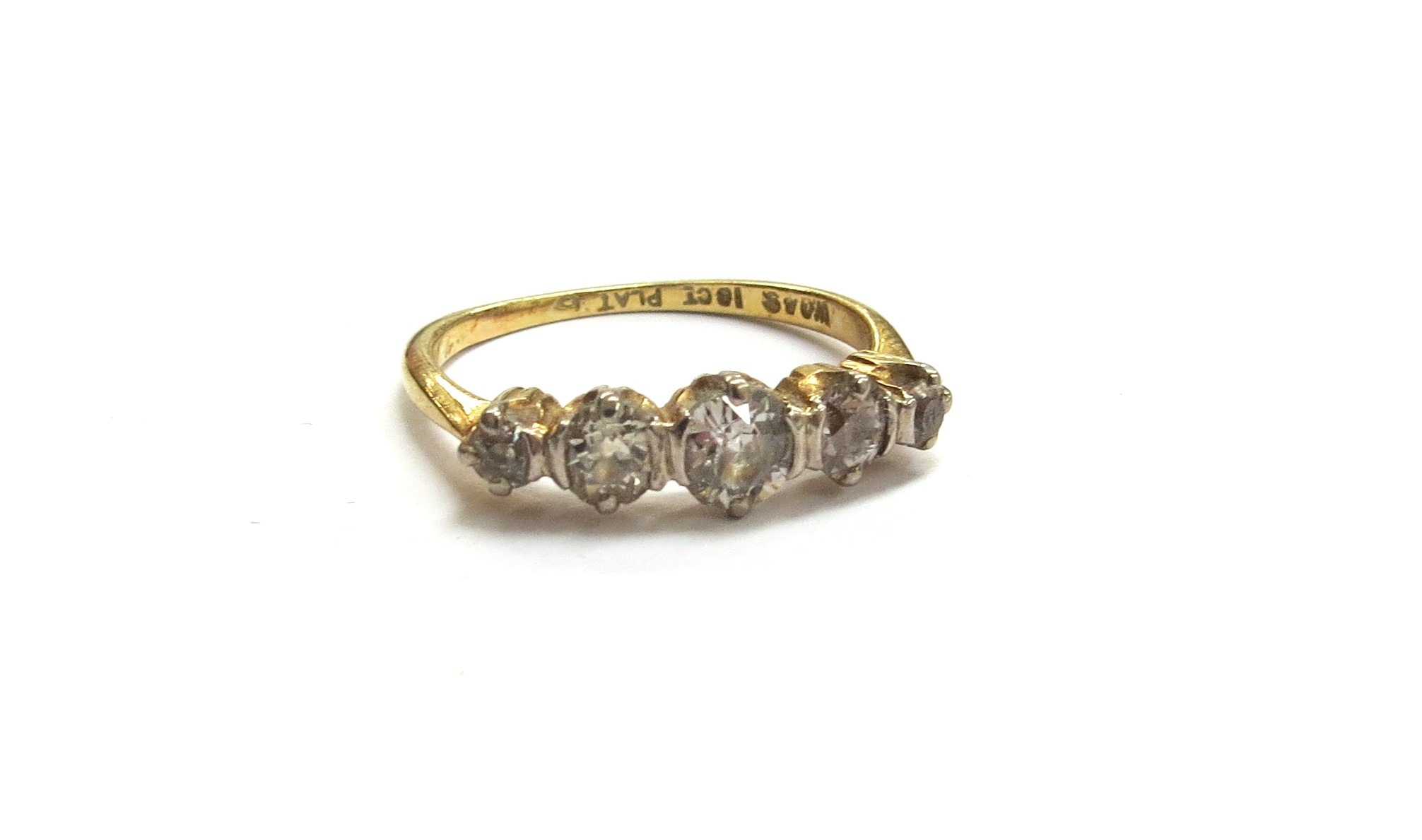
Primary live lot today
An 18ct gold/platinum set five stone graduated diamond ring. Size M, 2.5g, Lot 8023
Auction house: TW Gaze
View live lot listing
Estimate: £200-£260
Auction timing shown in the sale details: 18th Aug 26 at 10am BST
Catalogue title: An 18ct gold/platinum set five stone graduated diamond ring. Size M, 2.5g
Photo coverage: six verified full-size catalogue images, with the lead hero downloaded locally from the full `.JPG` image family at 2012x1189
Why this lot is interesting
The five-stone lane is one of the healthiest places in the secondary jewellery market because it rewards proportion more than theatre. Buyers who want an everyday diamond ring often end up overpaying for size, branding, or a single flashy stone when what actually wears best is balance. This ring has the opposite pitch. It offers a familiar British format in honest precious metal, keeps the diamonds spread across the finger, and asks you to judge workmanship before fantasy.
The gold-and-platinum combination is part of the appeal. It suggests a ring made to present white stones cleanly without turning the whole object into a modern white-metal statement. At this estimate the lot is not being sold as a grand antique jewel, and that is exactly why it is interesting. The value sits in whether the stones still graduate with confidence, whether the top still reads as one calm sentence, and whether the shank has enough life left for real wear rather than occasional nostalgia.
Who buys this and why
- Vintage-leaning engagement or anniversary buyers: they want a diamond ring that feels rooted in older British jewellery taste without paying for a high-drama solitaire.
- Daily-wear jewellery buyers: they are buying spread, practicality, and a ring that can live quietly on the hand instead of only coming out for special occasions.
- Dealers and working jewellers: they see margin only if the claws are sound, the stones face up evenly, and the back of the shank does not immediately trigger a rebuild conversation.
Condition pressure points
- Read the graduation head-on first: the centre stone should lead naturally and the outer stones should taper without looking mismatched in spread, brightness, or height.
- Check the claws before you admire the sparkle: five-stone rings live hard lives, and the fastest way to inherit expense is to buy pretty stones sitting in tired metal.
- Use the side profile to judge the mount: the platinum top should look purposeful and settled, not like later patching or awkward solder that has disturbed the ring's original line.
- Inspect the back of the shank unsentimentally: thinness, resizing seams, or a flattened lower hoop matter more here than they do in a ring bought purely for display.
- Look for one stone that breaks the rhythm: chips, clouding, or a noticeably different cut style can turn a calm wearable ring into five separate compromises.
Comparator lots
These comparators stay in the live diamond-ring lane and help separate straight five-stone wearability from boat-shape styling, half-hoop brightness, and more decorative colour-led alternatives.
- An 18ct gold graduated five stone diamond ring in boat shaped mount. Size Q/R, 2g, Lot 8242 — Auction house: TW Gaze. Estimate: £180-£220. This is the closest same-format comparator: similar money, similar metal language, but with a more obviously shaped top that asks whether you want quiet wearability or more period silhouette. view lot
- An 18ct white gold diamond half hoop ring, 12 brilliant cut diamonds in channel setting, 0.84ct total approx diamonds. Size K, 3.4g, Lot 8055 — Auction house: TW Gaze. Estimate: £300-£360. This is the modern-finish comparator. It trades old-style graduation for denser white sparkle and a cleaner channel-set look, which helps show how restrained today's ring really is. view lot
- An Art Deco ruby and diamond bow tie ring, stamped 750. Size P, 7.7g, Lot 8030 — Auction house: TW Gaze. Estimate: £650-£700. This is the style-first alternative. It is far more theatrical, much heavier, and useful for reminding buyers that today's ring is attractive precisely because it does not need colour, motif, or period drama to make sense. view lot
UK culture context
Five-stone rings sit in a very British middle lane between engagement token and everyday keeper. The Jewellery Editor's guide to Georgian, Regency, and Victorian engagement rings singles out the Victorian five-stone or half-hoop as a genuinely versatile format, precisely because it can function as both an engagement-style ring and an all-in-one band. The V&A's broader history of jewellery provides the longer backdrop: once brilliant-cut diamonds took hold, white sparkle increasingly dominated jewellery design and precious metal settings were asked to flatter that light rather than overwhelm it. The Goldsmiths' Centre brings the practical side back into focus through its profile of the diamond mounter, where the entire job is described as making a mount that holds stones securely while showing them off. That combination of taste history and bench logic suits today's lot perfectly. This is not a trophy ring. It is a workmanship-and-wearability ring.
- The Jewellery Editor: How to buy Georgian, Regency, Victorian engagement ring — useful on why the Victorian five-stone or half-hoop format remains such a durable buying lane.
- V&A: A history of jewellery — good museum context on how diamonds came to dominate jewellery design once cutting and setting techniques pushed sparkle to the front.
- The Goldsmiths' Centre: Diamond Mounter (Jeweller) — a sharp practical reminder that a ring like this only works if the mount still does its quiet structural job properly.
Bottom line
This looks the kind of diamond ring that can be worn more often than it is talked about, and that is praise. The estimate is sensible, the six-image photo set is strong enough to justify a real decision, and the format has exactly the calm usefulness many secondhand jewellery buyers actually need. The green light is conditional but clear: bid if the claws, stone alignment, and shank thickness confirm the first impression. If the graduation feels improvised or the metal looks tired where the finger will feel it most, leave the sentiment to someone else.
Editorial analysis for educational purposes only. Final bidding decisions, fees, tax, shipping, collection, condition confirmation, and contract terms are handled by the auction house.