
Daily Deep Dive · 19 Aug 2026 · Decorative Arts
Lot Spotlight: a cloisonné pair where the second vase carries half the value
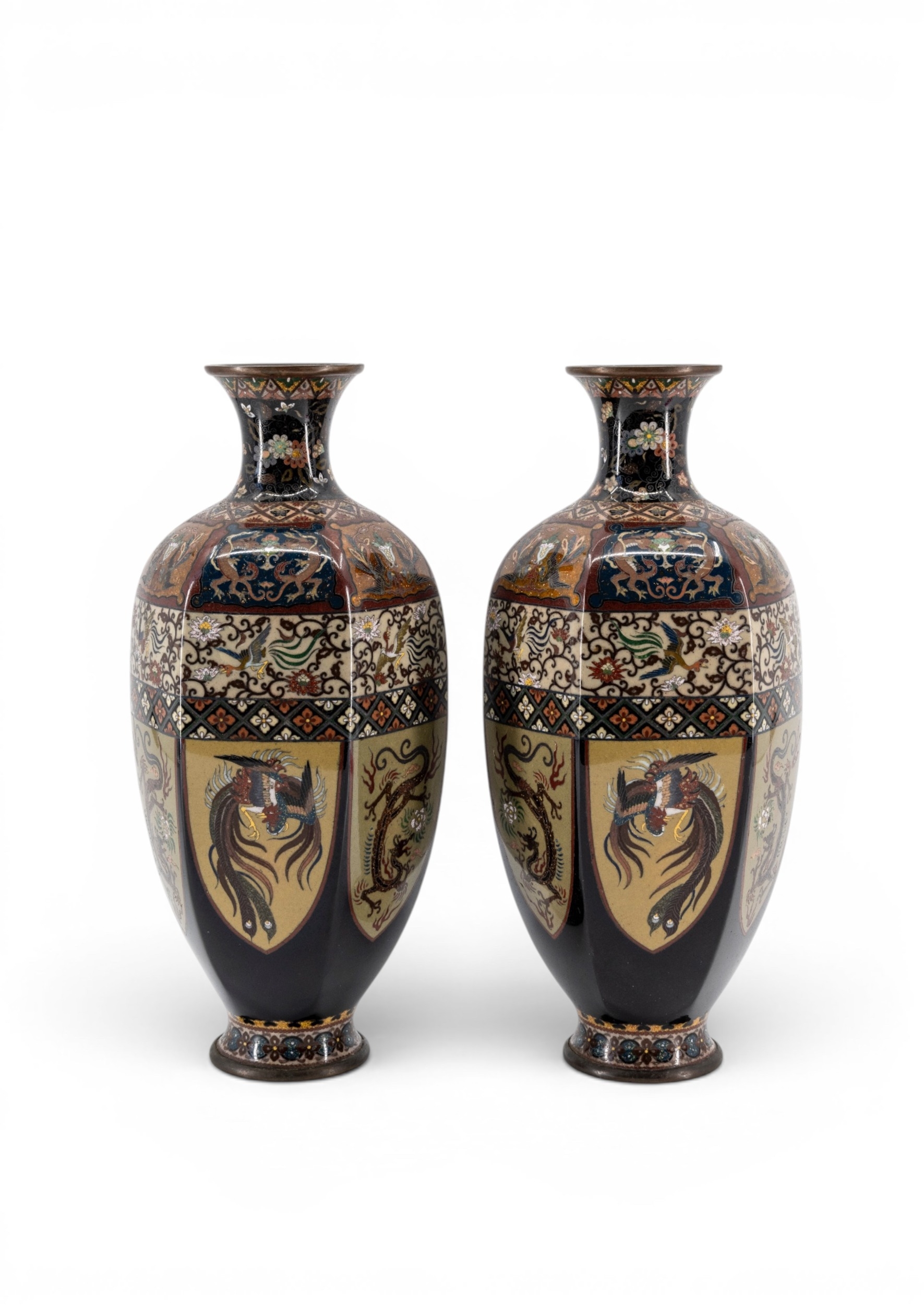
A pair like this earns its money only if neither vase starts freelancing. Dore & Rees Auctions has a live pair of Japanese cloisonné vases in the manner of Honda Yasaburo, Lot 294, estimated at £500-£700 and backed by six verified full-size catalogue images, with the local hero downloaded from a 1771x2500 full-size image family. That makes this a stricter decorative-arts decision than the black grounds, ho-o birds, and dragons first suggest, because the whole case rests on whether both bodies keep the same line, the same enamel authority, and the same confidence at the rim, shoulder, and foot.
Primary live lot today
A fine pair of Japanese cloisonné vases in the manner of Honda Yasaburo, Meiji period (1868-1912), Lot 294
Auction house: Dore & Rees Auctions
View live lot listing
Estimate: £500-£700
Auction timing shown in the sale details: Wed 19th Aug 2026 9:30am BST
Catalogue detail: hexagonal baluster sides finely worked in coloured enamels with alternating panels of ho-o birds and dragons, 25cm high
Photo coverage: six verified full-size catalogue images, with the local hero saved from a 1771x2500 full-size `.JPG` and a separate 500x500 preview asset for homepage use
Why this lot is interesting
Single cloisonné vases can get away with a little swagger. Pairs cannot. Once two bodies are being sold as one decorative decision, every small difference in shoulder width, neck finish, border sharpness, and surface freshness begins to count twice. That is what makes this Dore & Rees lot useful. The estimate is serious enough to demand discipline, but not so high that buyers can excuse themselves with trophy logic.
The Honda Yasaburo comparison matters here mostly as a standard of behaviour, not as a guarantee. What you want is the sense that both vases have been built around the same rhythm: dark grounds holding their depth, cream panels staying crisp, and the bird-and-dragon programme landing as controlled ornament rather than busy export bravura. If one vase is flatter in colour, softer in wirework, or less settled at the foot, the pair premium starts leaking immediately.
Who buys this and why
- Interior buyers furnishing one serious mantel, console, or cabinet top: they are buying pair symmetry and room authority, and they need both vases to carry equal visual weight.
- Collectors of Meiji decorative arts: they want enough technical control in the wirework, grounds, and panel spacing to justify looking past pure decorative colour.
- Dealers working the upper middle of the Asian decorative market: they can sell a pair like this cleanly only if the condition match is real and the two vases still behave like partners rather than near-neighbours.
Where the pair gets tested
- Start at the mouths and rims: a pair only looks expensive when both openings keep the same profile, colour, and metal calm.
- Compare the shoulder bands panel by panel: geometric borders are unforgiving, so any softening, repairs, or drift in the pattern will show up quickly.
- Read the black grounds before the motifs: if one body looks chalkier, browner, or more rubbed than the other, the decorative harmony is already compromised.
- Check whether the ho-o birds and dragons have equal crispness: one sharper vase and one tired vase is the classic way a pair keeps selling as if it were still whole.
- Use the side and rear views to test the copper foot and neck mounts: dents, lifting edges, or uneven wear matter more here than on a single cabinet vase because sameness is part of the value.
- Ask Dore & Rees Auctions for underside and side-by-side natural-light views if you want to bid beyond decorative money: the catalogue is strong, but pair judgements improve dramatically once both foots and backs are seen without studio kindness.
Comparator lots
These comparators stay in the Japanese cloisonné vase lane, but each tests a different buying logic: single-object drama, single-vase colour appeal, and another pair whose value sits more in figural storytelling than in this lot's geometric discipline.
- A massive Japanese cloisonné vase and cover, Meiji period (1868-1912), Lot 287 — Auction house: Dore & Rees Auctions. Estimate: £1,200-£1,800. This is the scale-and-theatre comparator. It helps show why today's pair is not about sheer monumentality, but about whether two quieter objects can hold a room with more control than one grand one. view lot
- A Japanese Aka Suke cloisonné vase together with a hardwood stand 18cm (2), Lot 6383 — Auction house: Hannam's Auctioneers. Estimate: £100-£150. This is the colour-led single-vase alternative. It asks far less money and far less matching discipline, which is useful if your taste is for one attractive cabinet object rather than a true pair decision. view lot
- A pair of Japanese cloisonné vases with figural design, Meiji, 19th C., Lot 560 — Auction house: Rob Michiels Auctions. Estimate: €200-€400. This is the closest pair comparator because it stays with Meiji cloisonné and offers eight catalogue images, but the emphasis shifts toward figural panels and lower-entry pricing rather than toward the stricter black-ground balance and border discipline of the Dore & Rees lot. view lot
UK culture context
British buyers tend to meet cloisonné through two overlapping lenses: museum-grade Meiji craft and highly usable decorative luxury. Country Life's introduction to cloisonné is helpful because it stresses how Japanese makers expanded the colour range and decorative confidence of the medium beyond the broad European idea of enamelled metalwork. The V&A sharpens the judgement further. Its pair of Ota Jinnoei vases makes the real point of a pair plain: repeated balance is part of the achievement. Its black-ground Namikawa Yasuyuki lidded vase explains why dark enamel grounds and intricate wirework became such a high bar in late nineteenth-century Japanese cloisonné. That is exactly the lens today's lot needs. The dragons and ho-o birds are doing the selling, but the buyer should be watching the ground, the wire, and whether both vases remain equally exacting under that ornament.
- Country Life: In Focus: The fine art of cloisonné — useful UK editorial context on how Japanese cloisonné widened the medium's palette and decorative ambition.
- V&A: Pair of cloisonné enamel vases by Ota Jinnoei — the best museum reminder that a successful pair depends on repeated control, not just two objects sharing a theme.
- V&A: Lidded vase by Namikawa Yasuyuki — strong on mirror-black grounds, intricate wirework, and the kind of technical finish that makes black-ground Meiji cloisonné worth slowing down for.
Bottom line
This is a good pair only if it stays a pair under scrutiny. Six strong images and a proper full-size photo family make the lot publishable and make the decision real, but they do not remove the central risk: one weaker vase can quietly drain a lot like this of most of its authority. Bid if the rims, grounds, panel sharpness, and overall poise keep matching from left to right. If one body starts looking softer, browner, or less exact than the other, the answer is not to halve the romance. It is to halve the bid or walk away.
Editorial analysis for educational purposes only. Final bidding decisions, fees, tax, shipping, collection, condition confirmation, and contract terms are handled by the auction house.