
Daily Deep Dive · 20 Aug 2026 · Lighting
Lot Spotlight: a Tiffany-style lamp where the shade has to outrun the cherub
This is the sort of lamp that can sell on sweetness before anyone checks a single solder line. AJ Auctions Fife has a live Tiffany-style table lamp with a cherub base, Lot 144, estimated at £100-£120 and backed by eight verified catalogue images, with the local hero downloaded from a 1536x2048 full-size image family. The useful tension is obvious in the first frame: a domed stained-glass shade with green leaves and dark red grape cabochons over a cast cherub base that wants to be noticed almost as much as the glass. Buyers do not need to decide whether it is tasteful in the abstract. They need to decide whether the shade still reads as one confident decorative object, and whether the base supports that mood instead of tipping it into souvenir theatre.
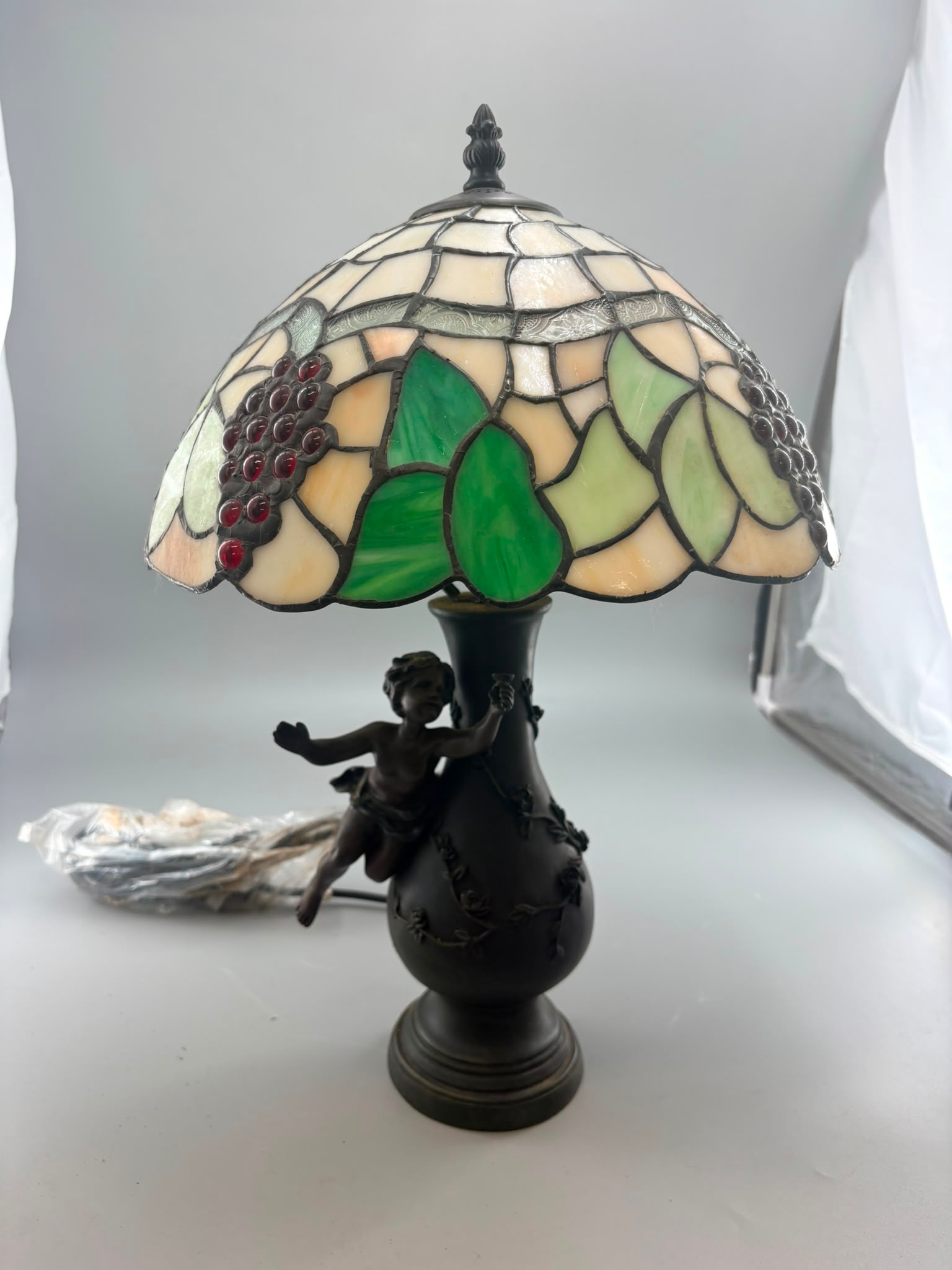
Primary live lot today
Tiffany Style Table Lamp with Cherub on Base Height 47cm, Lot 144
Auction house: AJ Auctions Fife Ltd
View live lot listing
Estimate: £100-£120
Sale window shown in the listing: 20 Aug 2026, 10:00 to 23:59:59
Catalogue title: Tiffany Style Table Lamp with Cherub on Base Height 47cm
Photo coverage: eight verified catalogue images, with the post hero saved locally from the 1536x2048 full-size `.JPG` and a separate 500x500 preview asset for homepage use
Why this lot is interesting
Tiffany-style lamps do not live or die on the name in the title. They live or die on whether the shade still makes sense once the room lights are on and the romance wears off. This AJ lot works because the shade is doing real decorative labour: creamy opalescent fields, leaf shapes that hold their colour, and a border of dark red cabochons that gives the dome enough punctuation to avoid looking washed out. The estimate is low enough to attract decorators, but high enough that a buyer should expect more than a vaguely colourful glow.
The cherub base is where the lot becomes specific rather than generic. Some buyers will love the extra flourish; others will feel it drags the lamp away from the cleaner late-Arts-and-Crafts lane that keeps the best Tiffany-style pieces quietly useful. That is not a flaw by itself. It just means the base cannot be judged separately from the shade. If the glass is crisp and the bronze-tone surface still looks settled, the combination can read as theatrical in a good way. If the metal looks cheap, over-darkened, or clumsy at close range, the lamp starts asking the shade to rescue too much.
Who buys this and why
- Interior buyers furnishing one moody corner rather than a whole period room: they want coloured light, recognisable stained-glass character, and a lamp that can soften a side table without requiring specialist knowledge.
- Hospitality or shopfit buyers working on pub-parlour, restaurant, or vintage-retail atmosphere: they are buying instant set dressing and need the silhouette to read clearly from across the room.
- Lighting dealers and vintage-home resellers: they see value only if the shade is structurally sound, the fitter sits properly, and the base does not turn out to be the weak link once cleaned and rewired.
Where the risk sits
- Read the solder before the colours: bowed lines, rough joins, or later repairs matter more than the grape motif because structure is what keeps a lamp like this saleable after the first flash of charm.
- Inspect the cabochon grapes individually: a missing, loose, or replaced red jewel changes the whole rhythm of the lower border faster than buyers expect.
- Check whether the shade sits level on the fitter: a slight lean can mean a tired mount, a mismatch between shade and base, or a past repair done for function rather than grace.
- Study the top cap and finial area: the upper crown should look composed, not pinched together out of miscellaneous parts.
- Look hard at the cherub and vine casting: if the metal surface is too grainy, too blackened, or visibly soft in the details, the base may be doing a poorer imitation of quality than the shade deserves.
- Treat the wiring as a question, not a bonus: ask AJ Auctions Fife Ltd whether the lamp has been tested and request close shots of the plug, switch, and underside before bidding with real confidence.
Comparator lots
These comparators stay in the lighting lane, but each tests a different route into room mood: iconic British task lighting, cheap utility charm, and older pre-electric decorative presence.
- An Angelpoise lamp, Lot 64 — Auction house: McCartneys. Estimate: no estimate published. This is the cleanest counterpoint because it swaps stained-glass decoration for British design shorthand. It helps separate buyers who want sculptural atmosphere from buyers who simply want a recognisable lamp form with less visual sugar. view lot
- Pam valve radio and a brass study lamp, Lot 4 — Auction house: Mitchells Auction. Estimate: £20-£40. This is the low-entry mood comparator. It is less coherent as a single-object decorative buy, but useful for showing how cheaply a buyer can purchase ambient vintage lighting once stained-glass craft is out of the picture. view lot
- A kerosene table lamp with clear glass fount of lobed cylindrical form and applied handle, brass-mounted burner with wick adjuster, and tall clear glass hurricane chimney, Lot 41 — Auction house: North Coast Auctions. Estimate: no estimate published. This is the period-technology comparator. It keeps the decorative-lighting impulse alive while reminding buyers that older lamp value can sit in fittings, chimney survival, and historical form rather than in coloured glass spectacle. view lot
UK culture context
Britain has always been a good home for lamps that promise atmosphere faster than connoisseurship. The V&A's introduction to Arts and Crafts is still the useful museum backdrop because it explains why handcrafted surfaces, nature-led motifs, and domestic objects were asked to carry moral weight as well as decorative warmth. That helps explain why leaf-and-berry stained-glass shades still feel legible in British interiors even when the catalogue only says “Tiffany style” rather than making any claim to Louis Comfort Tiffany or studio authorship. The modern UK market keeps proving the point. Tiffany Lighting Direct and The Lighting Superstore both still sell large ranges of Tiffany-style stained-glass lighting, which tells you exactly where the live taste sits: coloured glass, familiar Art Nouveau-ish curves, and a soft nostalgic glow that buyers understand instantly. Today's AJ lot therefore makes most sense when judged as a room-making British decorative purchase, not as a proxy for original Tiffany history.
- V&A: Arts and Crafts: an introduction — useful UK museum context on why nature motifs, hand-work, and domestic decorative objects became such a durable interior language.
- Tiffany Lighting Direct: Tiffany style stained glass lamps — a practical snapshot of how firmly the Tiffany-style shade remains embedded in the contemporary UK home-lighting market.
- The Lighting Superstore: Tiffany style stained glass lamps — another live UK retail reference showing how buyers are still being sold colour, lead lines, and instant period mood rather than strict maker history.
Bottom line
The shade is good enough to make this worth a proper look. The estimate is sensible, the eight-image photo set is better than average for this end of the market, and the local full-size hero confirms that the lamp has more presence than the generic title suggests. The bid only stays sensible if the solder is honest, the grapes are complete, and the cherub base feels like part of one decorative idea rather than a cast-metal distraction bolted under a better shade. If the glass checks out, this is an easy room-improver. If the structure or fitter starts looking makeshift, leave the coloured glow to someone else.
Editorial analysis for educational purposes only. Final bidding decisions, fees, tax, shipping, collection, condition confirmation, and contract terms are handled by the auction house.