
Daily Deep Dive · 21 Aug 2026 · Wine & Spirits
Lot Spotlight: a Glen Ord 28 where the whole package has to earn the age statement
At £180-£260, this is the sort of bottle that punishes a fast nod at the number on the label. Ryedale Auctioneers has a live Glen Ord 28 Year Old limited edition bottling, Lot 1096, bottled in 2003 at 58.3% ABV and still carrying its presentation box, with five verified catalogue images and a local hero saved from a 2500x2500 full-size image family. That matters because the useful buying case is not just “old Highland whisky.” It is the whole official-package proposition: the dark glass, the neck dressing, the boxed presentation, and the visible fill level all reading like one carefully kept object rather than one strong bottle being flattered by a tired carton.
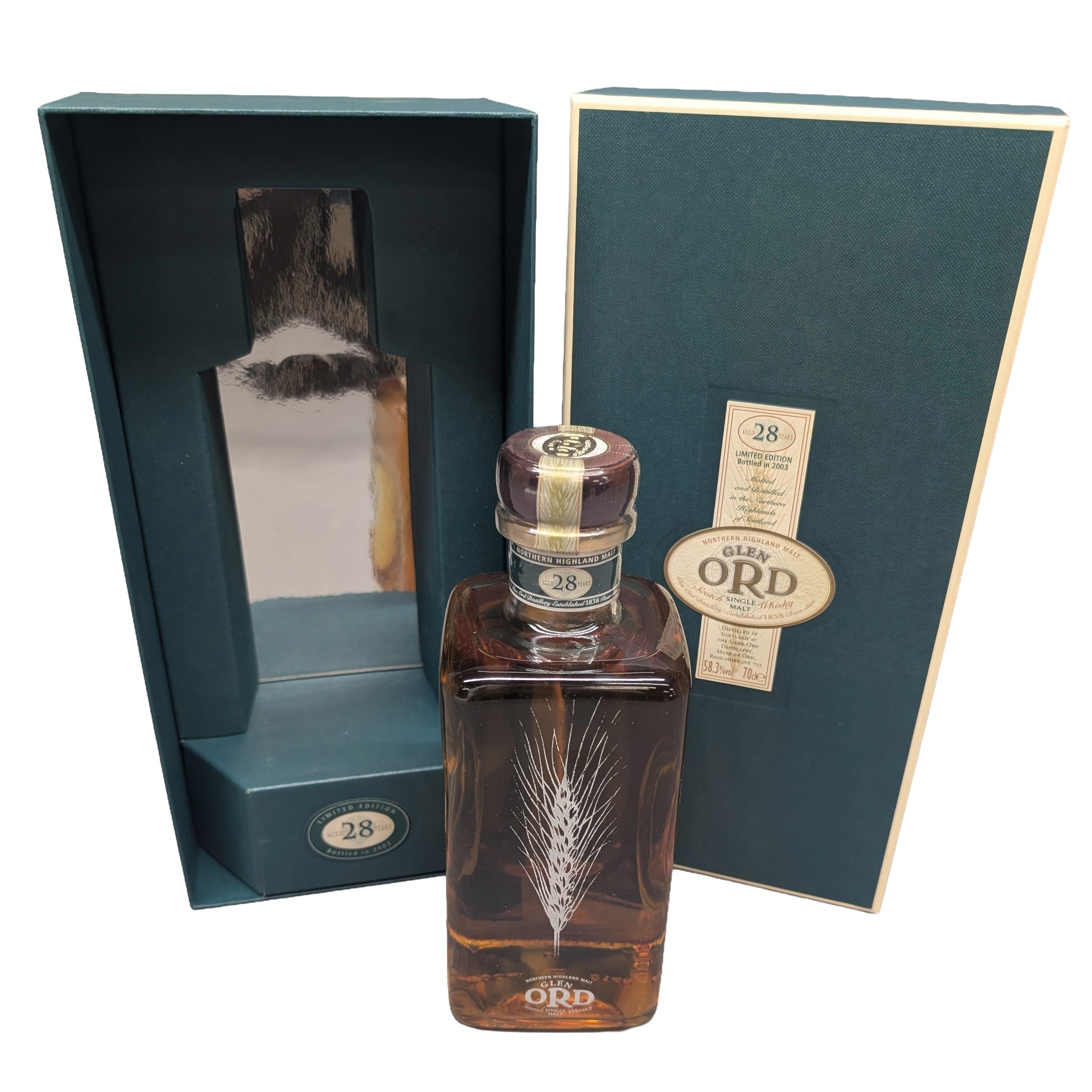
Primary live lot today
Glen Ord Aged 28 Years, Limited Edition, Bottled in 2003, Northern Highland Malt, Scotch Single Malt Whisky, 58.3% 70cl (boxed), Lot 1096
Auction house: Ryedale Auctioneers
View live lot listing
Estimate: £180-£260
Sale window shown in the listing: 21 Aug 2026, 10:00 to 23:59:59
Catalogue title: Glen Ord Aged 28 Years, Limited Edition, Bottled in 2003, Northern Highland Malt, Scotch Single Malt Whisky, 58.3% 70cl (boxed)
Photo coverage: five verified catalogue images, with the post hero saved locally from the 2500x2500 full-size `.JPG` and a separate 500x500 preview asset for homepage use
Why the estimate is live
Glen Ord sits in an interesting buying lane because it is a real distillery name without the auction shorthand of Macallan, Springbank, or Port Ellen. That can keep the estimate human, but it also means buyers have to know what they are actually paying for. Here the answer is maturity plus official presentation. Twenty-eight years, bottled in 2003, at 58.3% ABV, with the proper case still present, is a stronger proposition than a loose age statement on a shelf-worn bottle. The front image shows exactly the sort of composed package you want to see: deep fill, capsule still in place, and the green box and outer sleeve doing their quiet share of the work.
The lot becomes more convincing because the photography does not stop at one glamour shot. Ryedale gives five usable views, including bottle-and-box presentation and supporting angles that let you judge the state of the outer packaging. For whisky buyers, that matters more than a romantic line about Highland pedigree. Older official bottlings sell best when the liquid, the closure, and the packaging all agree that the bottle has been kept properly. If one part feels compromised, the premium starts leaking away surprisingly fast.
Who buys this and why
- Collectors of official distillery bottlings: they want mature stock, distillery identity, and the satisfaction of buying a release that still feels complete in its original presentation.
- Drinkers building a serious Highlands shelf: they see value in a high-strength older bottle from a name better known today through Singleton branding, especially when the estimate stays below the flashier trophy-distillery tier.
- Gift buyers shopping for milestone whisky with more substance than a standard current-release bottle: they are paying for age, presence, and box appeal, but only if the package still looks cared for rather than merely old.
Condition pressure points
- Read the fill before the age statement: the bottle should look healthy at the shoulder and not quietly low for its age, because old corked spirits lose confidence fast once the fill starts dropping.
- Inspect the capsule and neck band closely: tears, seepage, or clumsy reworking would matter far more than a light scuff on the outer box.
- Treat the box as part of the lot, not wrapping: check the edges, inner plinth, and front panel for splitting, crushing, or later replacement pieces, because presentation is carrying part of the estimate here.
- Look at the label tone and edges: a little age is fine, but staining, lifting, or moisture damage can drag the lot from collector bottle toward compromised bottle very quickly.
- Ask whether the package still feels matched: bottle, sleeve, and inner case should read as one surviving set rather than one good bottle parked in the nearest plausible box.
- Keep storage in the foreground: if you can, ask Ryedale Auctioneers whether the bottle has been stored upright and away from heat, because age is valuable only when the care story underneath it makes sense.
Comparator lots
These three comparators stay in the same Ryedale whisky run, which makes them genuinely useful because the buyer is choosing between parallel lots under the same fees and photography style rather than between abstract market anecdotes.
- First Cask 1984 Islay Malt Whisky, distilled 27th November 1984, an unblended cask of 18 year old malt whisky, Cask no. 5761, Bottle no. 38, 46% 70cl, Lot 1097 — Auction house: Ryedale Auctioneers. Estimate: £120-£160. This is the independent-bottler comparator. It trades the Glen Ord's official-box confidence for single-cask specificity and a more workmanlike presentation, which helps show how much today's lot is charging for completeness as well as age. view lot
- Gordon & MacPhail, Imperial Single Malt Scotch Whisky, Distilled 1996, Bottled 2015, 43% 70cl (tubed), Lot 1098 — Auction house: Ryedale Auctioneers. Estimate: £80-£120. This is the closed-distillery comparator. The Imperial name adds intrigue, but the lower estimate and tube presentation remind you that today's Glen Ord is being valued as a polished official release rather than as a curiosity-led indie bottle. view lot
- Glenfiddich Single Malt Scotch Whisky, Limited Edition 1991, Vintage Reserve, 40% 70cl (tubed), Lot 1099 — Auction house: Ryedale Auctioneers. Estimate: £80-£120. This is the brand-recognition comparator. It shows what happens when a more familiar name arrives with lighter proof, a lower estimate, and disclosed tube dents. If Glenfiddich is the comfort buy, the Glen Ord needs to justify itself on seriousness rather than familiarity. view lot
UK culture context
Glen Ord is useful because it ties two different Scottish whisky stories together. On one hand, the Scotch Whisky Association's explainer on single malt sets out the strict side of the category: single distillery, malted barley, Scottish maturation, and bottling in Scotland. On the other, the modern public face of Glen Ord is increasingly visitor-led. In December 2025, the Ross-shire Journal reported that the Singleton of Glen Ord Distillery in Muir of Ord had won the World Travel Awards title for the world's leading whisky distillery tour for a second year running, after welcoming around 78,000 visitors. That creates an interesting split in the buying imagination. Today's lot is not really about cocktails in a polished visitor centre. It belongs to the older official-bottling lane where buyers care about age, proof, packaging, and whether the bottle still carries the calm authority of something that has been kept rather than merchandised.
- Scotch Whisky Association: Single Malt Scotch Whisky — a useful UK trade-body reference on why single-distillery provenance, pot-still production, and bottling standards still matter to value.
- Ross-shire Journal: Singleton of Glen Ord Distillery in Muir of Ord scoops “world best” accolade — a live Highland media reference showing how strongly the distillery now trades on visitor experience and regional identity.
- Live Breathe Scotland: Glen Ord Distillery — a practical Scotland-focused guide that underscores Glen Ord's current visitor-centre strength and its continued local-production story beside the maltings.
Bottom line
This is a grown-up bottle buy, not a cheap punt with a flattering age statement. The estimate is real money, but the five-image set gives buyers enough to work with and the 2500x2500 hero confirms that the package has genuine presence. If the fill, capsule, and box all prove as settled in person as they look in the catalogue, the lot makes sense as a mature official Highland bottling with proper shelf authority. If the packaging is doing more work than the bottle, step down into one of the cheaper comparators and keep your enthusiasm in your pocket.
Editorial analysis for educational purposes only. Final bidding decisions, fees, tax, shipping, collection, condition confirmation, and contract terms are handled by the auction house.